


Diagnosis and treatment recommendations for glucose transporter 1 deficiency syndrome
- PMID: 39745620
- PMCID: PMC11885374
- DOI: 10.1007/s12519-024-00864-5
Diagnosis and treatment recommendations for glucose transporter 1 deficiency syndrome
Abstract
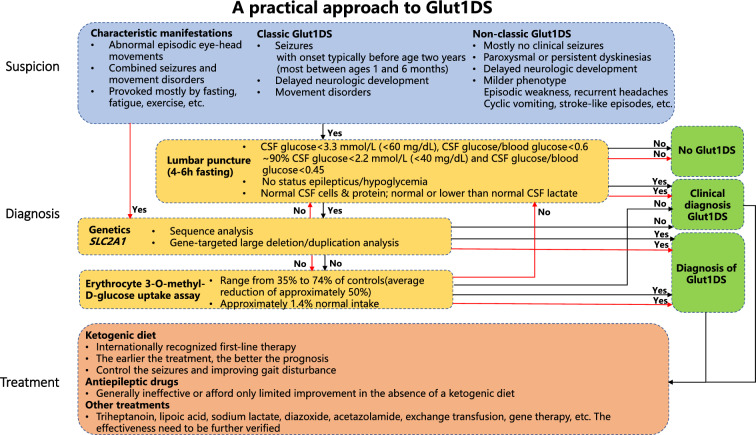
Background: Glucose transporter 1 deficiency syndrome (Glut1DS) was initially reported by De Vivo and colleagues in 1991. This disease arises from mutations in the SLC2A1 and presents with a broad clinical spectrum. It is a treatable neuro-metabolic condition, where prompt diagnosis and initiation of ketogenic dietary therapy can markedly enhance the prognosis. However, due to its rarity, Glut1DS is susceptible to misdiagnosis or missed diagnosis, which can lead to delayed treatment and irreversible dysfunction of the central nervous system. To promote diagnostic awareness and effective treatments, the recommendations for diagnosis and treatment have been developed.
Methods: The panel on Glut1DS included 28 participants from the members of the Ketogenic Diet Professional Committee of the Chinese Epilepsy Association and Chinese experts with extensive experience in managing Glut1DS. All authors extensively reviewed the literature, and the survey results were discussed in detail over several online meetings. Following multiple deliberative sessions, all participants approved the final manuscript for submission.
Results: Early diagnosis and timely treatment of Glut1DS are crucial for improving prognosis. Physicians should be alert to suspiction of this disease if the following clinical manifestations appear: seizures, episodic or persistent movement disorders (often triggered by fasting, fatigue, or exercise), delayed motor and cognitive development. Characteristic clinical presentations may include seizures combined with movement disorders, episodic eye-head movements, and paroxysmal exercise-induced dyskinesia (PED). In these cases, genetic testing should be promptly completed, and a lumbar puncture should be performed if necessary. The ketogenic diet is internationally recognized as the first-line treatment; the earlier it is started, the better the prognosis. It can effectively control seizures and improve motor disorders. Antiepileptic drug treatment is generally ineffective or provides limited symptom improvement before starting the ketogenic diet.
Conclusion: The recommendations provide clinicians with a relatively systematic guide for the rapid identification, diagnosis, and timely treatment of Glut1DS.
Keywords: Consensus; Diagnosis; Glut1DS; Treatment.
© 2024. The Author(s).
Conflict of interest statement
Declarations. Conflict of interest: No financial or nonfinancial benefits have been received or will be received from any party related directly or indirectly to the subject of this article. Ethical approval: Not required.
Figures
References
-
- Liu YY, Bao XH,·Wang·S, Fu N, Liu XY, Song FY, et al. Clinical and·genetic characteristics of glucose transporter type·1·deficiency syndrome. Chin J Pediatr. 2013;443–79 (in Chinese). - PubMed
Publication types
MeSH terms
Substances
Supplementary concepts
Grants and funding
LinkOut - more resources
Full Text Sources
Medical
Miscellaneous
