


CKD-Associated Pruritus is Associated with Greater Use of Antidepressants and Anti-pruritus Medications
- PMID: 39745632
- PMCID: PMC11787220
- DOI: 10.1007/s12325-024-03090-7
CKD-Associated Pruritus is Associated with Greater Use of Antidepressants and Anti-pruritus Medications
Abstract
Introduction: Chronic kidney disease-associated pruritus (CKD-aP) is a common, yet underdiagnosed condition among patients on hemodialysis. Considering the lack of established treatment pathways, we sought to evaluate the use of antidepressant, systemic antihistamines, or gabapentinoid medications among patients with CKD-aP in the year following pruritus assessment.
Methods: We included 6209 patients on hemodialysis in the analysis. We retrospectively extracted clinical and patient-reported data from electronic health records. The intensity of CKD-aP was assessed by KDQOL-36 and 5-D Itch questionnaires. Prescription of antidepressant, antihistamine, and gabapentinoids was ascertained by the occurrence of a relevant active medical order in patients' medical records.
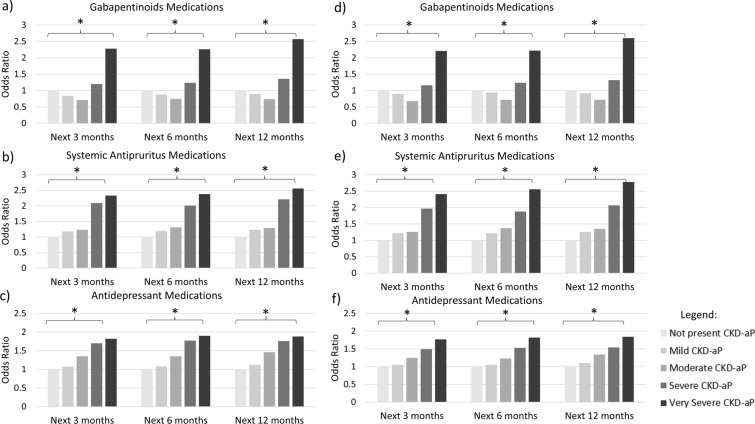
Results: We observed a consistent and graded association between the severity of CKD-aP and the use of antidepressant, systemic antihistamines, and gabapentinoid medications. This association remained consistent and intensified over the duration of the year after pruritus screening. This trend was robust even after accounting for potential confounding factors.
Conclusions: Patterns of antipruritic medication use in a cohort of patients with CKD-aP was identified and the frequent use of off-label treatments in the absence of approved therapies was highlighted. These observations reflect clinical practices aimed at managing severe pruritus but do not imply a causal relationship between the medications and pruritus severity. Even though we cannot exclude the possibility that these drugs have been prescribed to treat medical conditions warranting their use, previous evidence suggested that doctors may also use such medications in an attempt to buffer CKD-aP. These findings underline the importance of further elucidating current treatment strategies adopted in clinical practice to address CKD-aP.
Keywords: Antidepressants; Chronic kidney disease-associated pruritus; Gabapentinoids; Hemodialysis; Quality of life; Systemic antihistamines.
© 2024. The Author(s).
Conflict of interest statement
Declarations. Conflict of Interest: Jasmine Ion Titapiccolo, Luca Neri, Hans-Juergen Arens, Len Usvyat, Stefano Stuard are employees of Fresenius Medical Care. Marco Soro and Thilo Schaufler are employees of CSL Vifor and have CSL share options. Hans-Juergen Arens has share options/ownership in Fresenius Medical Care, Abbott Laboratories, and AbbVie Inc. Len Usvyat has share options/ownership in Fresenius Medical Care and he is inventor of patents in the field of dialysis. Len Usvyat is an advisory board member for Privacy Analytics Inc. Ethical Approval: All the patients consented to their data being used for secondary data analysis and research. Ethical approval was waived by the Ethics Committee of the Hospital Clinic of Barcelona, Spain with the protocol number Reg. HCB/2022/0586. All research was performed in accordance with relevant guidelines and regulations and in particular in accordance with the World Medical Association Declaration of Helsinki regarding the ethical principles for medical research involving human subjects. Patients were involved in the initial design of the study through feedback gathered in patient-reported outcomes from previous quality of life assessments. Additionally, the results of this study will be shared with the patient community through appropriate channels to inform them of the findings and potential implications for future treatment strategies. We are committed to patient-centered research while always safeguarding patient confidentiality.
Figures
References
MeSH terms
Substances
LinkOut - more resources
Full Text Sources
Medical
Research Materials
