


Development of colorimetric and fluorescent closed tube LAMP assay using simplified extraction for diagnosis of Meloidogyne enterolobii in root tissues
- PMID: 39747178
- PMCID: PMC11696552
- DOI: 10.1038/s41598-024-83214-9
Development of colorimetric and fluorescent closed tube LAMP assay using simplified extraction for diagnosis of Meloidogyne enterolobii in root tissues
Abstract
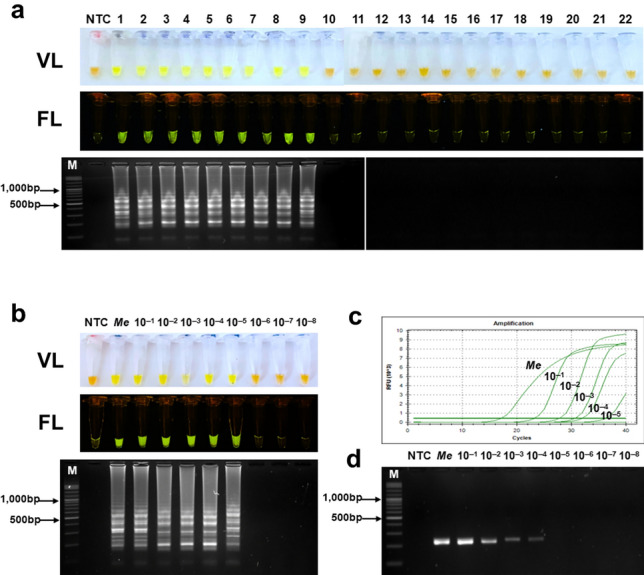
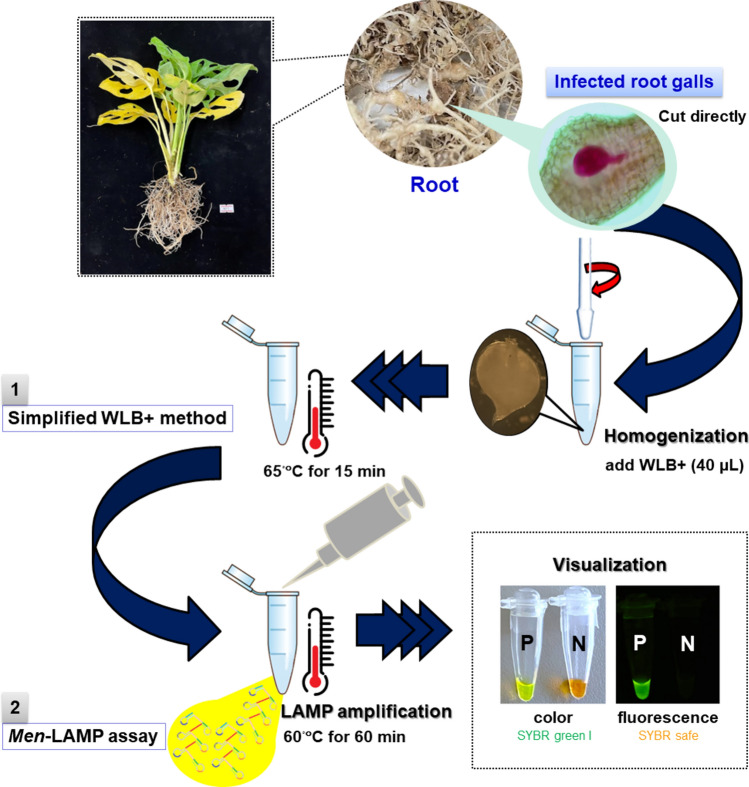
Meloidogyne enterolobii, a guava root-knot nematode, is a highly virulent pest in tropical and subtropical regions causing galls or knots in roots of diverse plant species posing a serious threat to agriculture. Managing this nematode is challenging due to limitations in conventional identification based on isolation and microscopic classification requiring expertise and time. A colorimetric and fluorescent LAMP assay using simplified extraction method targeting rDNA-ITS region was developed to detect M. enterolobii DNA. The Men-LAMP assay exhibits simple procedure and achievable outcomes directly from root gall samples within 75 to 80 min, using a simplified Worm Lysis Buffer Plus (WLB +) extraction and the LAMP assay. The results could be interpreted using color and fluorescence without requiring post-amplification to minimize any possibility of contamination. The specificity showed no cross amplification with other plant-parasitic nematodes, a sensitivity was limited to 2.89 ng/μL. Our study proposes a sensitive, specific and time-efficient diagnostic tool for M. enterolobii infection as an alternative promising method for rapid and effective diagnosis at point-of-service to manage and control of M. enterolobii in export plants that can contribute to the degradation of trade restrictions and streamline of the international quarantine inspection process.
Keywords: Meloidogyne enterolobii; Extraction; LAMP; Parasite; Root; SYBR.
© 2024. The Author(s).
Conflict of interest statement
Declarations. Competing interests: The authors declare they have no competing interests.
Figures



References
-
- Salazar-Mesta, R. J. et al. Characterization, pathogenicity, and reproduction of Meloidogyne enterolobii populations parasitizing vegetables in Sinaloa, Mexico. Trop. plant pathol.48, 394–407. 10.1007/s40858-023-00576-7 (2023).
-
- Bui, H., Gu, M., Riva, G. & Desaeger, J. Meloidogyne spp. infecting asian vegetables in central florida, USA. Nematropica52, 56–63 (2022).
-
- Jindapunnapat, K., Chinnasri, B. & Kwankuae, S. Biological control of root-knot nematodes (Meloidogyne enterolobii) in guava by the fungus Trichoderma harzianum. J. Dev. Sus. Agr.8, 110–118. 10.11178/jdsa.8.110 (2013).
-
- Wu, C. et al. First report of the guava root-knot nematode (Meloidogyne enterolobii) on Selenicereus costaricensis in Guangxi, China. Plant Dis.17, 4034. 10.1094/pdis-04-23-0736-pdn (2023).
Publication types
MeSH terms
Supplementary concepts
LinkOut - more resources
Full Text Sources
