


Use of refractive aids among adults in a general population
- PMID: 39747230
- PMCID: PMC11696050
- DOI: 10.1038/s41598-024-84045-4
Use of refractive aids among adults in a general population
Abstract
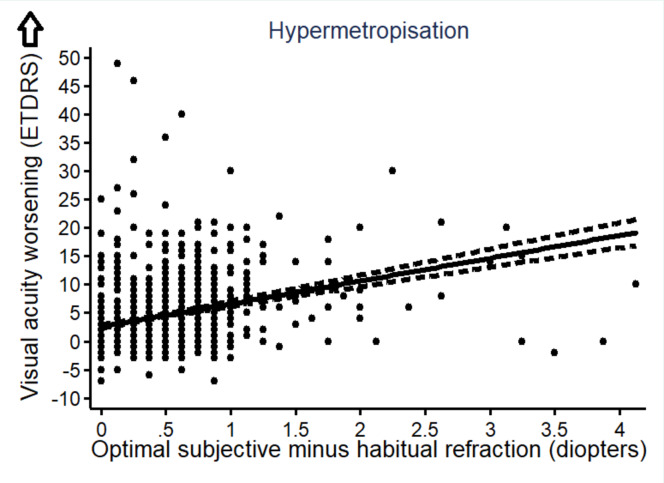
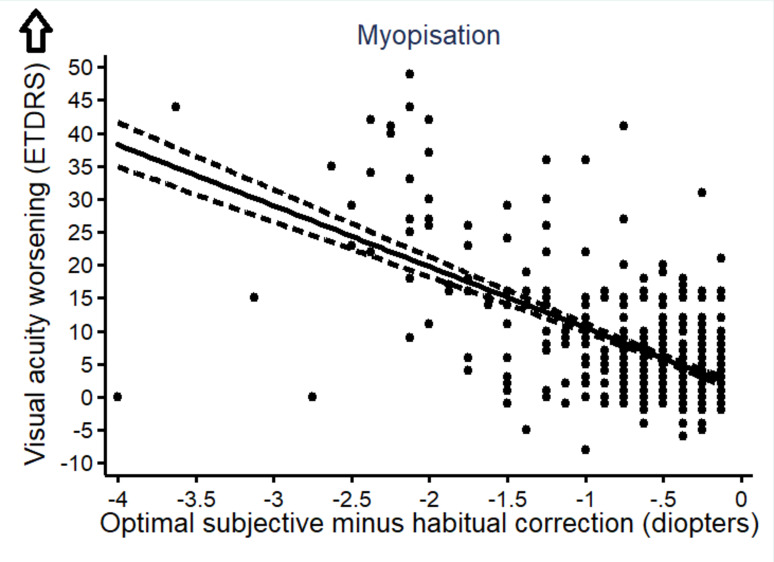
Spectacles and contact lenses are important for conducting a normal life in a large part of the general population. The purpose of this study was to estimate the use of these refractive aids in a normal adult population, and to identify characteristics of persons who should be targeted in order to improve uncorrected refraction. In the FORSYN study, 10,350 citizens representative for the adult Danish population were invited for a non-cycloplegic eye examination. The examination was completed in 3,384 persons, and the data were adjusted to represent the frequencies in the originally invited population on the basis of age, sex and socio-economic factors. The frequencies were projected to estimates of absolute numbers in the total adult Danish population. Refractive aids were used by 72.6%, 95% CI: 71.7-73.5% of the adult population. Distance correction was used by 55.7% (95% CI: 54.8-56.7%), contact lenses alone or alternating with spectacles by 11.2% (95% CI: 10.6-11.8%) and reading glasses by 18.8% (95% CI: 18.0-19.5%). Uncorrected refractive error resulted in a reduction in distance visual acuity of 2.99 ETDRS letters per diopter of hyperopia and of 10.3 ETDRS letters per diopter myopia (p < 0.0001 for both regressions). Uncorrected refractive error reduced distance visual acuity significantly in persons using single vision spectacle lenses and progressive addition spectacle lenses that had been prescribed more than 3 years previously. Refractive aids were used in approximately 72% of the population and should be checked when more than 3 years have passed since the last visit with a dispensing optometrist.
Keywords: Autorefraction; Habitual correction; Population study; Refractive aids; Subjective refraction..
© 2024. The Author(s).
Conflict of interest statement
Declarations. Competing interests: The authors declare no competing interests. Ethical approval: The study was approved by the Regional Scientific Ethics Committee (Ref 1-10-72-1-19) and the Regional Data Protection Office (Ref 1-16-02-419-19). Participant consent: All procedures followed the declaration of Helsinki and the patients gave their oral and written informed consent to participate.
Figures
References
-
- World report on Vision from WHO. https://www.who.int/publications/i/item/9789241516570 (2019).
-
- Vision Loss Expert Group of the Global Burden of Disease Study. GBD 2019 blindness and Vision Impairment Collaborators. Global estimates on the number of people blind or visually impaired by uncorrected refractive error: a meta-analysis from 2000 to 2020. Eye38/11, 2083–2101 (2024). - DOI - PMC - PubMed
-
- Alio, J. L., Grzybowski, A., Aswad, A. E. & Romaniuk, D. Refractive lens exchange. Lancet393, 2085–2098 (2019).
Publication types
MeSH terms
Grants and funding
LinkOut - more resources
Full Text Sources
Medical
