


Empathy is associated with older adults' social behaviors and verbal emotional expressions throughout the day
- PMID: 39747349
- PMCID: PMC11696790
- DOI: 10.1038/s41598-024-82550-0
Empathy is associated with older adults' social behaviors and verbal emotional expressions throughout the day
Abstract
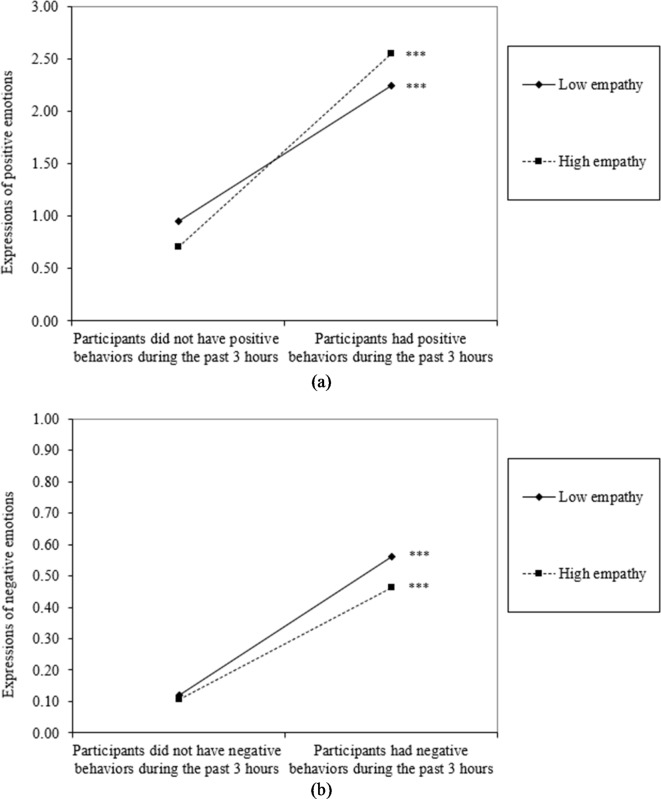
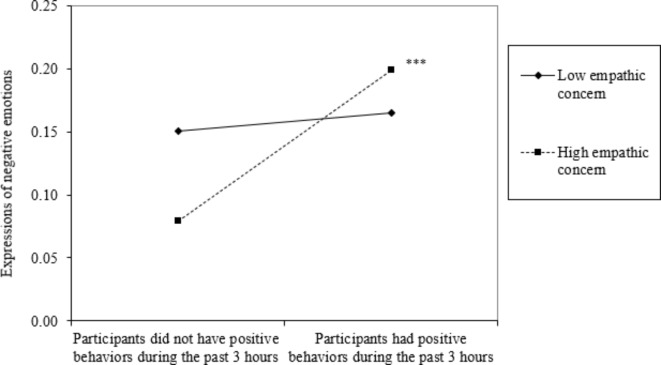
Empathy plays a crucial role in promoting older adults' interpersonal experiences, but it remains unclear how these benefits of empathy occur. To address this gap, we examined associations between empathy and how older adults behave and express emotions during their daily interpersonal encounters. Participants included 268 adults aged 65+ (46% men, n = 124) from the Daily Experiences and Well-being Study. They reported background characteristics and empathy in baseline interviews and indicated interpersonal encounters every 3 hours across 5 to 6 days. Participants wore electronically activated recorders (EAR), an app that captured 30-second snippets of ambient sounds every 7 minutes. Verbatim transcripts were coded for positive and negative social behaviors (e.g., praise, complain) and text was analyzed via Linguistic Inquiry and Word Count (LIWC) software for verbal expressions of positive and negative emotions (e.g., happy, hope, hate, hurt). Multilevel models showed that greater empathy was associated with greater variety in positive social behaviors throughout the day. More empathic older adults expressed more positive emotions while engaging in positive behaviors and less negative emotions when engaging in negative behaviors. This study innovatively draws on naturalistic data to delineate how more empathic older adults may have more positive and less negative social experiences than their less empathic counterparts. Findings may inform interventions that can incorporate empathy training to target those at higher risk of poor interpersonal experiences and outcomes (e.g., social isolation).
Keywords: EAR; EMA; Empathic; Late life; Linguistics.
© 2024. The Author(s).
Conflict of interest statement
Declarations. Competing interests: The authors declare no competing interests.
Figures
References
-
- Santini, Z. I., Koyanagi, A., Tyrovolas, S., Mason, C. & Haro, J. M. The association between social relationships and depression: A systematic review. J. Affect. Disord. 175, 53–65 (2015). - PubMed
-
- Davis, M. H. in The Oxford Handbook of Prosocial Behavior (eds. Schroeder, D. A. & Graziano, W. G.) Ch. 14 (Oxford University Press, 2015).
Publication types
MeSH terms
Grants and funding
LinkOut - more resources
Full Text Sources
Research Materials
Miscellaneous
