


Heterozygous mutation in BRCA2 induces accelerated age-dependent decline in sperm quality with male subfertility in rats
- PMID: 39747609
- PMCID: PMC11696240
- DOI: 10.1038/s41598-024-84184-8
Heterozygous mutation in BRCA2 induces accelerated age-dependent decline in sperm quality with male subfertility in rats
Abstract
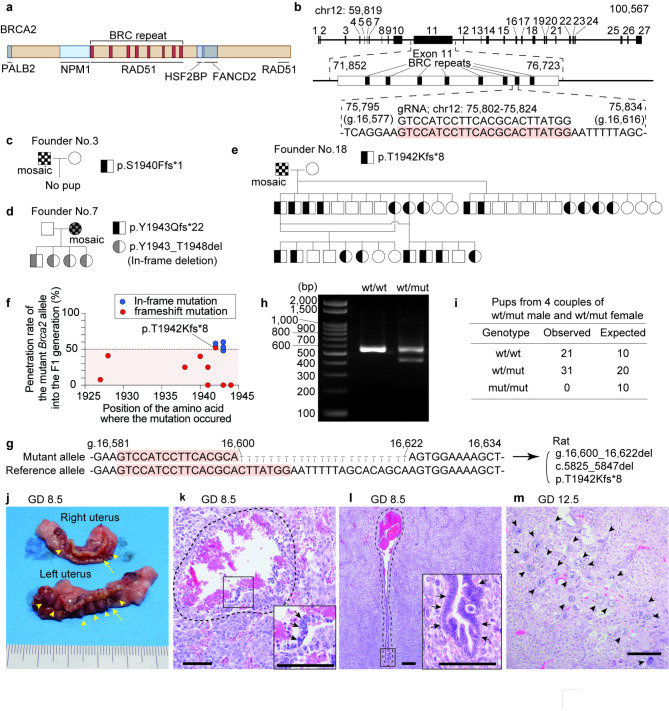
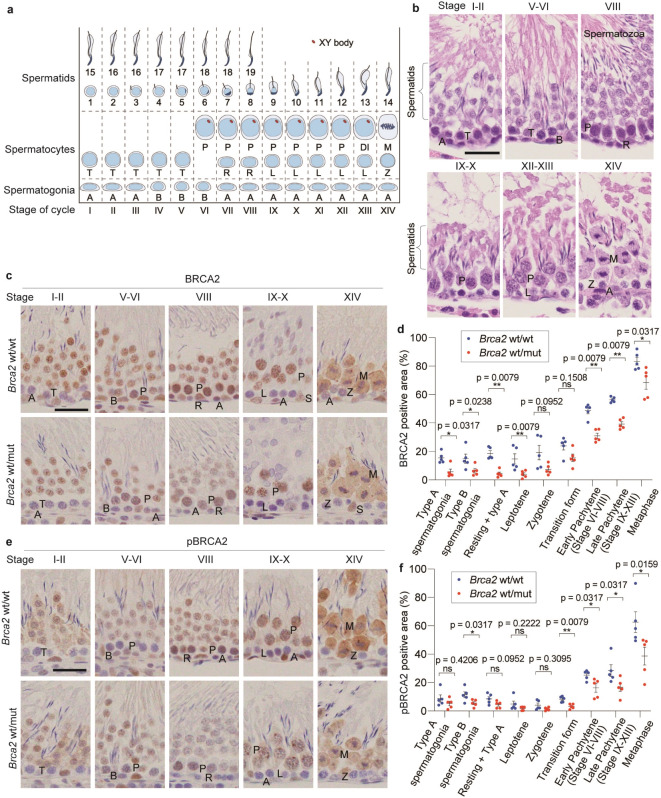
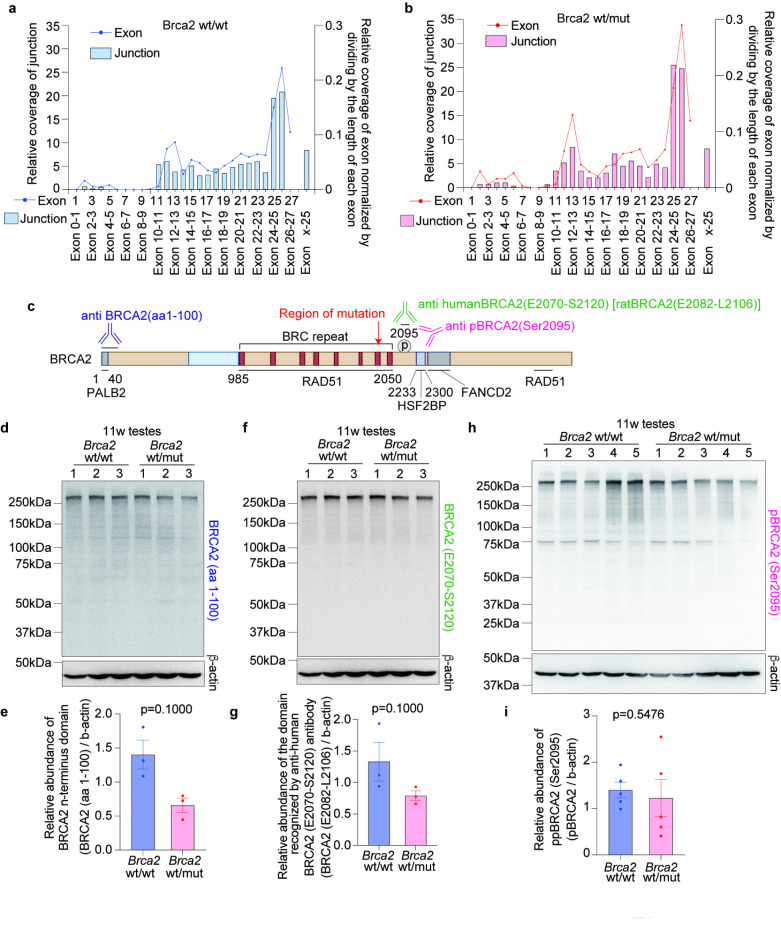
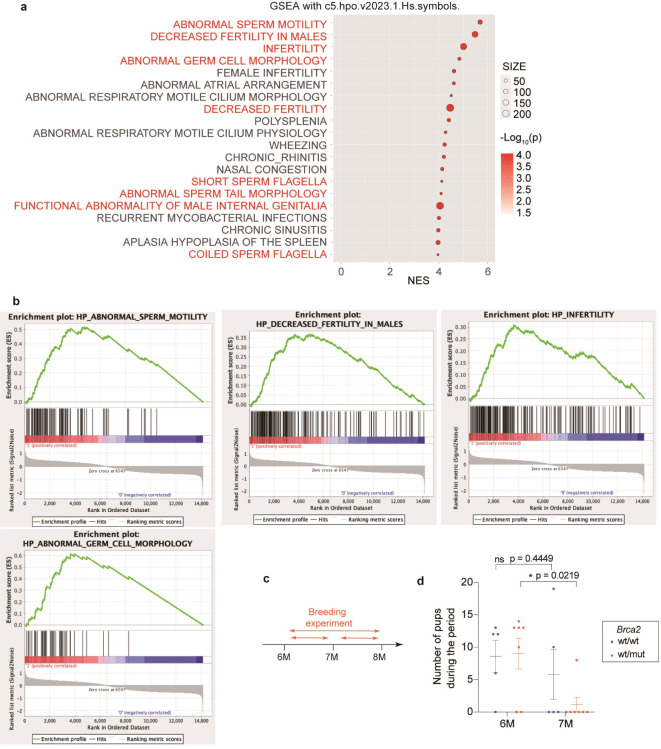
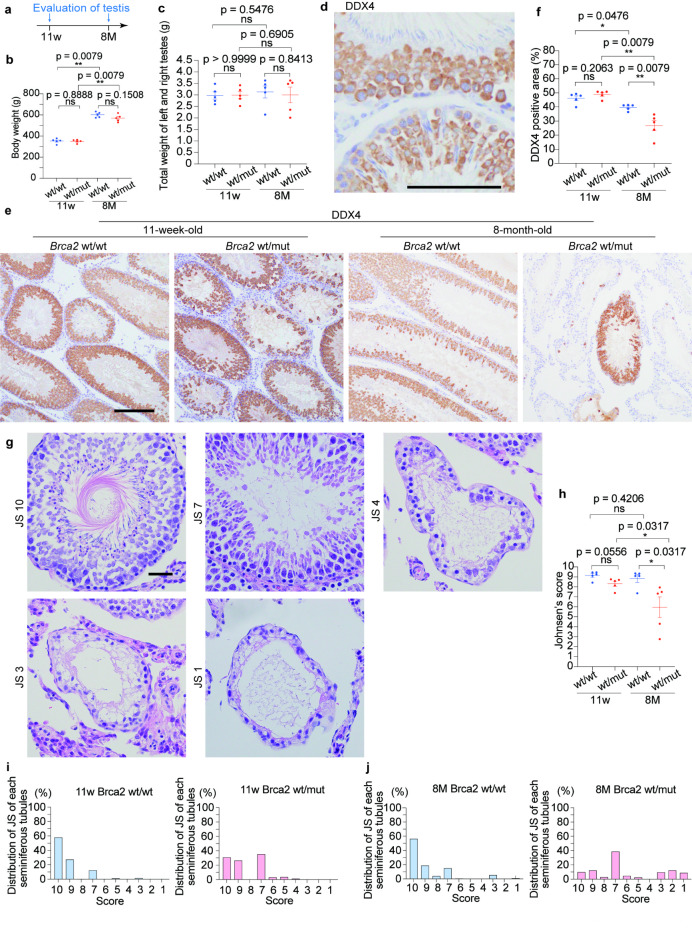
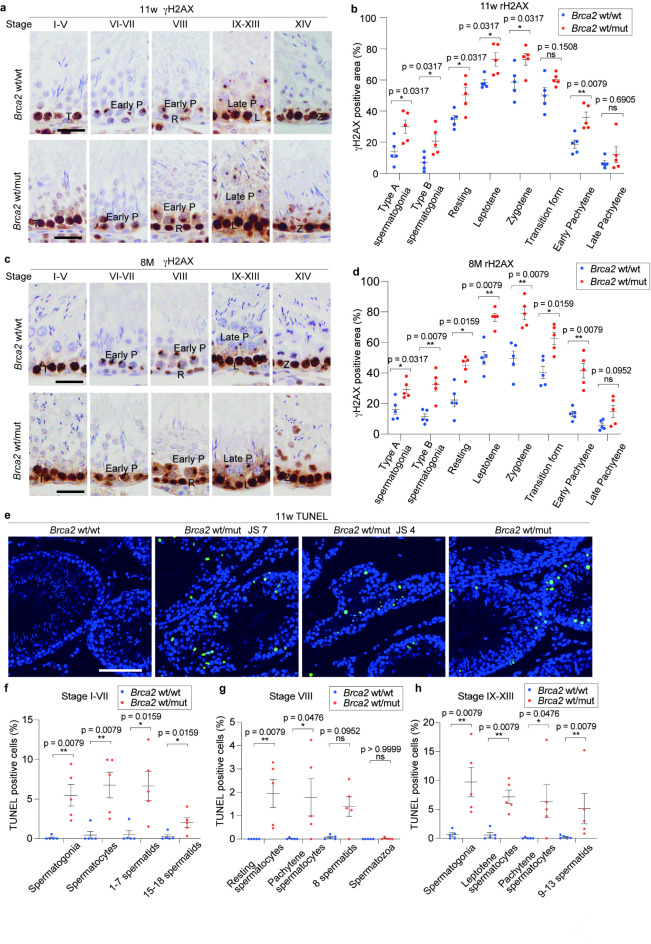
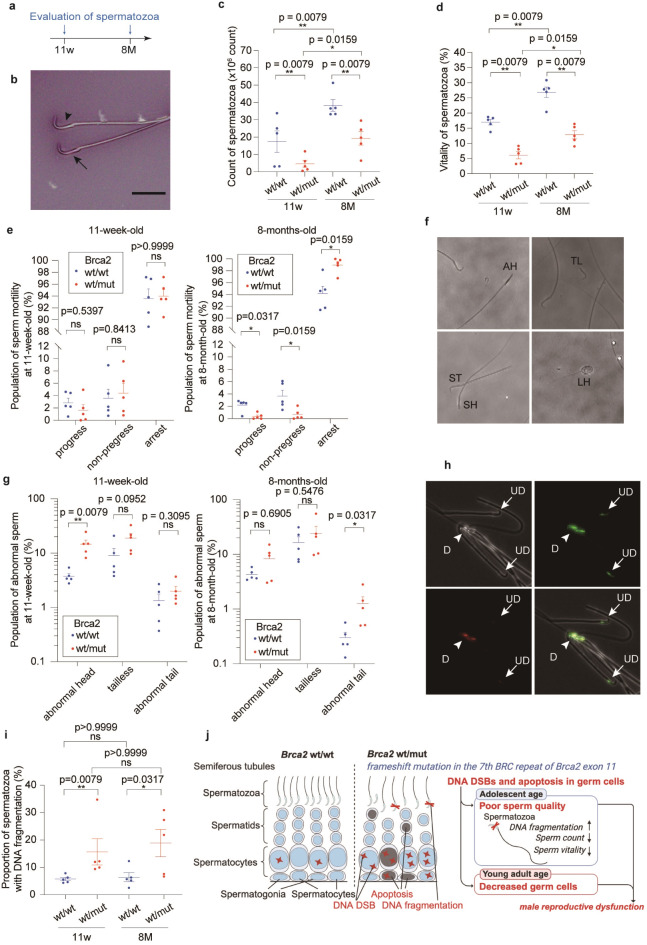
Tumor suppressor BRCA2 executes homologous recombination to repair DNA double-strand breaks in collaboration with RAD51, involving exon 11 and 27. Exon 11 constitutes a region where pathogenic variants (PVs) accumulate, and mutations in this region are known to contribute to carcinogenesis. However, the impact of the heterozygous PVs of BRCA2 exon 11 on the life quality beyond cancer risk, including male fertility, remains unclear. Here, we established a rat model with a frameshift on the seventh BRC repeat in Brca2 exon 11 (Brca2+/p.T1942fs), which is homologous to human BRCA2+/p.T1974fs, using CRISPR/Cas9 system. Our analyses revealed that the heterozygous rats with the PV in the BRCA2 exon 11 showed increased DNA double-strand breaks and apoptosis in spermatogonia and spermatocytes, accelerated testicular germ cell loss, and deterioration in sperm quality according with aging, ultimately resulting in early male reproductive dysfunction. Of note, these alterations in testes and sperm, including DNA fragmentation in spermatozoa, were observed from completion of sexual maturation. The present findings suggest that it is crucial to consider not only cancer risk but also potential declines in reproductive capacity in men carrying BRCA2 exon 11 PVs. Further investigation is warranted to determine whether similar traits appear in humans.
Keywords: Aging; BRCA2 exon 11; Heterozygote; Male subfertility; Pathogenic variant; Spermatogenesis.
© 2024. The Author(s).
Conflict of interest statement
Declarations. Competing interests: The authors declare no competing interests.
Figures
References
-
- McAllister, K. A. et al. Characterization of the rat and mouse homologues of the BRCA2 breast cancer susceptibility gene. Cancer Res.57, 3121–3125 (1997). - PubMed
Publication types
MeSH terms
Substances
Grants and funding
LinkOut - more resources
Full Text Sources
Medical
Research Materials
Miscellaneous
