


Gut-liver translocation of pathogen Klebsiella pneumoniae promotes hepatocellular carcinoma in mice
- PMID: 39747695
- PMCID: PMC11726454
- DOI: 10.1038/s41564-024-01890-9
Gut-liver translocation of pathogen Klebsiella pneumoniae promotes hepatocellular carcinoma in mice
Abstract
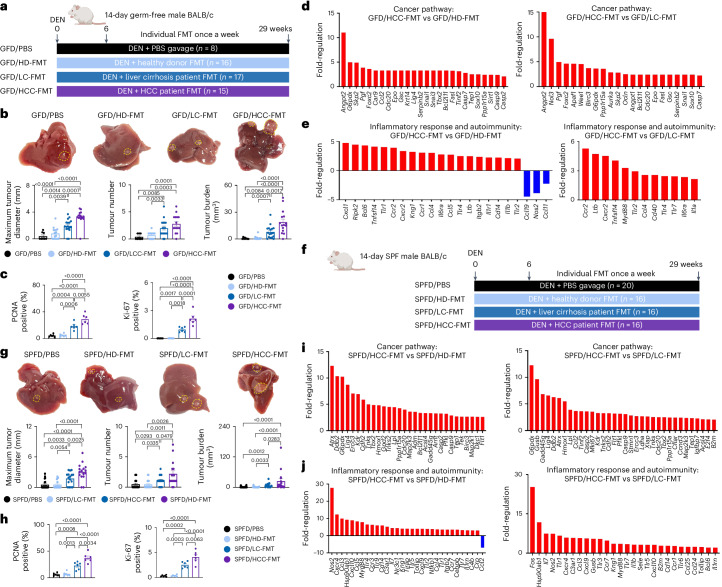
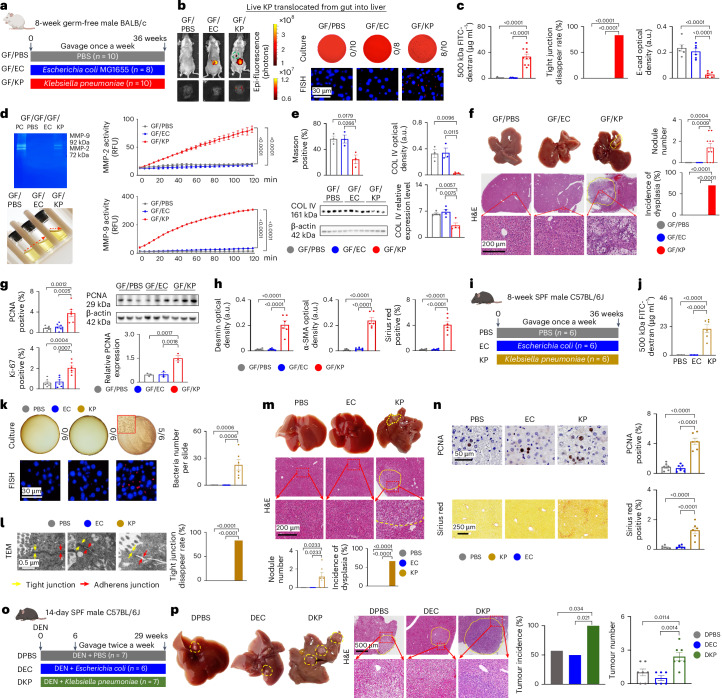
Hepatocellular carcinoma (HCC) is accompanied by an altered gut microbiota but whether the latter contributes to carcinogenesis is unclear. Here we show that faecal microbiota transplantation (FMT) using stool samples from patients with HCC spontaneously initiate liver inflammation, fibrosis and dysplasia in wild-type mice, and accelerate disease progression in a mouse model of HCC. We find that HCC-FMT results in gut barrier injury and translocation of live bacteria to the liver. Metagenomic analyses and bacterial culture of liver tissues reveal enrichment of the gut pathogen Klebsiella pneumoniae in patients with HCC and mice transplanted with the HCC microbiota. Moreover, K. pneumoniae monocolonization recapitulates the effect of HCC-FMT in promoting liver inflammation and hepatocarcinogenesis. Mechanistically, K. pneumoniae surface protein PBP1B interacts with and activates TLR4 on HCC cells, leading to increased cell proliferation and activation of oncogenic signalling. Targeting gut colonization using K. oxytoca or TLR4 inhibition represses K. pneumoniae-induced HCC progression. These findings indicate a role for an altered gut microbiota in hepatocarcinogenesis.
© 2025. The Author(s).
Conflict of interest statement
Competing interests: The authors declare no competing interests.
Figures




References
MeSH terms
Substances
Grants and funding
LinkOut - more resources
Full Text Sources
Medical
