


Post-myocardial infarction ventricular septal defects: incidence and treatment trends during and after the COVID-19 pandemic
- PMID: 39747983
- PMCID: PMC11695627
- DOI: 10.1038/s41598-024-84983-z
Post-myocardial infarction ventricular septal defects: incidence and treatment trends during and after the COVID-19 pandemic
Abstract
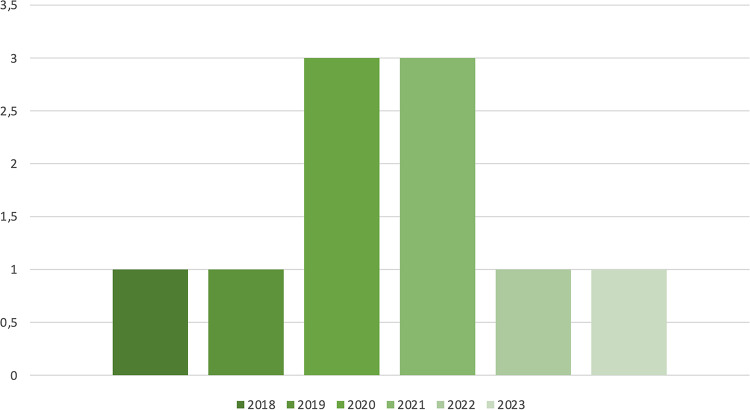
Ventricular septal defect (VSD) is a serious complication of myocardial infarction (MI), with its global incidence significantly reduced in recent years due to advances in coronary reperfusion techniques. However, during the COVID-19 pandemic, there was an unexpected rise in the incidence of post-MI VSD, likely driven by delays in seeking treatment. This study retrospectively analyzed 10 cases of post-MI VSD treated at our hospitals from March 2018 to August 2023, comparing incidence rates across pre-pandemic, pandemic, and post-pandemic periods. The findings revealed a notable increase in VSD cases during the pandemic, with six cases occurring in two years, compared to only two cases in each of the pre-pandemic and post-pandemic periods. Despite these fluctuations, surgical intervention remained a crucial and effective treatment, with 60% of patients surviving the 30-day follow-up. The study underscores the impact of delayed treatment on VSD incidence during the pandemic and highlights the critical need for timely medical intervention to manage severe MI complications effectively.
Keywords: COVID-19 pandemic; Delayed treatment; Myocardial infarction; Post-MI complications; Surgical correction; Ventricular Setpal defect.
© 2025. The Author(s).
Conflict of interest statement
Declarations. Competing interests: The authors declare no competing interests. Institutional review board statement: The study conforms to the ethical principles of the Good Clinical Practice, the Helsinki Declaration, and is in compliance with the current Italian regulations. This study was approved by the Institutional Review Board of Anthea Hospital-Bari, code 011-2024, date 31 January 2024. Informed consent: Informed consent was obtained from all subjects involved in the study and written informed consent has been obtained from the patient(s) to publish this paper. Patient confidentiality was maintained by anonymizing data and using secure databases for data storage and analysis.
Figures

References
MeSH terms
LinkOut - more resources
Full Text Sources
Medical
