


Association of body mass index with disability in activities of daily living in older adults: a systematic review of the literature based on longitudinal data
- PMID: 39748352
- PMCID: PMC11697817
- DOI: 10.1186/s12889-024-21234-w
Association of body mass index with disability in activities of daily living in older adults: a systematic review of the literature based on longitudinal data
Abstract
Background: The influence of Body Mass Index (BMI) on the functional capacity for daily activities in older adults is a significant concern. Our study is designed to delineate the longitudinal relationship between BMI and the ability of daily living activities among older adults.
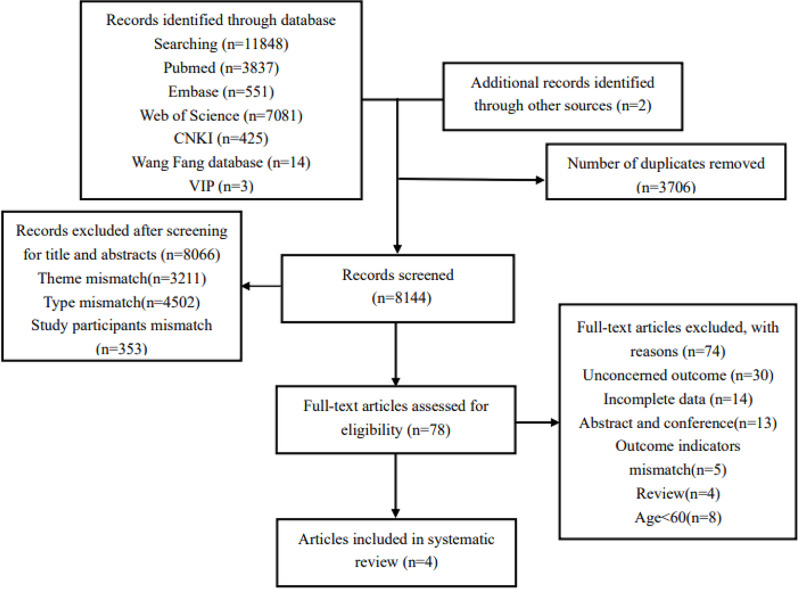
Methods: Two researchers conducted a comprehensive literature search and independent screening of articles in PubMed, Embase, Web of Science, China National Knowledge Infrastructure (CNKI), the Database for Chinese Technical Periodicals (VIP), and Wanfang, covering the period from January 2000 to May 2024. Studies were selected based on predefined inclusion and exclusion criteria, and relevant data were extracted for subsequent meta-analysis using the Cochrane Collaboration's Review Manager 5.3 software.
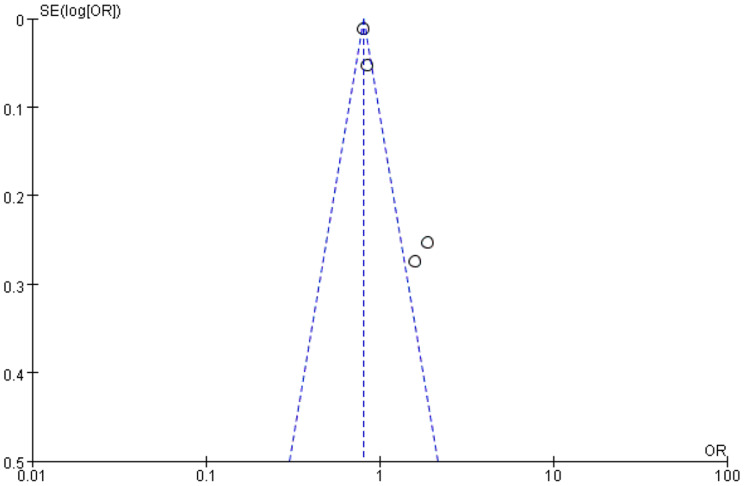
Results: After rigorous selection, four longitudinal studies were incorporated into our meta-analysis. The findings indicated that underweight older adults exhibited a higher likelihood of experiencing difficulties with basic activities of daily living (BADL) (odds ratio [OR] = 1.33, 95% confidence interval [CI]: [1.03, 1.72]; P = 0.03). Conversely, overweight older adults were found to have a reduced likelihood of BADL (odds ratio [OR] = 0.81, 95% confidence interval [CI]: [0.79, 0.83]; P < 0.001). However, overweight and obese older adults demonstrated an increased likelihood of challenges with Instrumental Activities of Daily Living (IADL) (odds ratio [OR] = 1.58, 95% confidence interval [CI]: [1.25, 2.00]; P < 0.01).
Conclusions: Our longitudinal meta-analysis substantiates the correlation between underweight status and the impairment of BADL in older adults, irrespective of gender. It also reveals that overweight older adults have a lower risk of BADL difficulties, yet a higher risk of IADL challenges, which is further exacerbated in obesity. The early identification and management of BMI in this population could be instrumental in preventing a decline in ADL. Recognizing the role of BMI categories in this context is essential for developing targeted preventative strategies for the elderly, while also accounting for other modifiable risk factors such as pain and depression.
Keywords: Activities of daily living; Basic activities of daily living; Body mass index; Elderly; Healthy life expectancy; Instrumental activities of daily living.
© 2024. The Author(s).
Conflict of interest statement
Declarations. Human ethics and consent to participate: Not applicable. Consent for publication: Not applicable. Competing interests: The authors declare no competing interests.
Figures




References
-
- WHO. World Health Statistics 2022[EB/OL]. HYPERLINK https://www.who.int/data/gho/publications/world-health-statistics. [2022-12-1].
-
- Connolly D, Garvey J, McKee G. Factors associated with ADL/IADL disability in community dwelling older adults in the Irish longitudinal study on ageing (TILDA). Disabil Rehabil. 2017;39(8):809–16. 10.3109/09638288.2016.1161848. - PubMed
-
- NCD Risk Factor Collaboration (NCD-RisC). Trends in adult body-mass index in 200 countries from 1975 to 2014: a pooled analysis of 1698 population-based measurement studies with 19·2 million participants [published correction appears in Lancet. 2016;387(10032):1998. Lancet. 2016;387(10026):1377–1396. 10.1016/S0140-6736(16)30054-X - PMC - PubMed
-
- Global Burden of Metabolic Risk Factors for Chronic Diseases Collaboration (BMI Mediated Effects), Lu Y, Hajifathalian K, et al. Metabolic mediators of the effects of body-mass index, overweight, and obesity on coronary heart disease and stroke: a pooled analysis of 97 prospective cohorts with 1·8 million participants. Lancet. 2014;383(9921):970–83. 10.1016/S0140-6736(13)61836-X. - PMC - PubMed
Publication types
MeSH terms
Grants and funding
LinkOut - more resources
Full Text Sources
