


Effects of amide proton transfer imaging in diagnosis, grading and prognosis prediction of cervical cancer: A systematic review and meta-analysis
- PMID: 39748993
- PMCID: PMC11693897
- DOI: 10.1016/j.heliyon.2024.e40291
Effects of amide proton transfer imaging in diagnosis, grading and prognosis prediction of cervical cancer: A systematic review and meta-analysis
Abstract
Purpose: To assess the effectiveness of Amide Proton Transfer (APT) imaging in predicting the histopathological characteristics of cervical cancer.
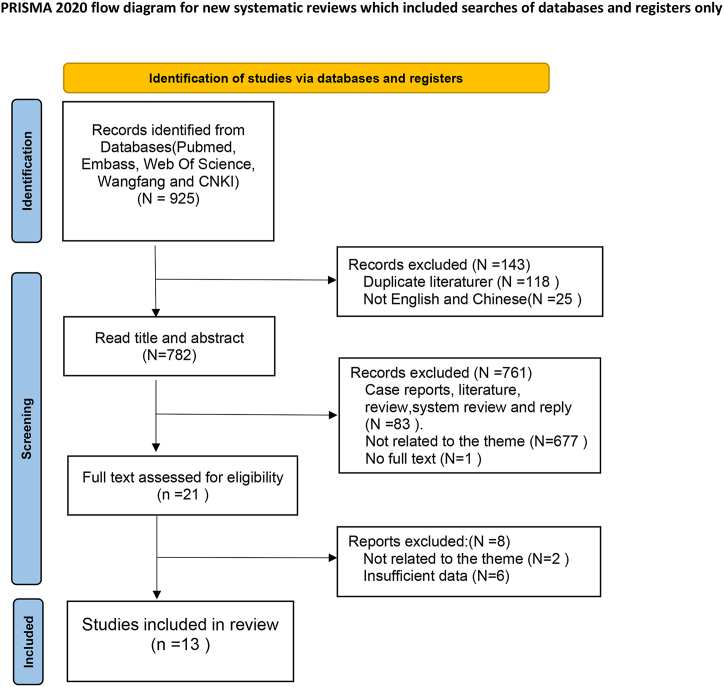
Methods: A comprehensive literature search was conducted across multiple databases, covering studies until December 27, 2023. The meta-analysis was performed using Stata 15 and Review Manager 5.4 software. Key metrics analyzed included pooled sensitivity, specificity, positive likelihood ratio, negative likelihood ratio, diagnostic odds ratio (DOR), and summary receiver operating characteristic curves. The analysis focused on differentiating cervical cancer types, squamous carcinoma differentiation, and lymph node involvement. Meta-regression was employed to investigate heterogeneity.
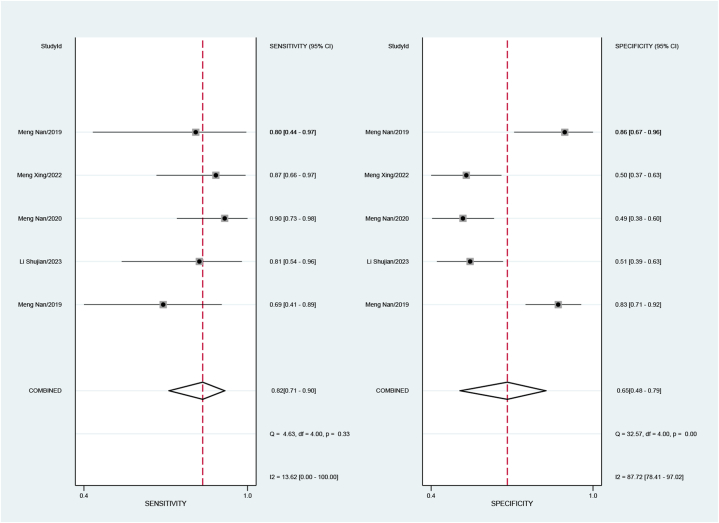
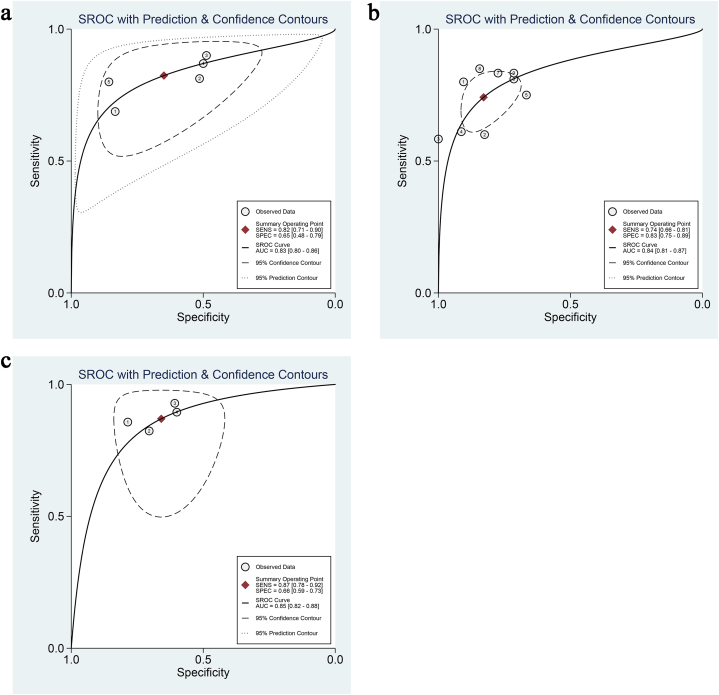
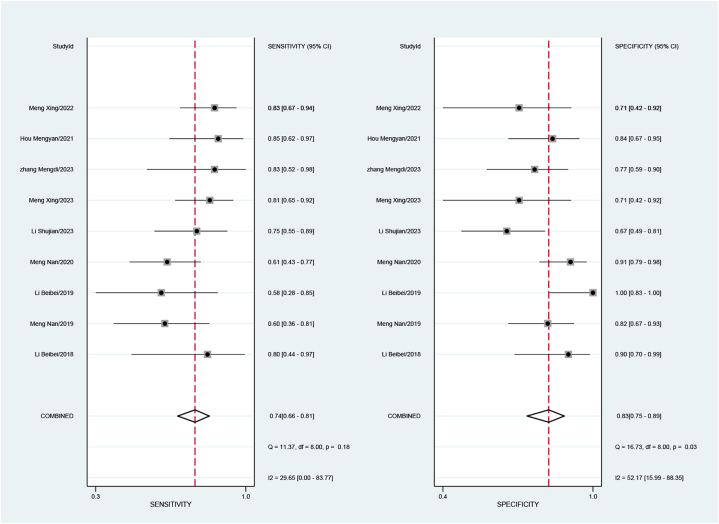
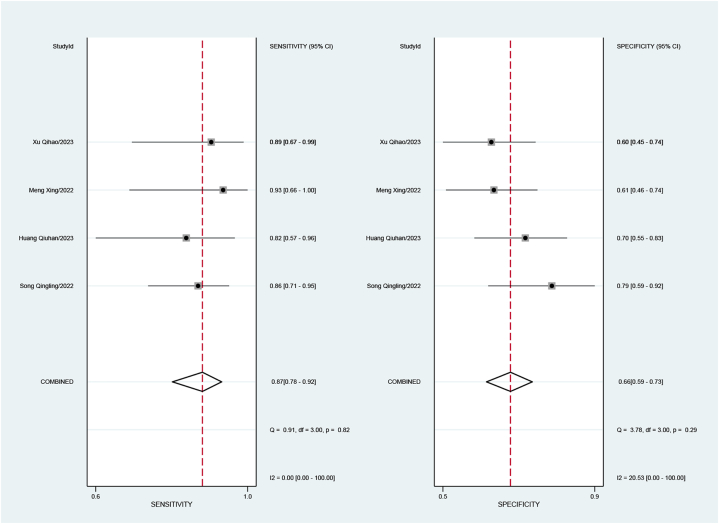
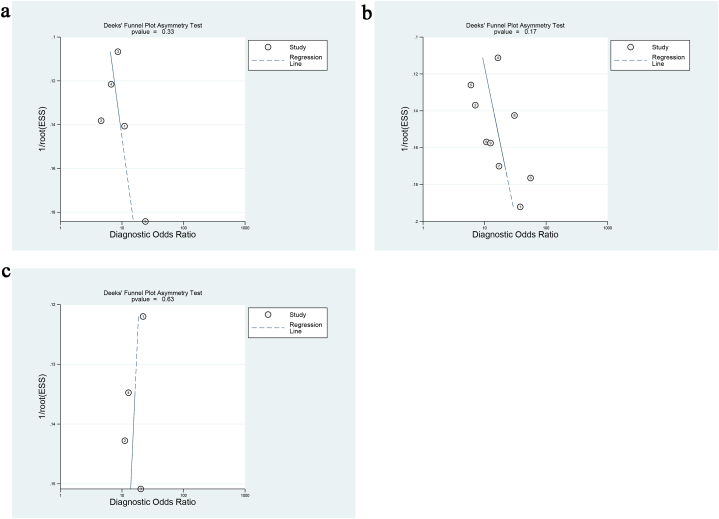
Results: Thirteen studies involving 868 patients were included in the meta-analysis. For differentiating adenocarcinoma from squamous carcinoma, the pooled sensitivity was 0.82 (95%CI: 0.71-0.90), specificity was 0.65 (95%CI: 0.48-0.79), and DOR was 9 (95%CI: 1.6-3.5). When distinguishing poorly differentiated from moderately/well-differentiated squamous carcinoma, the sensitivity was 0.74 (95%CI: 0.66-0.81), specificity was 0.83 (95%CI: 0.75-0.89), and DOR was 14 (95%CI: 8-23). For identifying lymph node involvement, the sensitivity was 0.87 (95%CI: 0.78-0.92), specificity was 0.66 (95%CI: 0.59-0.73), and DOR was 13 (95%CI: 7-26). No publication bias was detected.
Conclusions: APT imaging demonstrates high sensitivity and specificity in distinguishing between cervical cancer types, grading squamous carcinoma, and detecting lymph node involvement. It can be considered a reliable technique for predicting the pathological features of cervical cancer in clinical practice.
Keywords: Amide proton transfer; Cervical cancer; Systematic review.
© 2024 The Authors.
Conflict of interest statement
The authors declare that they have no known competing financial interests or personal relationships that could have appeared to influence the work reported in this paper.
Figures
References
-
- Sung H., Ferlay J., Siegel R.L., Laversanne M., Soerjomataram I., Jemal A., Bray F. Global cancer statistics 2020: GLOBOCAN estimates of incidence and mortality worldwide for 36 cancers in 185 countries. CA Cancer J Clin. 2021;71(3):209–249. - PubMed
-
- Corrado G., Anchora L.P., Bruni S., Sperduti I., Certelli C., Chiofalo B., Giannini A., D'Oria O., Bizzarri N., Legge F., Cosentino F., Turco L.C., Vizza E., Scambia G., Ferrandina G. Patterns of recurrence in FIGO stage IB1-IB2 cervical cancer: comparison between minimally invasive and abdominal radical hysterectomy. Eur. J. Surg. Oncol.: the journal of the European Society of Surgical Oncology and the British Association of Surgical Oncology. 2023;49(11) doi: 10.1016/j.ejso.2023.107047. - DOI - PubMed
-
- Pecorino B., D'Agate M.G., Scibilia G., Scollo P., Giannini A., Di Donna M.C., Chiantera V., Laganà A.S. Evaluation of surgical outcomes of abdominal radical hysterectomy and total laparoscopic radical hysterectomy for cervical cancer: a retrospective analysis of data collected before the LACC trial. Int. J. Environ. Res. Publ. Health. 2022;19(20) doi: 10.3390/ijerph192013176. - DOI - PMC - PubMed
LinkOut - more resources
Full Text Sources
