


Efficacy and cost-effectiveness of an ACT and compassion-based intervention for women with breast cancer: study protocol of two randomised controlled trials {1}
- PMID: 39754194
- PMCID: PMC11697741
- DOI: 10.1186/s13063-024-08626-4
Efficacy and cost-effectiveness of an ACT and compassion-based intervention for women with breast cancer: study protocol of two randomised controlled trials {1}
Erratum in
-
Correction: Efficacy and cost-effectiveness of an ACT and compassion-based intervention for women with breast cancer: study protocol of two randomised controlled trials {1}.Trials. 2025 Jun 30;26(1):226. doi: 10.1186/s13063-025-08730-z. Trials. 2025. PMID: 40588754 Free PMC article. No abstract available.
Abstract
Background: Breast cancer is the most diagnosed cancer in women worldwide and carries a considerable psychosocial burden. Interventions based on Acceptance and Commitment Therapy (ACT) and compassion-based approaches show promise in improving adjustment and quality of life in people with cancer. The Mind programme is an integrative ACT and compassion-based intervention tailored for women with breast cancer, which aims to prepare women for survivorship by promoting psychological flexibility and self-compassion. A pilot study of the Mind programme has shown acceptability and preliminary efficacy in improving quality of life and psychological health. This paper presents the study protocol of two randomised controlled trials that aim to test the efficacy and cost-effectiveness of an optimised version of the Mind programme in women with breast cancer.
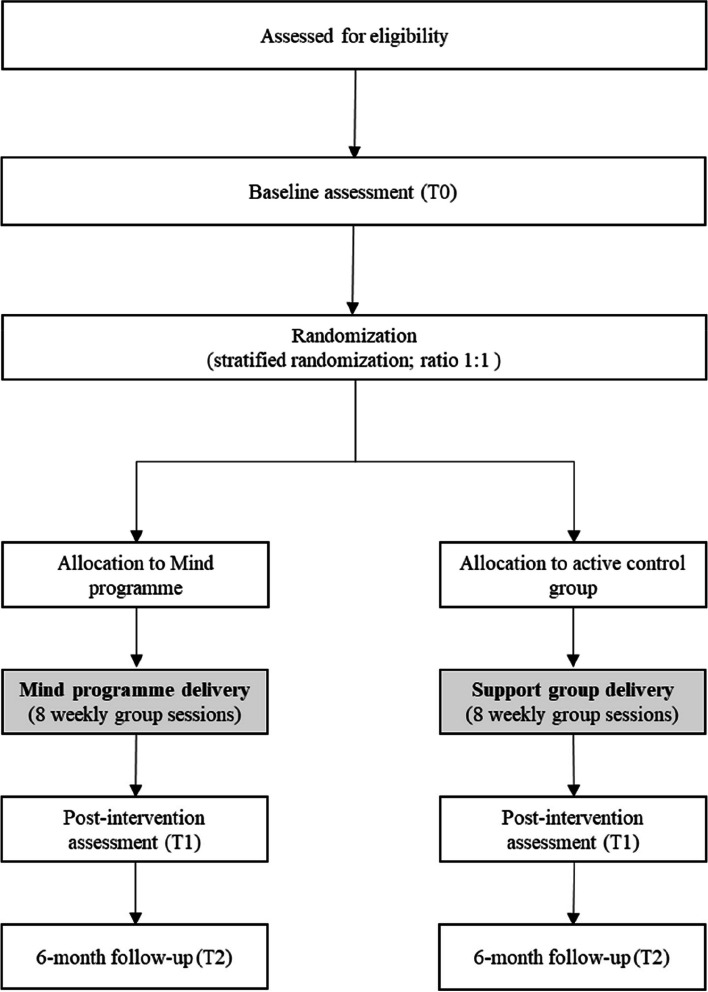
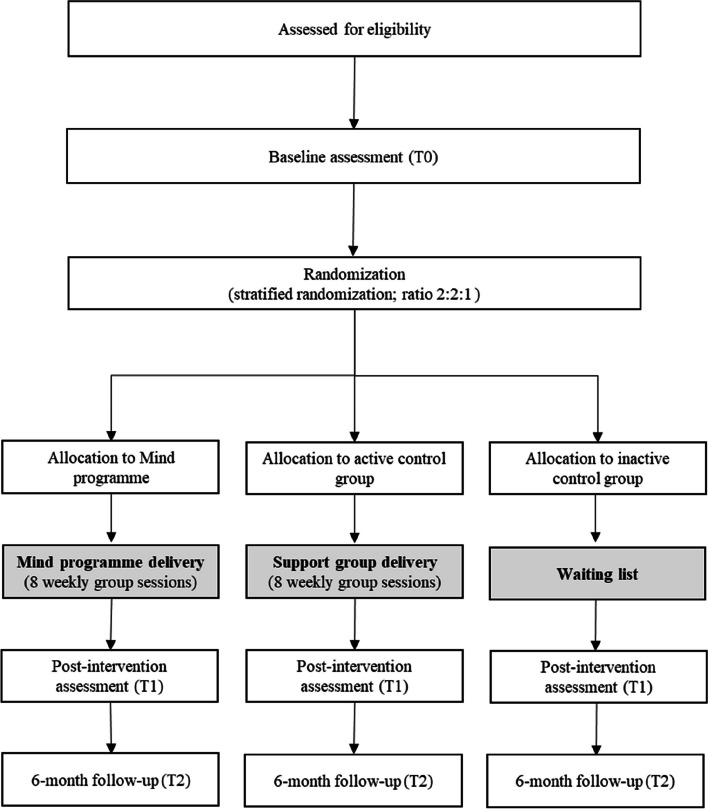
Methods: Participants will be women diagnosed with breast cancer randomly assigned to the Mind programme or a support group intervention (active control) in a 1:1 ratio for study 1, while study 2 includes one more arm (treatment as usual; inactive control) and a 2:2:1 ratio. Both interventions will be delivered weekly via an 8-session face-to-face or online group format. Data will be collected at baseline, post-treatment and 6-month follow-up. The efficacy and cost-effectiveness of the two interventions will be assessed. Treatment outcomes will comprise cancer-specific quality of life (primary outcome), anxiety and depressive symptoms, psychological flexibility, self-compassion, health-related quality of life, resource use, and intervention's acceptability and feasibility. Study 1 will also include immunological and epigenetic markers associated with breast cancer prognosis and mental health. Outcome assessors will be blind to group allocation. Statistical analyses will be conducted using an intention-to-treat approach. Analyses of moderators and mediators of change will also be performed.
Discussion: These trials examine the efficacy and cost-effectiveness of an integrative ACT and compassion-based intervention tailored for women with breast cancer. Greater improvements in psychosocial, biological and resource use are expected in the Mind group, when compared to the control group(s). Results will likely support the potential benefits of the Mind programme for breast cancer patients and highlight the clinical relevance of integrative and holistic interventions in oncology. TRIALS REGISTRATION {2A, 2B}: ClinicalTrials.gov NCT05642897 and NCT06212414. Registered on December 8, 2022, and January 18, 2024.
Keywords: Acceptance and Commitment Therapy; Breast cancer; Compassion-Focused Therapy; Mind programme; Randomised controlled trial.
© 2024. The Author(s).
Conflict of interest statement
Declarations. Ethics approval and consent to participate {24}: Study 1 was approved by the Ethics Committee of Coimbra Hospital and University Centre, Portugal (CHUC-038–20), while study 2 was approved by the Ethics Committee of the Faculty of Psychology and Education Sciences of the University of Coimbra, Portugal (CEDI/FPCEUC:76/11). The planning and implementation of both studies considered the ethical recommendations of the American Psychological Association [64] and the World Medical Association’s Declaration of Helsinki [65]. Both studies are registered at ClinicalTrials.gov (study 1: NCT05642897; study 2: NCT06212414). All participants will provide their written informed consent or electronic informed consent. Consent for publication {32}: N/A: no identifying images or other personal or clinical details of participants will be presented in reports of the trials results. Competing interests {28}: The authors declare that they have no competing interests.
Figures
References
-
- Bray F, Ferlay J, Soerjomataram I, Siegel RL, Torre LA, Jemal A. Global cancer statistics 2018: GLOBOCAN estimates of incidence and mortality worldwide for 36 cancers in 185 countries. CA Cancer J Clin. 2018;68(6):394–424. - PubMed
-
- Group TE. EuroQol-a new facility for the measurement of health-related quality of life. Health Policy. 1990;16(3):199–208. - PubMed
-
- Moreira H, Canavarro MC. A longitudinal study about the body image and psychosocial adjustment of breast cancer patients during the course of the disease. Eur J Oncol Nurs. 2010;14(4):263–70. - PubMed
-
- Ganz PA. Monitoring the physical health of cancer survivors: a survivorship-focused medical history. J Clin Oncol. 2006;24(32):5105–11. - PubMed
Publication types
MeSH terms
Associated data
Grants and funding
LinkOut - more resources
Full Text Sources
Medical
