


Systematic review and meta-analysis of the prevalence of frailty and pre-frailty amongst older hospital inpatients in low- and middle-income countries
- PMID: 39757939
- PMCID: PMC11701313
- DOI: 10.1093/ageing/afae279
Systematic review and meta-analysis of the prevalence of frailty and pre-frailty amongst older hospital inpatients in low- and middle-income countries
Abstract
Background: As populations age, low- and middle-income countries (LMICs) are rapidly adapting hospital services to meet the needs of older populations. This systematic review aimed to establish the prevalence of frailty and pre-frailty amongst older people admitted to hospital in LMICs, and to compare levels with existing estimates for high-income settings.
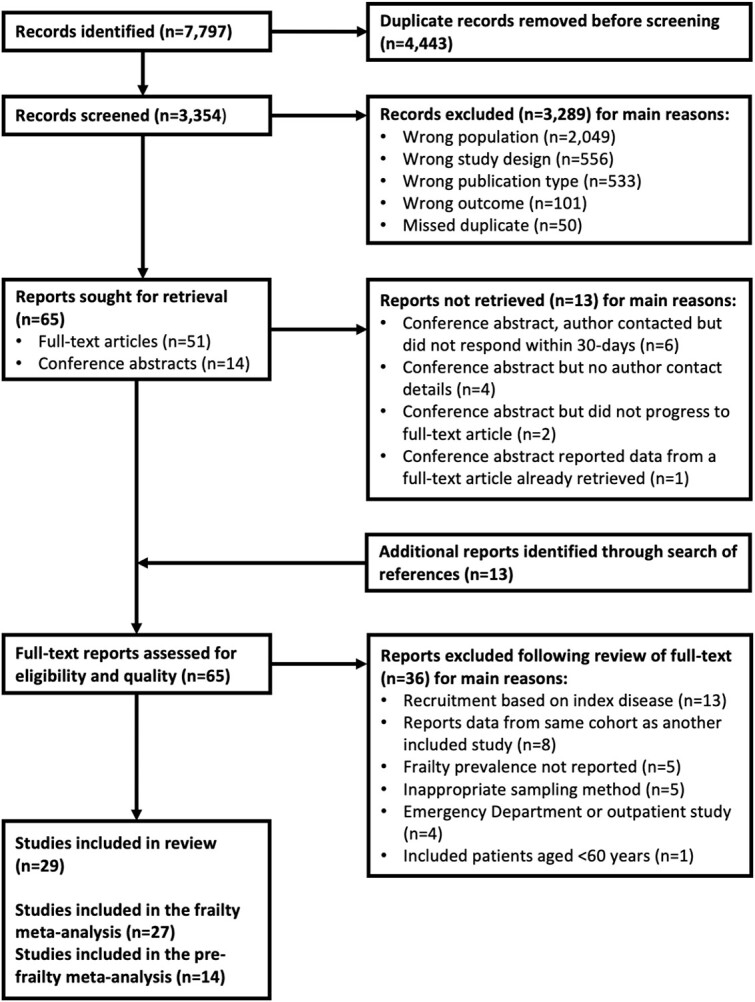
Methods: Databases Medline, Embase, CINAHL and PsychInfo were searched, and results were manually screened by two researchers. Included studies were cross-sectional or cohort design and reported data from hospital inpatients, aged ≥60 years, in LMICs, using validated methods for identifying frailty. Risk of bias was assessed by two researchers using the Joanna Briggs Institute checklist. Where possible, results were synthesised using meta-analysis.
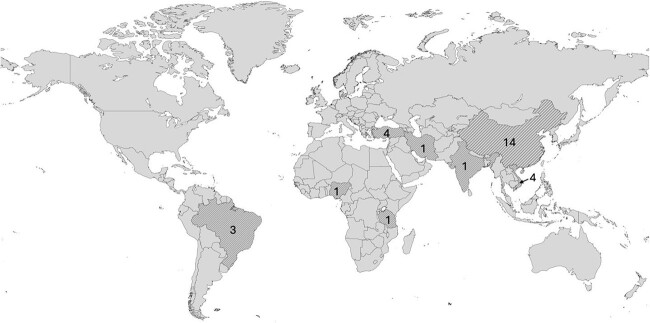
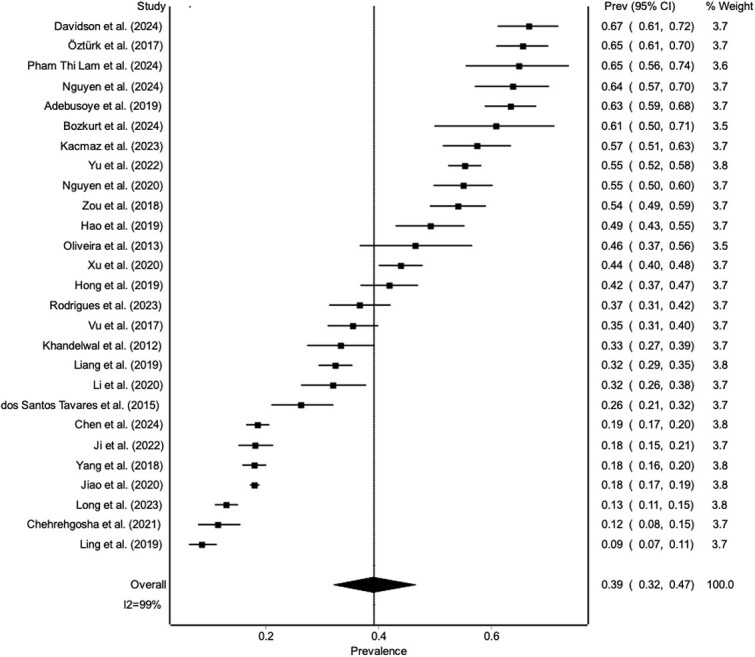
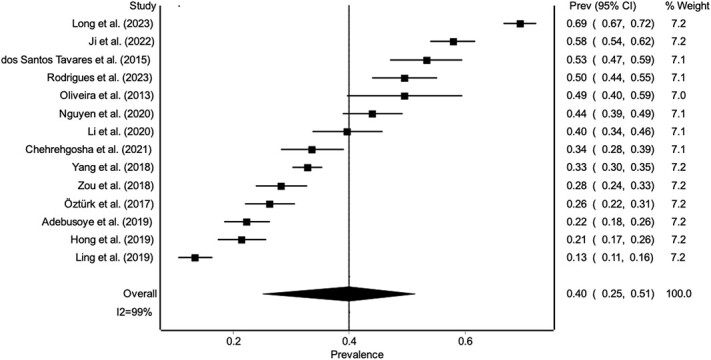
Results: Twenty-nine studies were included, all reporting data from middle-income countries. Physical frailty tools were the most common, with Fried's phenotype and the FRAIL Scale being the most often used methods of assessment. The pooled estimate of the prevalence of frailty was 39.1% [95% confidence interval (CI) 31.9-46.6%] comprising data from 23 311 older inpatients. For pre-frailty, prevalence was 40.0% (95% CI 25.1-51.4%) from 6954 individuals.
Discussion: Due to the paucity of eligible studies and their geographical distribution, these pooled estimates are only representative of the burden of frailty in select middle-income settings (particularly China). Future research should seek to establish the prevalence of frailty in hospitals in low-income countries, and to assess clinical outcomes by frailty status, in order to develop bespoke clinical tools and to aid the planning of future geriatric services.
Keywords: frailty; low- and middle-income; low- and middle-income countries (LMIC); older people; prefrailty; prevalence; systematic review.
© The Author(s) 2025. Published by Oxford University Press on behalf of the British Geriatrics Society. All rights reserved. For permissions, please email: journals.permissions@oup.com.
Conflict of interest statement
None declared.
Figures
References
-
- United Nations. World Population Ageing . In: Division DoEaSAP, Editor. New York: United Nations, 2019, 2019.
-
- World Health Organization . World Report on Ageing and Health. Geneva: World Health Organisation, 2015.
-
- Tan MP. Healthcare for older people in lower and middle income countries. Age Ageing. 2022;51:1–4, afac016. - PubMed
-
- Bigna JJ, Noubiap JJ. The rising burden of non-communicable diseases in sub-Saharan Africa. Lancet Glob Health. 2019;7:e1295–6. - PubMed
-
- World Health Organization . Decade of Healthy Ageing: Baseline Report. Geneva: World Health Organisation, 2020. 10.1371/journal.pone.0242911. - DOI
Publication types
MeSH terms
LinkOut - more resources
Full Text Sources
Research Materials
