Burden of human rabies disease: its potential prevention by means of Rabipur® vaccine
- PMID: 39758769
- PMCID: PMC11698110
- DOI: 10.15167/2421-4248/jpmh2024.65.3.3404
Burden of human rabies disease: its potential prevention by means of Rabipur® vaccine
Abstract
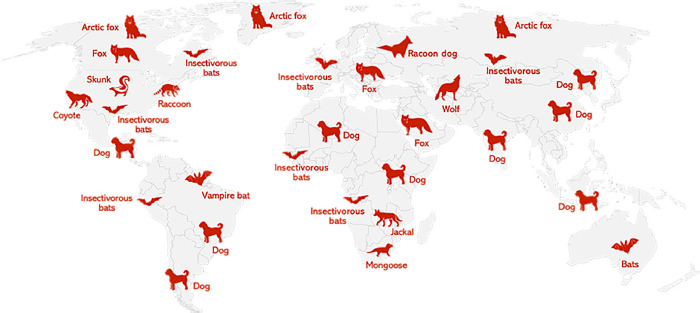
Rabies is a zoonotic viral disease transmitted mainly by bites of infected animals, especially dogs, which are responsible for 99% of human cases. Despite being preventable, it remains a neglected disease in low-income countries, with approximately 60,000 deaths per year, mostly concentrated in Africa and Asia. The real worldwide burden of rabies is probably underestimated, as death-reporting systems are inadequate and active surveillance is limited. Rabies prevention implies two main, non-exclusive strategies: (i) dog vaccination, in order to interrupt virus transmission to humans, and (ii) human vaccination i.e. pre-exposure prophylaxis (PrEP) and Post-Esposure Prophylaxis (PEP) through the use of purified cell-culture and embryonated egg-based vaccines (CCEEVs). Rabipur® is one of the available anti-rabies vaccines and is indicated for active immunization in individuals of all ages. Its efficacy and safety have been amply demonstrated. In rabies-free countries, PrEP is indicated for individuals who face occupational and/or travel-related exposure to the rabies virus in specific settings or over an extended period. Wider use of human rabies vaccination for PrEP and PEP in conjunction with programs to eradicate rabies from animal populations is the challenging goal in order to reduce the burden of disease and achieve zero rabies.
Keywords: Dog bite; Human rabies; Rabies; Rabies vaccine.
©2024 Pacini Editore SRL, Pisa, Italy.
Conflict of interest statement
The grant was destinated to research activities of Department of Health Sciences, University of Genoa (Italy). No conflict of interest by authors.
Figures




References
-
- WHO Rabies. Available at: https://www.who.int/news-room/fact-sheets/detail/rabies (Accessed on: 3/04/2024).
-
- Noah DL, Drenzek CL, Smith JS, Krebs JW, Orciari L, Shaddock J, Sanderlin D, Whitfield S, Fekadu M, Olson JG, Rupprecht CE, Childs JE. Epidemiology of human rabies in the United States, 1980 to 1996. Ann Intern Med 1998;128:922-30. https://doi.org/10.7326/0003-4819-128-11-199806010-00012. 10.7326/0003-4819-128-11-199806010-00012 - DOI - PubMed
-
- Giesen A, Gniel D, Malerczyk C. Correction to: 30 years of rabies vaccination with Rabipur: a summary of clinical data and global experience. Expert Rev Vaccines 2015;1:775. https://doi.org/10.1586/14760584.2015.1027863. 10.1586/14760584.2015.1027863 - DOI - PubMed
-
- Coulon P, Derbin C, Kucera P, Lafay F, Prehaud C, Flamand A. Invasion of the peripheral nervous systems of adult mice by the CVS strain of rabies virus and its avirulent derivative AvO1. J Virol 1989;63:3550-4. https://doi.org/10.1128/JVI.63.8.3550-3554.1989. 10.1128/JVI.63.8.3550-3554.1989 - DOI - PMC - PubMed
Publication types
MeSH terms
Substances
LinkOut - more resources
Full Text Sources
Medical
Miscellaneous