


Outcomes and Toxicities After Treatment for Men Diagnosed With Localized Prostate Cancer in Low- and Middle-Income Countries: A Systematic Review and Meta-Analysis
- PMID: 39758977
- PMCID: PMC11699425
- DOI: 10.1016/j.adro.2024.101670
Outcomes and Toxicities After Treatment for Men Diagnosed With Localized Prostate Cancer in Low- and Middle-Income Countries: A Systematic Review and Meta-Analysis
Abstract
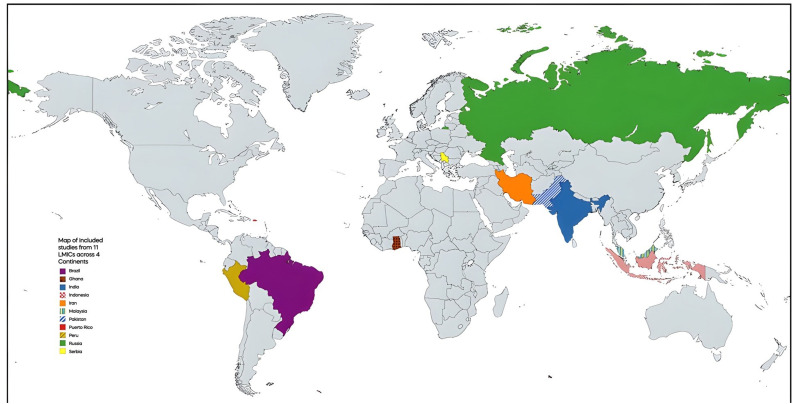
Purpose: Current management for clinically localized prostate cancer in low- and middle-income countries (LMICs) includes surgery, external beam radiation therapy (EBRT), and brachytherapy either alone or in combination, with plus or minus hormone therapy. The toxicity profiles and oncological outcomes of these treatment modalities vary. This systematic review and meta-analysis aimed to determine the prevalence of treatment-related outcomes and toxicities for men diagnosed with localized prostate cancer in LMICs.
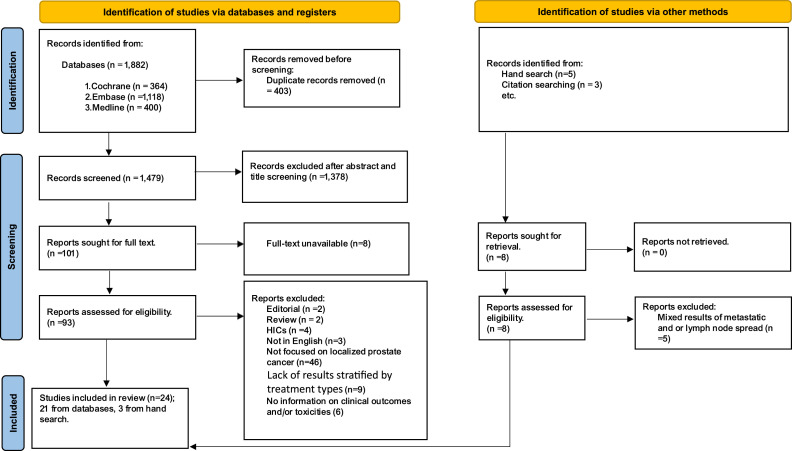
Methods and materials: The review was conducted based on the Preferred Reporting Items for Systematic Reviews and Meta-Analyses guidelines. Cochrane Library, Embase, and Medline were searched for eligible articles. Meta-analysis was performed with Review Manager version 5.4.1 using a random effects model at a 95% confidence interval.
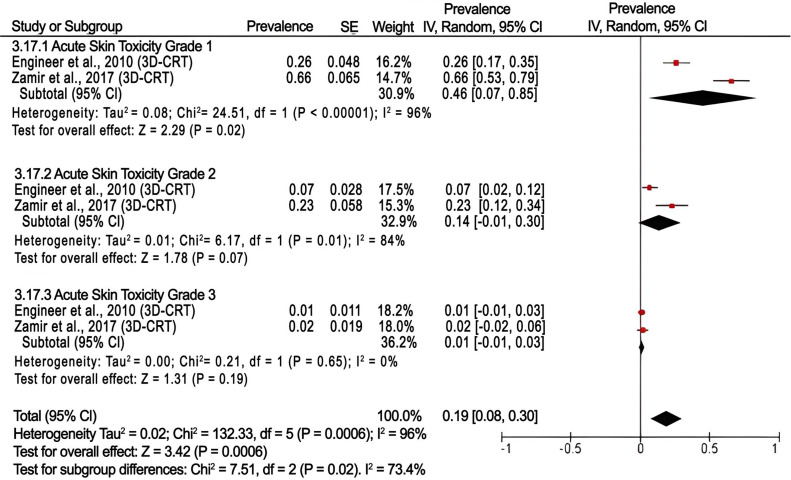
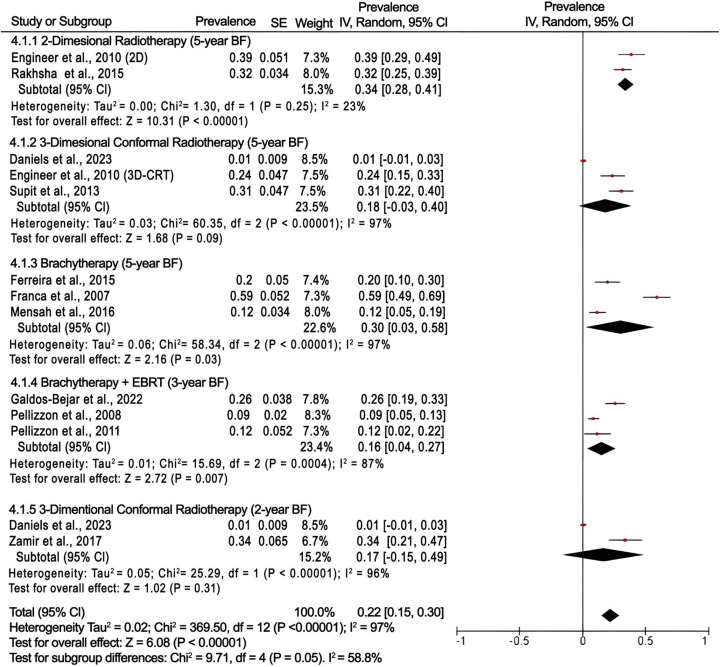
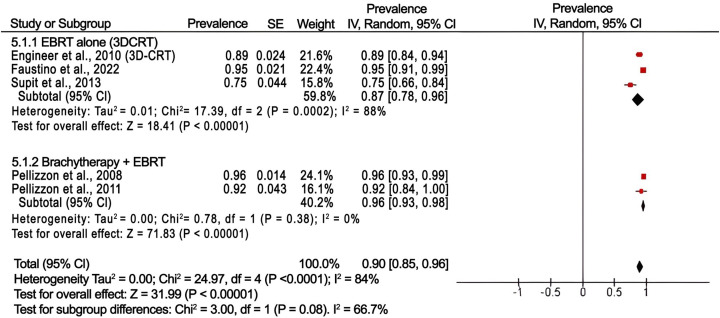
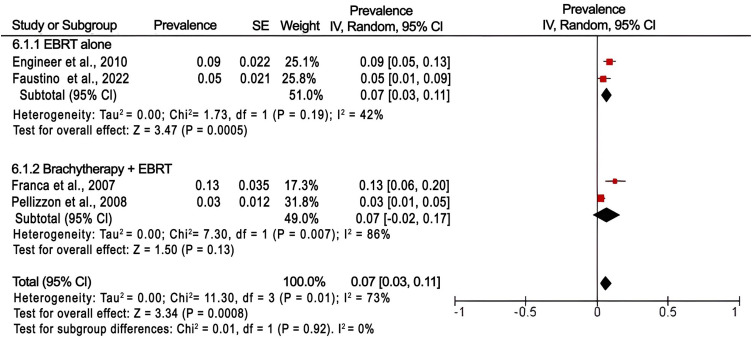
Results: A total of 2,820 patients were analyzed from 24 articles that met the inclusion criteria. Following 3-dimensional conformal radiation therapy (3D-CRT), the most common clinician-reported toxicities were acute skin grade 1, acute genitourinary grade 1, acute gastrointestinal grade 1, and late gastrointestinal grade 1, with 46%, 29%, 24%, and 18%, respectively. Acute and late genitourinary grade 3 and gastrointestinal grade 3 toxicities were below 3% with no grade 4 toxicities reported after 3D-CRT. In the brachytherapy group, the prevalence of acute genitourinary grade 1 toxicity was 19%. Perioperative rectal injury was the least prevalent (2%) after retropubic radical prostatectomy. Following 3D-CRT, the 5-year overall survival rate was 87%, and for the combined brachytherapy and EBRT group, it increased to 96%. The prevalence of 5-year biochemical failure following EBRT and brachytherapy was 18% and 30%, respectively. The 4- and 3-year biochemical failure after radical prostatectomy and combined EBRT with brachytherapy were 22% and 2%, respectively.
Conclusions: This systematic review and meta-analysis indicate that in LMICs, EBRT, brachytherapy, and radical prostatectomy, either alone or in combination has an excellent potential for localized prostate cancer control with low toxicities and good oncological outcomes. Results of treatment-related toxicities and outcomes can support policymakers, patients, and clinicians on informed decision-making to strengthen prostate cancer care in the region. However, efforts are required to improve early detection, treatment accessibility, regular post-treatment follow-up care, consistent quality assurance practices, and staff continues development to help minimize treatment toxicities and improve outcomes of localized prostate cancer in LMICs.
© 2024 The Author(s).
Conflict of interest statement
None.
Figures

References
-
- Sung H, Ferlay J, Siegel RL, et al. Global cancer statistics 2020: GLOBOCAN estimates of incidence and mortality worldwide for 36 cancers in 185 countries. CA Cancer J Clin. 2021;71:209–249. - PubMed
Publication types
LinkOut - more resources
Full Text Sources
Research Materials
Miscellaneous
