


Inter-city movement pattern of notifiable infectious diseases in China: a social network analysis
- PMID: 39759426
- PMCID: PMC11700286
- DOI: 10.1016/j.lanwpc.2024.101261
Inter-city movement pattern of notifiable infectious diseases in China: a social network analysis
Abstract
Background: Co-existence of efficient transportation networks and geographic imbalance of medical resources greatly facilitated inter-city migration of patients of infectious diseases in China.
Methods: To characterize the migration patterns of major notifiable infectious diseases (NIDs) during 2016-2020 in China, we collected migratory cases, who had illness onset in one city but were diagnosed and reported in another, from the National Notifiable Infectious Disease Reporting System, and conducted a nationwide network analysis of migratory cases of major NIDs at the city (prefecture) level.
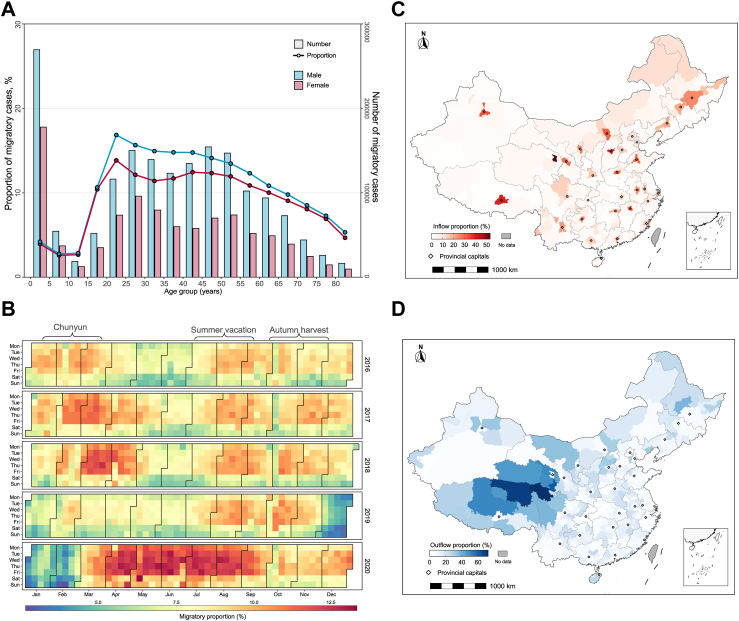
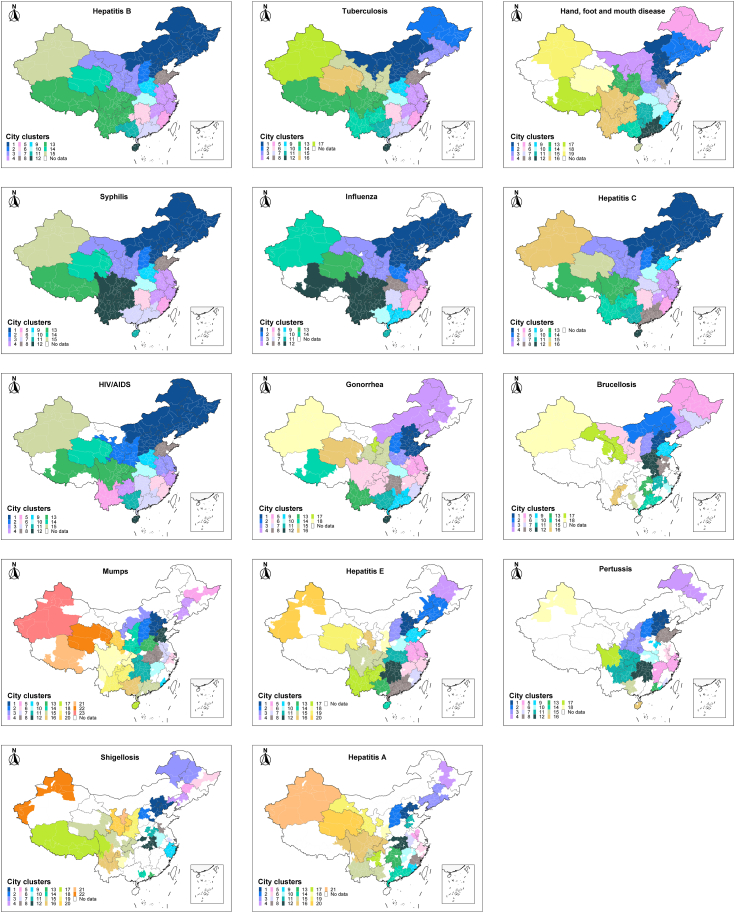
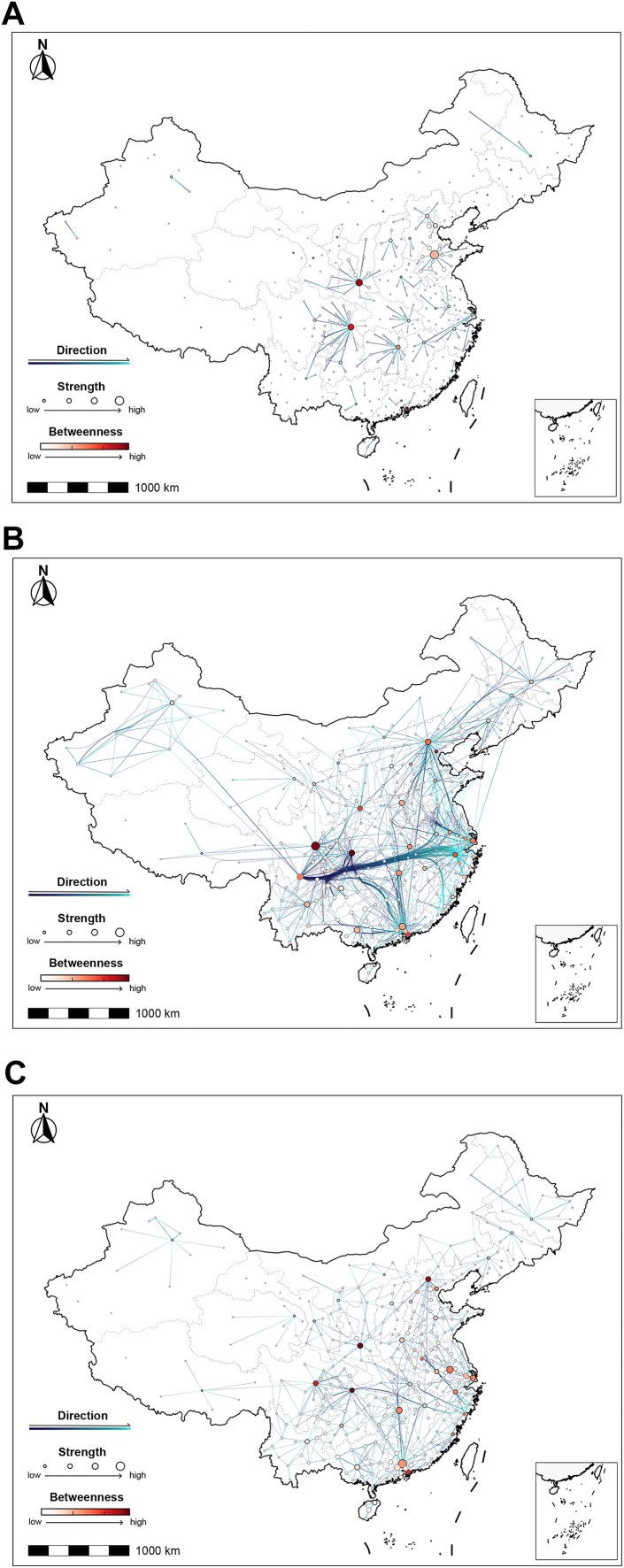
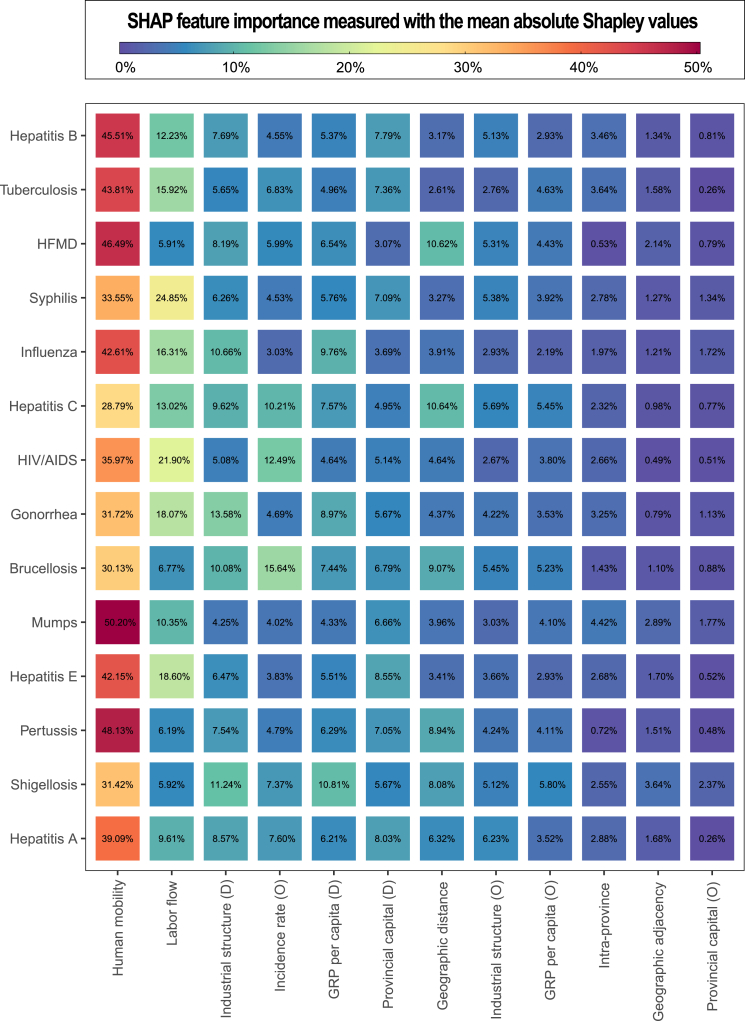
Findings: In total, 2,674,892 migratory cases of NIDs were reported in China during 2016-2020. The top five diseases with the most migratory cases were hepatitis B, tuberculosis, hand, foot and mouth disease (HFMD), syphilis, and influenza, accounting for 79% of all migratory cases. The top five diseases with the highest proportions of migratory cases were all zoonotic or vector-borne (37.89%‒99.98%). The network analysis on 14 major diseases identified three distinct migration patterns, where provincial capitals acted as key node cities: short distance (e.g., pertussis), long distance (e.g., HIV/AIDS), and mixed (e.g., HFMD). Strong drivers for patient migration include population mobility and labor flow intensities between cities as well as the economic development level of the destination city.
Interpretation: Collaborative prevention and control strategies should target cities experiencing frequent patient migration and cater to unique migration patterns of each disease. Addressing disparity in healthcare accessibility can also help alleviate case migration and thereby reduce cross-regional transmission.
Funding: National Key Research and Development Program of China.
Keywords: Disease migration; Human mobility; Network analysis.
© 2024 The Author(s).
Conflict of interest statement
Authors declare that they have no competing interests.
Figures
References
-
- Li B., National Health Commission of the PRC . 2013. Report on the prevention and control of infectious diseases and the implementation of the law on the prevention and control of infectious diseases.
-
- Duan C., Lyu L., Wang H., Xie D. From rural China to migrating China: rethinking migration transition in China. Popul Res. 2020;44(1):19–25.
-
- International Labour Organization . 2006. Internal labour migration in China: features and responses.
LinkOut - more resources
Full Text Sources
