


Use of the Hyperbaric Chamber Versus Conventional Treatment for the Prevention of Amputation in Chronic Diabetic Foot and the Influence on Fitting and Rehabilitation: A Systematic Review
- PMID: 39764384
- PMCID: PMC11703574
- DOI: 10.1155/ijvm/8450783
Use of the Hyperbaric Chamber Versus Conventional Treatment for the Prevention of Amputation in Chronic Diabetic Foot and the Influence on Fitting and Rehabilitation: A Systematic Review
Abstract
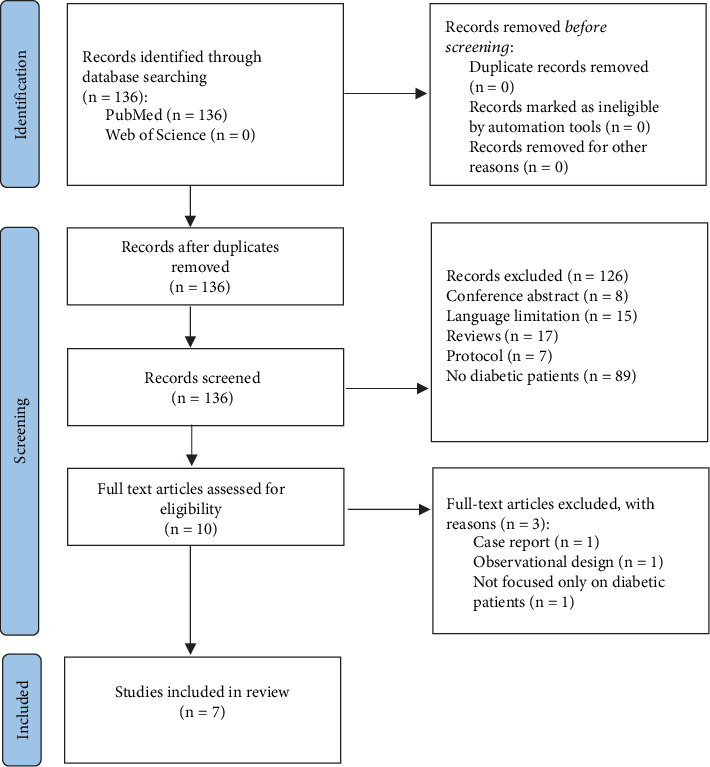
Diabetes mellitus (DM) is one of the most common chronic endocrine diseases, characterized by hyperglycemia, due to abnormal nitric oxide synthesis. The trend of an increase in the number of patients with DM continues. The medical and economic burden of DM is not only associated with hyperglycemia management but also with the management of DM-related complications. Most chronic DM-associated complications are vascular in nature. Thus, hyperbaric oxygen therapy (HBOT) can be used for primary and/or secondary prevention of vascular complications. This systematic review is aimed at providing an up-to-date analysis of the effects of HBOT in patients with diabetic foot ulcers (DFUs) on the prevention of amputation, fitting, and rehabilitation of amputees. The Preferred Reporting Items for Systematic Reviews and Meta-Analyses (PRISMA) guidelines were followed to conduct this systematic review. PubMed and Web of Science (WOS) database were employed in the search, which ended in November 2023. A risk of bias analysis was performed using the Evidence Project tool. After analyzing the records obtained, 10 studies were identified. However, seven fulfilled the inclusion criteria and were included in this systematic review. All included patients were over 18 years of age and had DM. The degree of DFU was assessed with the Wagner scale, being between 2 and 4, and the age of previous treatment of these DFU was taken into account. The results of the current systematic review showed that significant improvements can be achieved with HBOT when comparing its effects to those of the control group that followed usual care. Most studies included in the review showed positive results for DFU, amputation prevention, fitting, and rehabilitation of amputees. Therefore, the use of a hyperbaric chamber and standard care, as opposed to standard care alone, is favorable in patients with chronic DFUs. Promising and positive results were achieved for wound healing in DFU and the prevention of amputations.
Keywords: amputation; diabetic foot; hyperbaric oxygenation; rehabilitation.
Copyright © 2024 María Dolores Apolo-Arenas et al.
Conflict of interest statement
The authors declare no conflicts of interest.
Figures
References
-
- Abdou H. M., Hamaad F. A., Abd Elmageed G. M., Ghoneum M. H. Efficiency of Biobran/MGN-3, an arabinoxylan rice bran, in attenuating diabetes-induced cognitive impairment of the hippocampus via oxidative stress and IR/Akt/NF-κB in rats. Evidence‐Based Complementary and Alternative Medicine . 2023;2023(1) doi: 10.1155/2023/8248576.8248576 - DOI - PMC - PubMed
-
- Rosa M. Q. M., Rosa R. D. S., Correia M. G., Araujo D. V., Bahia L. R., Toscano C. M. Disease and economic burden of hospitalizations attributable to diabetes mellitus and its complications: a nationwide study in Brazil. International Journal of Environmental Research and Public Health . 2018;15(2):p. 294. doi: 10.3390/ijerph15020294. - DOI - PMC - PubMed
Publication types
LinkOut - more resources
Full Text Sources
