


User-Centred Design and Development of a Smartphone Application (OverSight) for Digital Phenotyping in Ophthalmology
- PMID: 39765977
- PMCID: PMC11675816
- DOI: 10.3390/healthcare12242550
User-Centred Design and Development of a Smartphone Application (OverSight) for Digital Phenotyping in Ophthalmology
Abstract
Background: Visual impairment can significantly impact an individual's daily activities. Patients require regular monitoring, typically occurring within hospital eye services. Capacity constraints have necessitated innovative solutions to improve patient care. Existing digital solutions rely on task-based digital home monitoring such as visual acuity testing. These require active involvement from patients and do not typically offer an indication of quality of life. Digital phenotyping refers to the use of personal digital devices to quantify passive behaviour for detecting clinically significant changes in vision and act as biomarkers for disease. Its uniqueness lies in the ability to detect changes passively. The objective was to co-design an accessible smartphone app (OverSight) for the purposes of digital phenotyping in people with sight impairment.
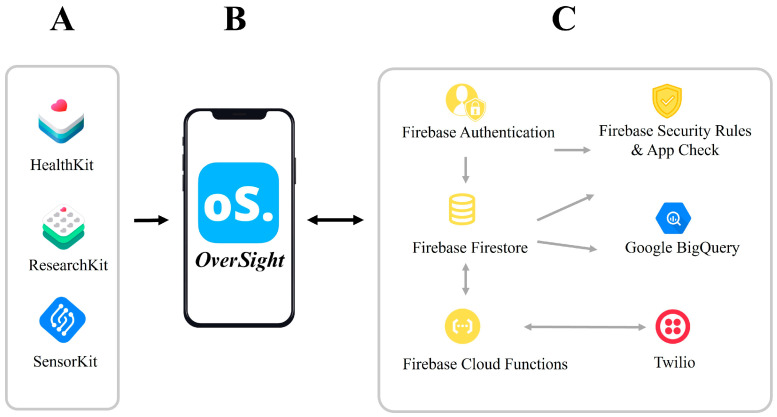
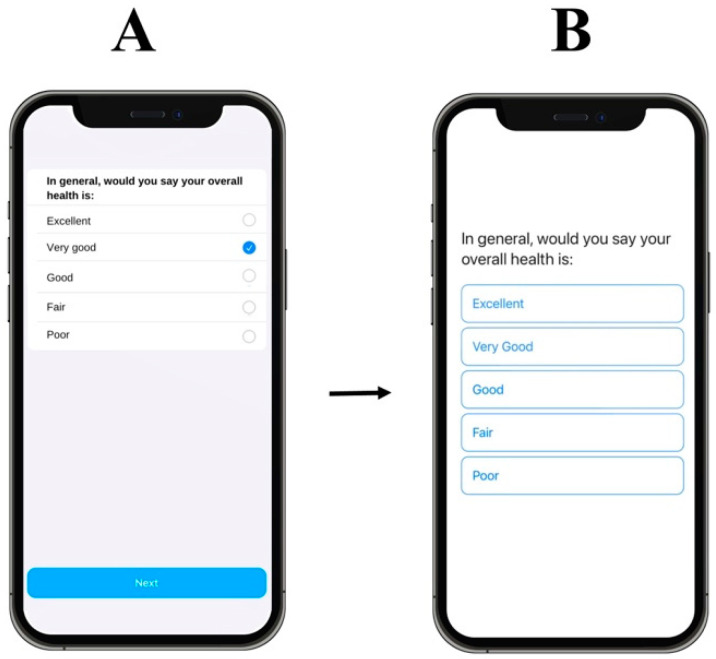
Methods: Development of OverSight included stakeholder consultations following principles of user-centred design. Apple iOS software frameworks (HealthKit, ResearchKit, and SensorKit) and a SwiftUI developer toolkit were used to enable the collection of active and passive data streams. Accessibility and usability were assessed using the System Usability Scale (SUS) and feedback following a 3-month pilot study. Consultations with patients informed the design of OverSight, including preferred survey scheduling and the relevancy of patient support resources.
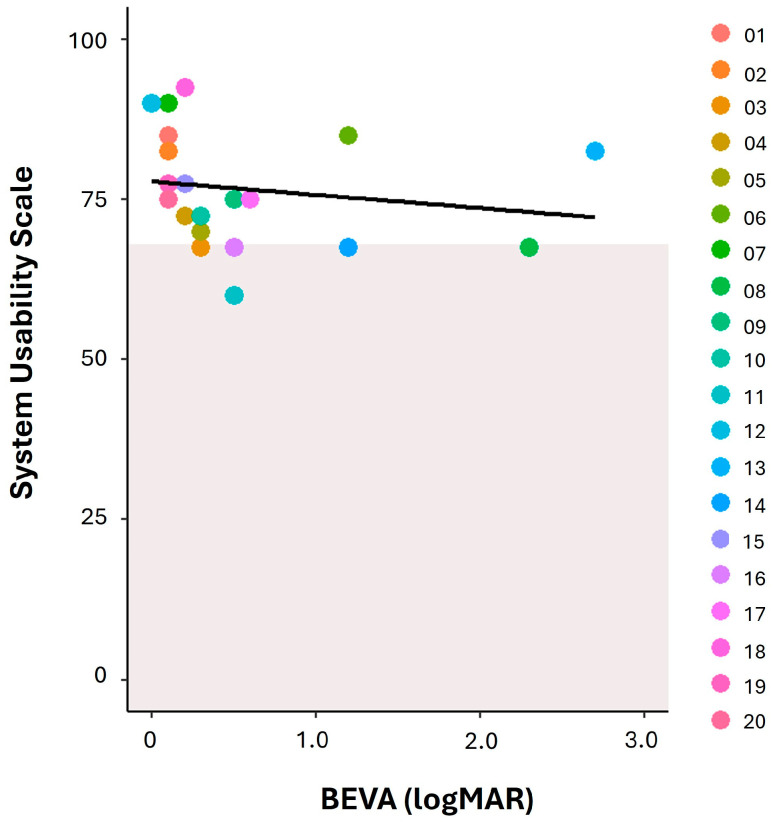
Results: Twenty visually impaired participants (mean age 42 ± 19 years) were recruited to the pilot study. The average score on the SUS was 76.8 (±8.9), indicating good usability. There was a statistically significant moderate negative correlation between SUS scores and visual acuity in both the better (r = -0.494; p ≤ 0.001) and worse eye (r = -0.421; p ≤ 0.001).
Conclusions: OverSight offers promising potential for collecting patient-generated health data for the purposes of digital phenotyping in patients with eye disease. Through further testing and validation, this novel approach to patient care may ultimately provide opportunities for remote monitoring in ophthalmology.
Keywords: digital health; digital phenotyping; ophthalmology; remote sensing; software development.
Conflict of interest statement
The authors declare no conflicts of interest.
Figures
References
-
- Bourne R., Steinmetz J.D., Flaxman S., Briant P.S., Taylor H.R., Resnikoff S., Casson R.J., Abdoli A., Abu-Gharbieh E., Afshin A., et al. Trends in prevalence of blindness and distance and near vision impairment over 30 years: An analysis for the Global Burden of Disease Study. Lancet Glob. Health. 2021;9:e130–e143. doi: 10.1016/S2214-109X(20)30425-3. - DOI - PMC - PubMed
-
- Langelaan M., De Boer M.R., Van Nispen R.M., Wouters B., Moll A.C., Van Rens G.H. Impact of visual impairment on quality of life: A comparison with quality of life in the general population and with other chronic conditions. Ophthalmic Epidemiol. 2007;14:119–126. doi: 10.1080/09286580601139212. - DOI - PubMed
-
- Jones N., Bartlett H.E., Cooke R. An analysis of the impact of visual impairment on activities of daily living and vision-related quality of life in a visually impaired adult population. Br. J. Vis. Impair. 2019;37:50–63. doi: 10.1177/0264619618814071. - DOI
Grants and funding
LinkOut - more resources
Full Text Sources
