


The Use and Benefits of Focused Shockwaves for the Diagnosis of Myofascial Pain Syndrome by Examining Myofascial Trigger Points in Low Back Pain
- PMID: 39767813
- PMCID: PMC11673203
- DOI: 10.3390/biomedicines12122909
The Use and Benefits of Focused Shockwaves for the Diagnosis of Myofascial Pain Syndrome by Examining Myofascial Trigger Points in Low Back Pain
Abstract
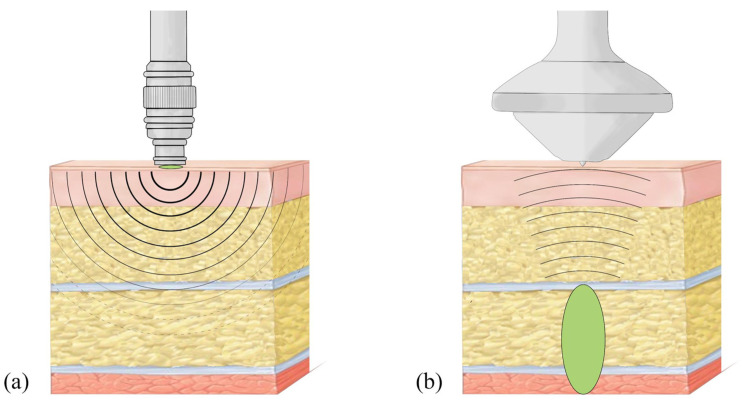
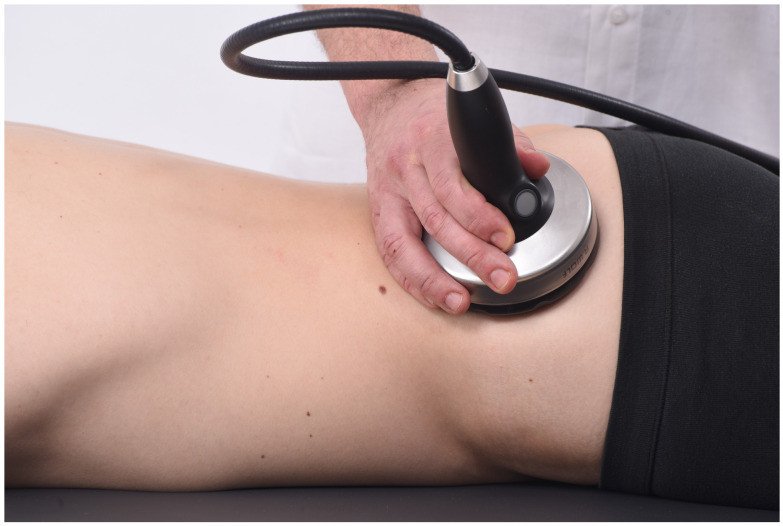
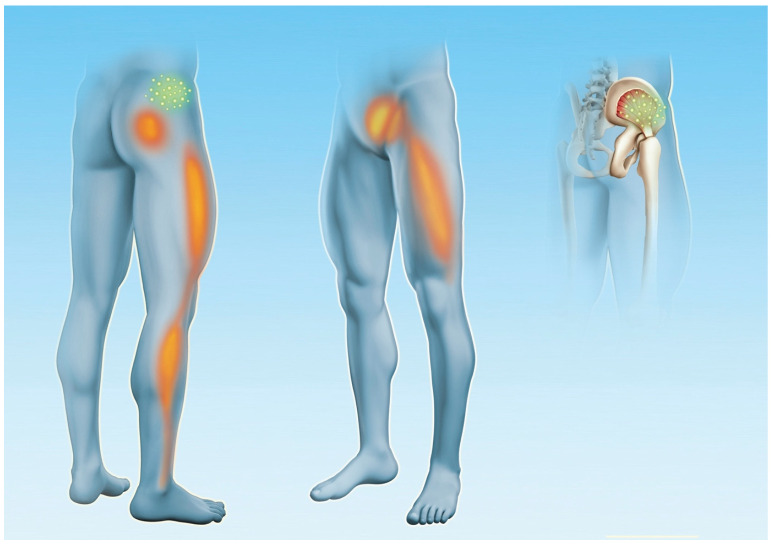
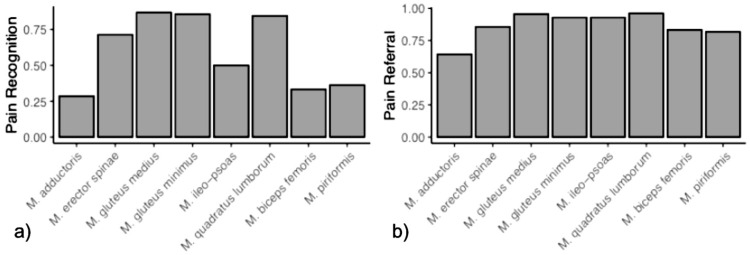
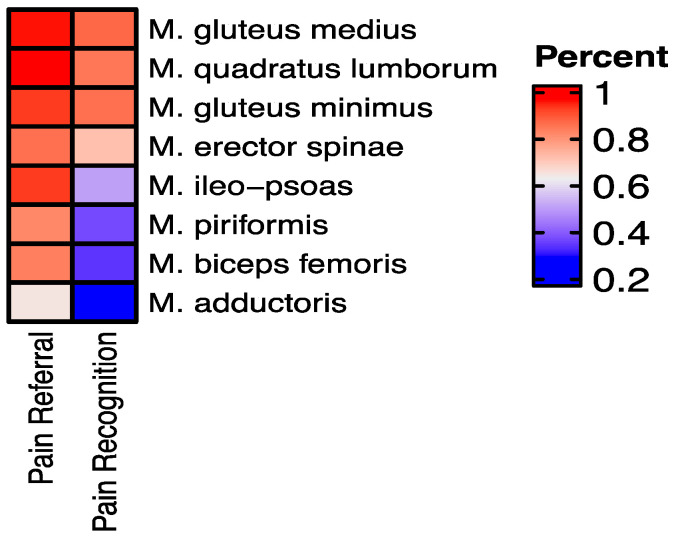
Background/Objectives: Low back pain (LBP) is a widespread public health issue, with myofascial pain syndrome (MPS) being a common cause, affecting 67-100% of patients. However, there are significant challenges in the diagnostic process due to the subjective and unreliable nature of manual palpation. Focused Extracorporeal Shockwave Therapy (F-ESWT), traditionally used for MPS treatment, offers a reproducible and non-invasive mechanical stimulus, making it a potential diagnostic tool. This study evaluated F-ESWT's diagnostic efficiency in chronic LBP patients by focusing on "recognition" and "referral" of pain. Methods: twenty-eight participants were screened for myofascial trigger points (MTrPs) in the lumbar, gluteal, and thigh regions. Identified MTrPs were stimulated using F-ESWT, and patient feedback was recorded. Results: data showed high diagnostic accuracy for muscles such as the quadratus lumborum, gluteus medius, and gluteus minimus muscles, achieving "referral" rates of 96%, 95%, and 92% and "recognition" rates of 84%, 86%, and 85%, respectively. Other structures like adductors, iliopsoas, erector spinae, and biceps femoris muscle showed consistent but lower diagnostic rates. Conclusions: the study's findings indicate that F-ESWT effectively reproduces pain patterns, offering a precise, reproducible, and non-invasive diagnostic approach for MPS in chronic LBP. However, they also highlight the necessity for detailed diagnostic criteria in managing myofascial pain.
Keywords: Extracorporeal Shockwave Therapy (ESWT); diagnosis; low back pain; myofascial pain syndrome; myofascial trigger points; pain.
Conflict of interest statement
The authors declare no conflicts of interest.
Figures
References
-
- Jun J.H., Park G.-Y., Chae C.S., Suh D.-C. The Effect of Extracorporeal Shock Wave Therapy on Pain Intensity and Neck Disability for Patients With Myofascial Pain Syndrome in the Neck and Shoulder: A Meta-Analysis of Randomized Controlled Trials. Am. J. Phys. Med. Rehabil. 2021;100:120–129. doi: 10.1097/PHM.0000000000001493. - DOI - PubMed
-
- Avendaño-López C., Megía-García Á., Beltran-Alacreu H., Serrano-Muñoz D., Arroyo-Fernández R., Comino-Suárez N., Avendaño-Coy J. Efficacy of Extracorporeal Shockwave Therapy on Pain and Function in Myofascial Pain Syndrome: A Systematic Review and Meta-analysis of Randomized Clinical Trials. Am. J. Phys. Med. Rehabil. 2024;103:89–98. doi: 10.1097/PHM.0000000000002286. - DOI - PubMed
LinkOut - more resources
Full Text Sources
Miscellaneous
