. 2024 Nov 28;11(12):1205.
doi: 10.3390/bioengineering11121205.

From Green Chemistry to Healthy Environments: Silver Nanoparticles as a Dual Antioxidant and Antibacterial Agents for Advancing Biomedicine and Sustainable Wastewater Treatment

Affiliations

From Green Chemistry to Healthy Environments: Silver Nanoparticles as a Dual Antioxidant and Antibacterial Agents for Advancing Biomedicine and Sustainable Wastewater Treatment

Hamza Moussa et al. Bioengineering (Basel). .

Abstract

The green synthesis of silver nanoparticles (AgNPs) using plant extracts is an eco-friendly method with potential for biomedical and environmental applications. This study aims to synthesize silver nanoparticles (SO-AgNPs) using Salvia officinalis L. extract and evaluate their antioxidant and antibacterial properties, positioning them as candidates for applications in sustainable biomedicine and wastewater treatment. S. officinalis L. extract was used to synthesize AgNPs under optimized conditions, with a 10% extract/AgNO₃ ratio and a reaction time of 180 min. The SO-AgNPs were characterized using ATR-FTIR, XRD, SEM, DLS, and Zeta potential analysis. The antioxidant activity of the extract and SO-AgNPs was evaluated using ABTS+• and DPPH radical scavenging assays. Antibacterial activity was tested against 11 bacterial strains and bacteria isolated from industrial effluent, with minimal inhibitory concentrations (MIC) determined for both the extract and SO-AgNPs. The SO-AgNPs demonstrated potent antioxidant activity, with IC₅₀ values of 0.233 mg/mL and 0.305 mg/mL in the ABTS+• assay, and 0.173 mg/mL and 0.185 mg/mL in the DPPH assay for the extract and SO-AgNPs, respectively. Antibacterial testing showed MIC values of 0.25 mg/mL for SO-AgNPs and between 3.12 and 6.25 mg/mL for S. officinalis L. extract against E. coli, P. aeruginosa, A. baumannii, MRSA, B. cereus, and S. epidermidis. For bacteria isolated from industrial effluent, the MIC values were 0.125 mg/mL for SO-AgNPs and 0.5 mg/mL for the extract. This study highlights the dual antioxidant and antibacterial capabilities of S. officinalis L. extract and SO-AgNPs, demonstrating their potential for use in both biomedical and environmental applications, including wastewater treatment.

Keywords: biological activities; green synthesis; silver nanoparticles; wastewater treatment.


Conflict of interest statement

The authors declare no conflict of interest.

Figures
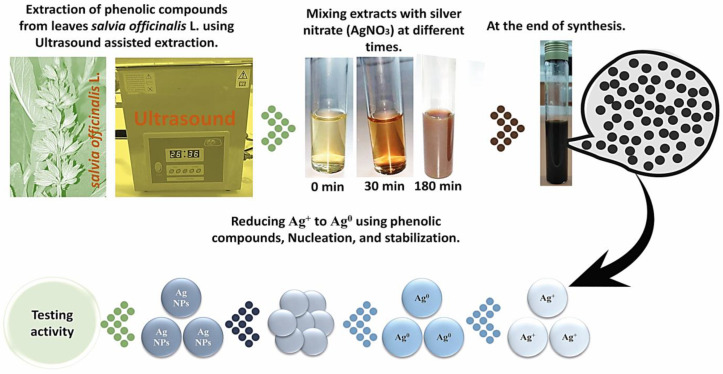
Figure 1
Figure 1
Biosynthesis of SO-AgNPs over time using S. officinalis L. extract.
Figure 2
Figure 2
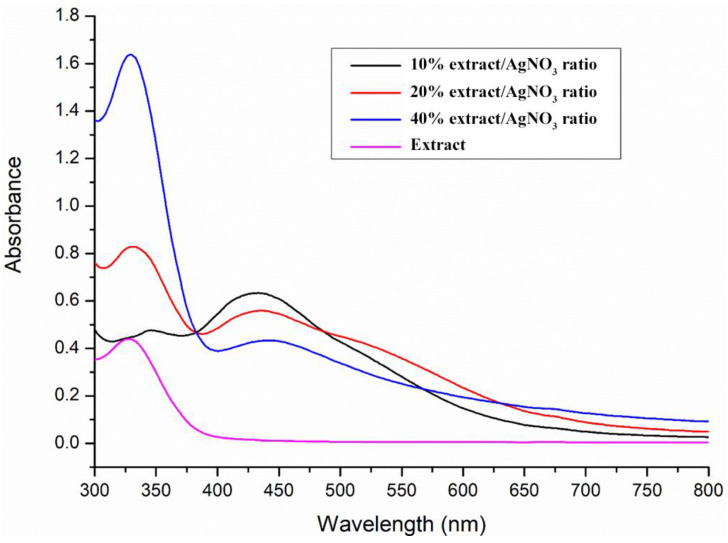
Extract/Silver nitrate ratio effect on the biosynthesis of SO-AgNPs at 180 min.
Figure 3
Figure 3
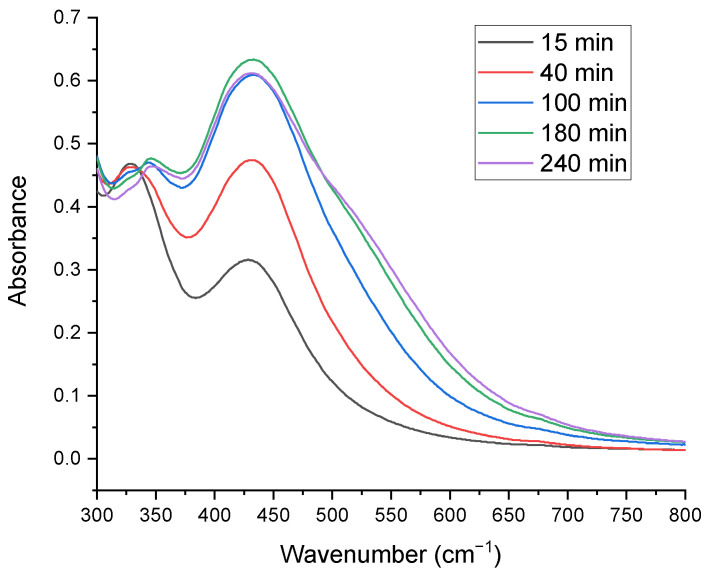
Time effect on the biosynthesis of SO-AgNPs using a 10% extract/AgNO3 ratio.
Figure 4
Figure 4
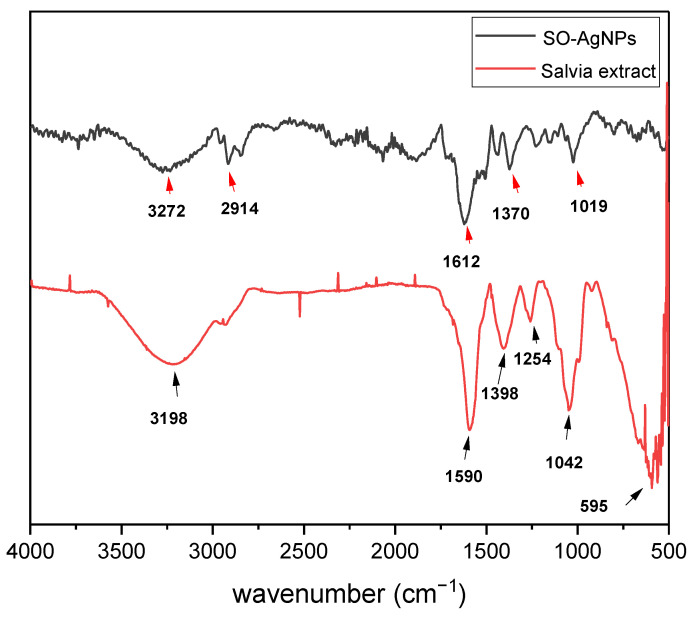
ATR-FTIR spectrum of Salvia extract and SO-AgNPs obtained under optimal conditions of synthesis.
Figure 5
Figure 5
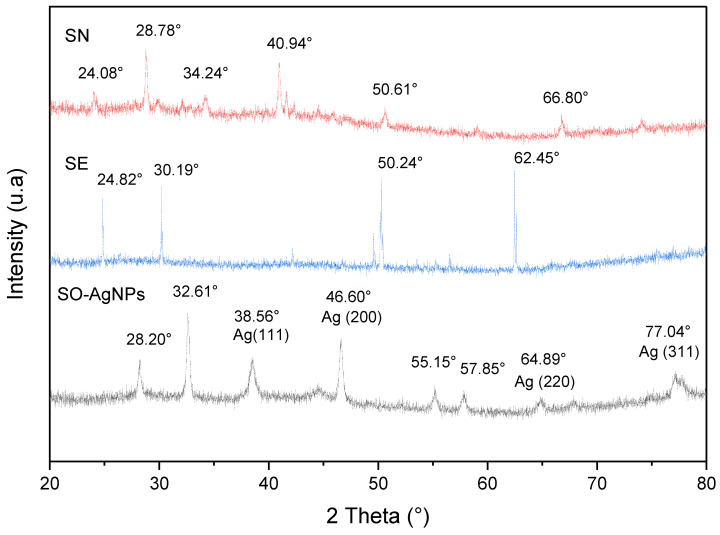
XRD pattern of SO-AgNPs, SN (Silver nitrate), and SE (Salvia extract) obtained under optimal conditions of synthesis.
Figure 6
Figure 6
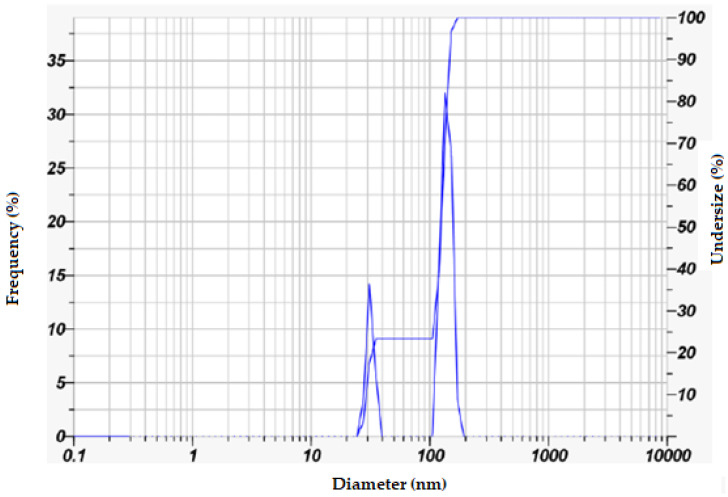
Zeta potential analysis of SO-AgNPs.
Figure 7
Figure 7
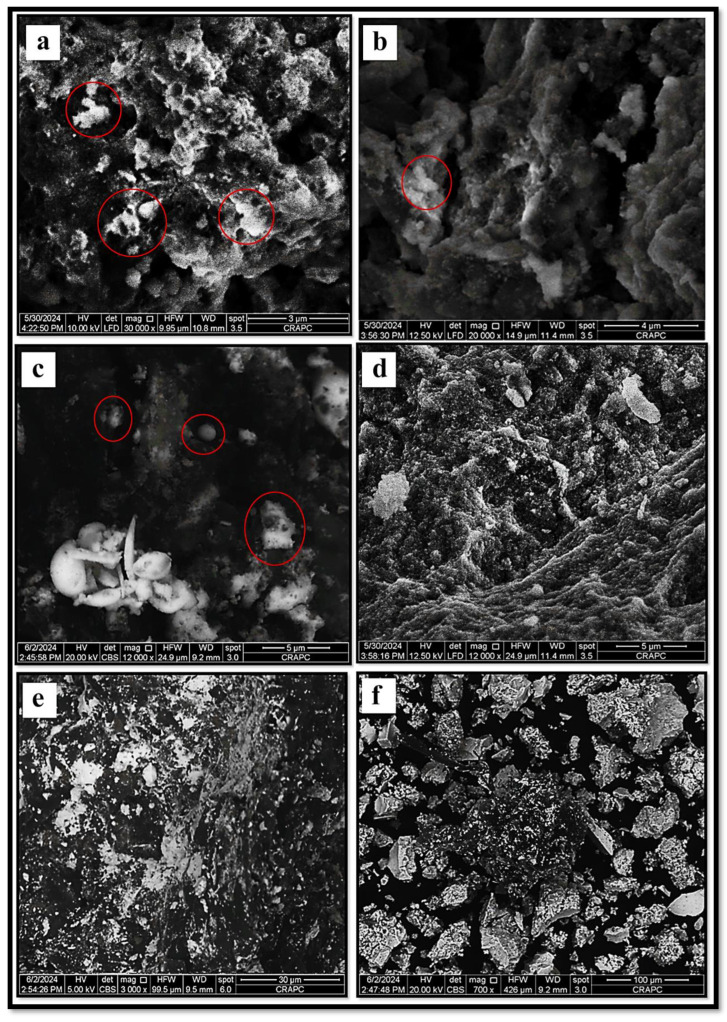
SEM microscopy micrographs of SO-AgNPs captured under varied imaging magnifications, (a) ×30,000, HFW: 9.95 μm, WD: 10.8 mm, (b) ×20,000, HFW: 14.9 μm, WD: 11.4 mm, (c) ×12,000, HFW: 24.9 μm, WD: 9.2 mm, (d) ×12,000, HFW: 24.9 μm, WD: 11.4 mm, (e) ×3000, HFW: 99.5 μm, WD: 9.5 mm, (f) ×700, HFW: 426.0 μm, WD: 9.2 mm. The red circles highlighting the SO-AgNPs at each magnification level.
Figure 8
Figure 8
Antioxidant activity of both S. officinalis L. extract and SO-AgNPs against DPPH (a) and ABTS+• (b) free radical.
Figure 9
Figure 9
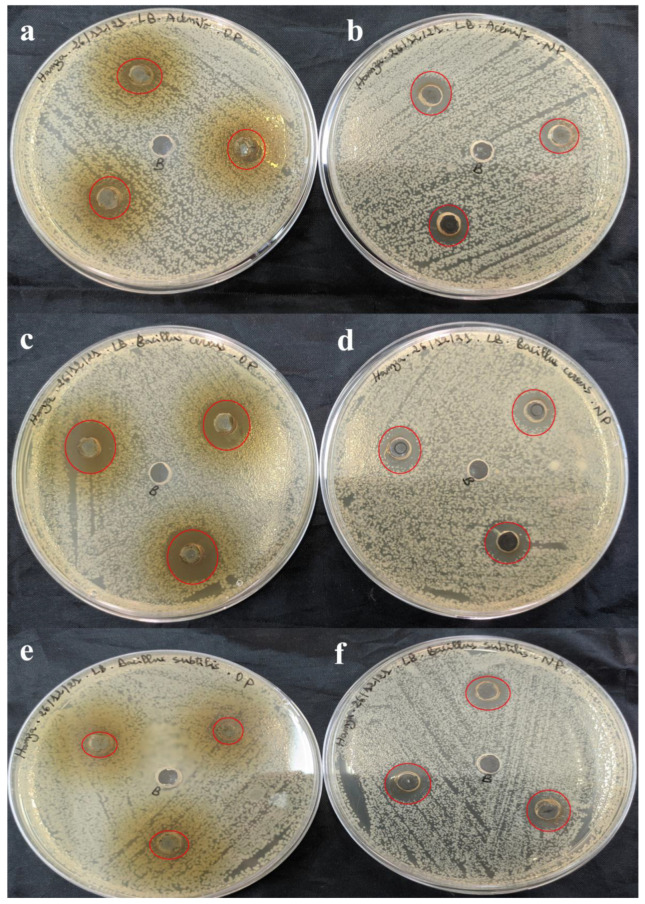
Antimicrobial activity of S. officinalis L. extract (a,c,e) and SO-AgNPs (b,d,f) against A. baumannii, B. cereus, and B. subtilis, respectively. The red circles indicate the zones of inhibition surrounding the tested samples and the negative control.
Figure 10
Figure 10
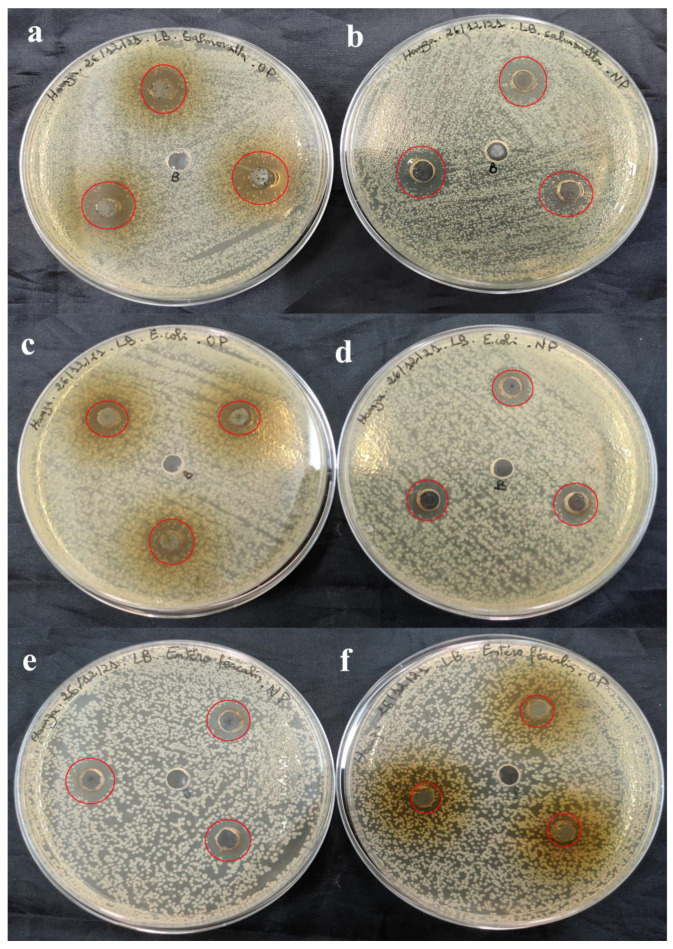
Antimicrobial activity of S. officinalis L. extract (a,c,f) and SO-AgNPs (b,d,e) against Salmonella spp., E. coli, and E. faecalis, respectively. The red circles indicate the zones of inhibition surrounding the tested samples and the negative control.
Figure 11
Figure 11
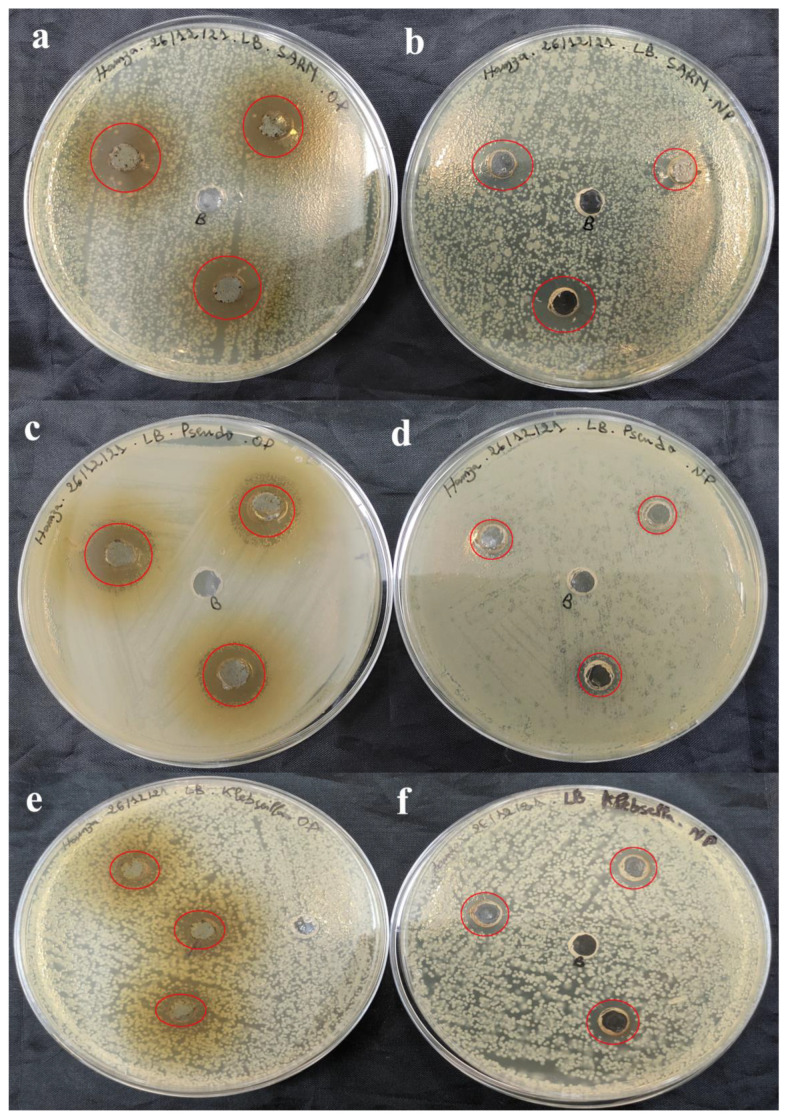
Antimicrobial activity of S. officinalis L. extract (a,c,e) and SO-AgNPs (b,d,f) against MRSA, P. aeruginosa, and K. pneumoniae, respectively. The red circles indicate the zones of inhibition surrounding the tested samples and the negative control.
Figure 12
Figure 12
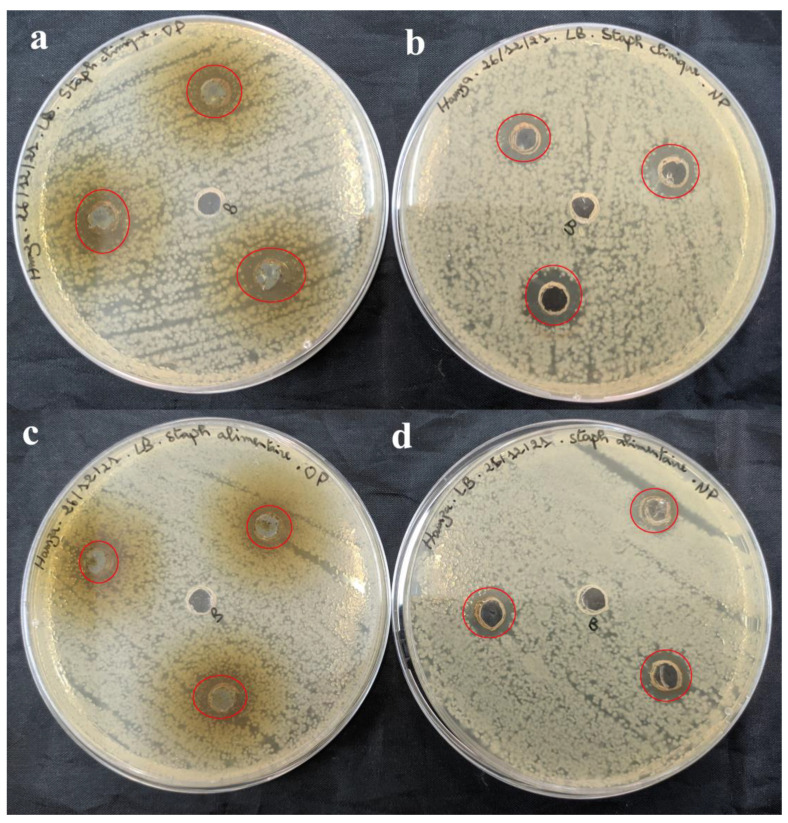
Antimicrobial activity of S. officinalis L. extract (a,c) and SO-AgNPs (b,d) against S. epidermidis, and S. aureus, respectively. The red circles indicate the zones of inhibition surrounding the tested samples and the negative control.
Figure 13
Figure 13
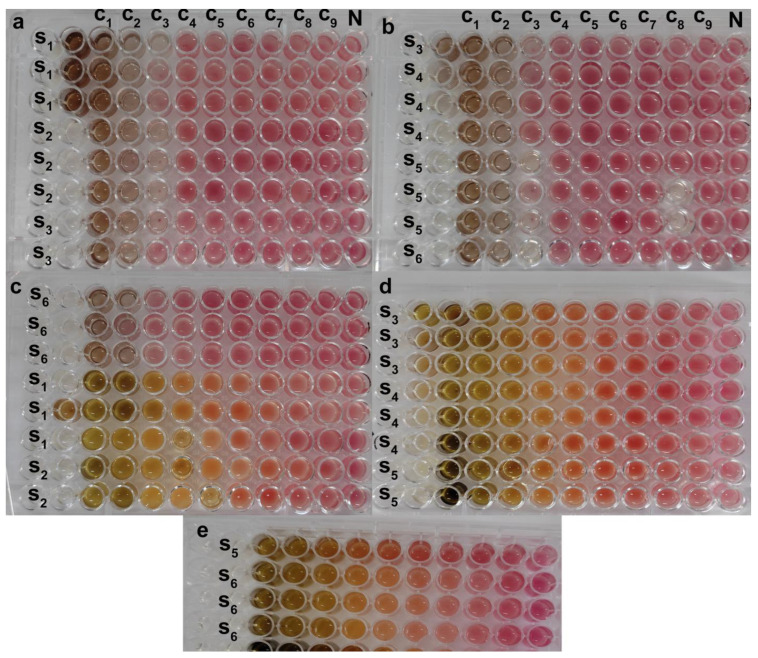
The MIC of SO-AgNps (ac (S6)) and Salvia extract (c S1-S2, d,e) using the tetrazolium red salt (TTC) colorimetric assay, C1–C9 are the concentration of salvia extract (25–0.976 mg/mL) and SO-AgNps (0.5–0.001 mg/mL), N is the negative control, S1 is E. coli, S2 is P. aeruginosa, S3 is A. baumannii, S4 is MRSA, S5 is B. cereus, S6 is S. epidermidis.

References

    1. Escarcega-Gonzalez C.E., Garza-Cervantes J.A., Vazquez-Rodriguez A., Montelongo-Peralta L.Z., Trevino-Gonzalez M.T., Diaz Barriga Castro E., Saucedo-Salazar E.M., Chavez Morales R.M., Regalado Soto D.I., Trevino Gonzalez F.M., et al. In vivo antimicrobial activity of silver nanoparticles produced via a green chemistry synthesis using Acacia rigidula as a reducing and capping agent. Int. J. Nanomed. 2018;13:2349–2363. doi: 10.2147/IJN.S160605. - DOI - PMC - PubMed
    1. Yin I.X., Zhang J., Zhao I.S., Mei M.L., Li Q., Chu C.H. The Antibacterial Mechanism of Silver Nanoparticles and Its Application in Dentistry. Int. J. Nanomed. 2020;15:2555–2562. doi: 10.2147/IJN.S246764. - DOI - PMC - PubMed
    1. Rafique M., Sadaf I., Rafique M.S., Tahir M.B. A review on green synthesis of silver nanoparticles and their applications. Artif. Cells Nanomed. Biotechnol. 2017;45:1272–1291. doi: 10.1080/21691401.2016.1241792. - DOI - PubMed
    1. Akdeniz E., Yakisik E., Rasouli Pirouzian H., Akkin S., Turan B., Tipigil E., Toker O.S., Ozcan O. Carob powder as cocoa substitute in milk and dark compound chocolate formulation. J. Food Sci. Technol. 2021;58:4558–4566. doi: 10.1007/s13197-020-04943-z. - DOI - PMC - PubMed
    1. Vijayaram S., Ghafarifarsani H., Vuppala S., Nedaei S., Mahendran K., Murugappan R., Chou C.-C. Selenium Nanoparticles: Revolutionizing Nutrient Enhancement in Aquaculture—A Review. Biol. Trace Elem. Res. 2024:1–12. doi: 10.1007/s12011-024-04172-x. - DOI - PubMed

LinkOut - more resources