


Comparative Analysis of Infusions and Ethanolic Extracts of Annona muricata Leaves from Colima, Mexico: Phytochemical Profile and Antioxidant Activity
- PMID: 39768408
- PMCID: PMC11677062
- DOI: 10.3390/life14121702
Comparative Analysis of Infusions and Ethanolic Extracts of Annona muricata Leaves from Colima, Mexico: Phytochemical Profile and Antioxidant Activity
Abstract
Background: Annona muricata L. (guanabana) leaves are rich in bioactive compounds with potential antioxidant properties. In the state of Colima, both ethanolic extracts and infusions are traditionally used in folk medicine to address various ailments. This study aimed to evaluate and compare the phytochemical composition and antioxidant activities of ethanolic extracts and infusions of A. muricata leaves from three geographic regions in Colima, Mexico, with a focus on how geographic origin affects their bioactive properties.
Methods: Ethanolic extracts and infusions were prepared from A. muricata leaves and analyzed using phytochemical screening; DPPH, total antioxidant capacity (TAC), and total phenolic content (TPC) measurements; and HPLC. TLC was also conducted to examine the presence of specific compounds, such as flavonoids and phenols.
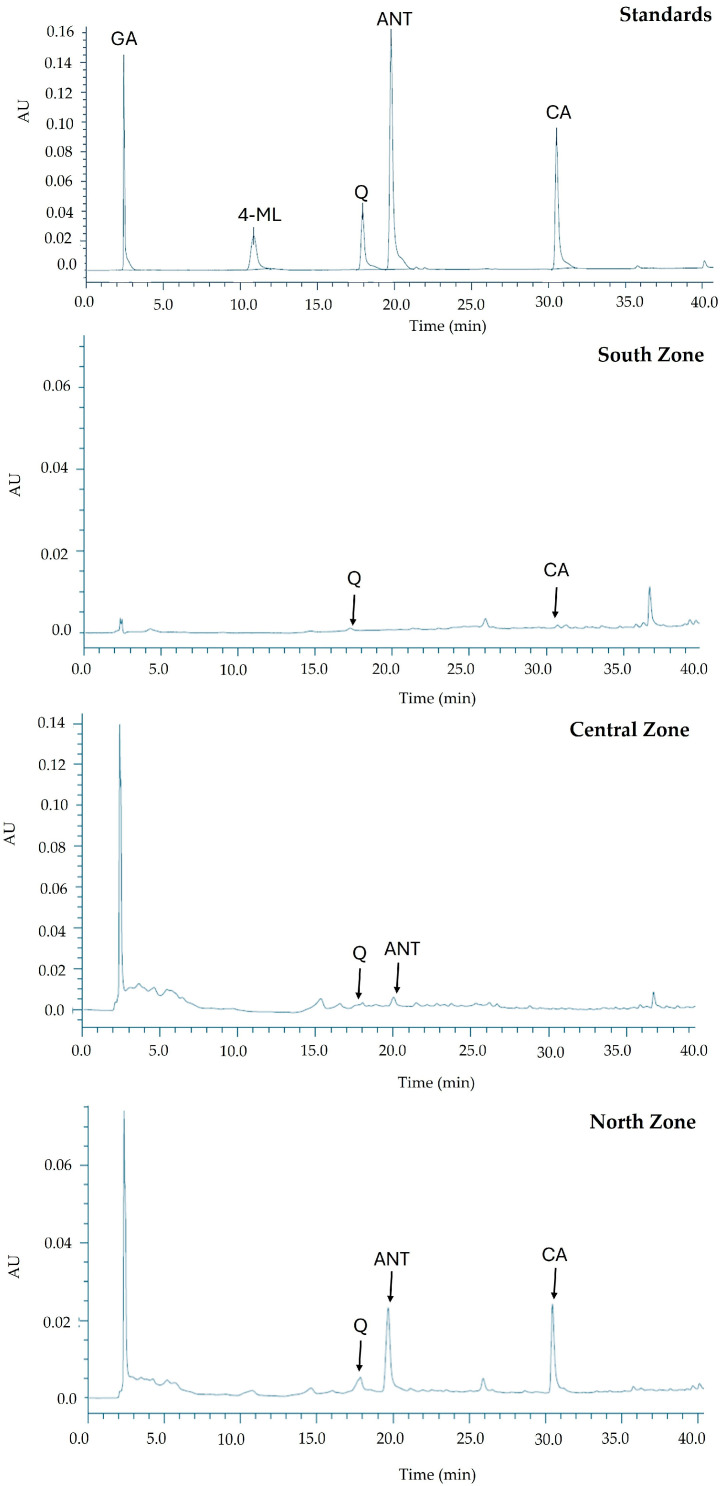
Results: Both the ethanolic extracts and infusions contained significant levels of alkaloids, flavonoids, tannins, and phenolic compounds. The infusions demonstrated superior antioxidant capacity, with DPPH inhibition values of 72.5%, 68.3%, and 65.1% in the northern, central, and southern regions, respectively, compared to the ethanolic extracts' values of 50.3%, 48.9%, and 45.0%. HPLC identified quercetin as a major compound across all samples. Geographically, the northern region exhibited higher concentrations of bioactive compounds, particularly total flavonoid content (TFC) and iron-reducing power (FRPA).
Conclusions: Both the ethanolic extracts and infusions of A. muricata leaves exhibited significant antioxidant properties, with the infusions showing superior performance. The results suggest that A. muricata infusions may have potential applications in managing oxidative stress-related diseases such as cancer and diabetes. Exploring their use in traditional medicine and employing this type of approach can help discern the metabolite profile responsible for these bioactivities. Geographic factors influence the bioactive profile of the plant, and further research is needed to isolate specific bioactive compounds and elucidate their therapeutic mechanisms.
Keywords: Annona muricata; antioxidant activity; flavonoids; phytochemistry; polyphenols; traditional medicine.
Conflict of interest statement
The authors declare no conflicts of interest.
Figures
References
-
- Zubaidi S.N., Mohd Nani H., Ahmad Kamal M.S., Abdul Qayyum T., Maarof S., Afzan A., Mohmad Misnan N., Hamezah H.S., Baharum S.N., Mediani A. Annona muricata: Comprehensive Review on the Ethnomedicinal, Phytochemistry, and Pharmacological Aspects Focusing on Antidiabetic Properties. Life. 2023;13:353. doi: 10.3390/life13020353. - DOI - PMC - PubMed
-
- Rady I., Bloch M.B., Chamcheu R.-C.N., Banang Mbeumi S., Anwar M.R., Mohamed H., Babatunde A.S., Kuiate J.-R., Noubissi F.K., El Sayed K.A., et al. Anticancer Properties of Graviola (Annona muricata: A Comprehensive Mechanistic Review. Oxid. Med. Cell Longev. 2018;2018:1826170. doi: 10.1155/2018/1826170. - DOI - PMC - PubMed
-
- Hernández Fuentes L.M., Montalvo González E., García Magaña M.d.L., Anaya Esparza L.M., Nolasco González Y., Villagrán Z., González Torres S., Velázquez Monreal J.J., Morelos Flores D.A. Current Situation and Perspectives of Fruit Annonaceae in Mexico: Biological and Agronomic Importance and Bioactive Properties. Plants. 2021;11:7. doi: 10.3390/plants11010007. - DOI - PMC - PubMed
Grants and funding
LinkOut - more resources
Full Text Sources
