


Urtica dioica L. Leaf Extract Dose-Dependently Modulates Oxidative Stress in the Kidney and Exerts Anti-Fibrotic and Anti-Inflammatory Properties by the Molecular Mechanisms Independent of NRF-2 Signalization Mirroring the Effects of Losartan in SHR
- PMID: 39769037
- PMCID: PMC11678458
- DOI: 10.3390/ijms252413272
Urtica dioica L. Leaf Extract Dose-Dependently Modulates Oxidative Stress in the Kidney and Exerts Anti-Fibrotic and Anti-Inflammatory Properties by the Molecular Mechanisms Independent of NRF-2 Signalization Mirroring the Effects of Losartan in SHR
Abstract
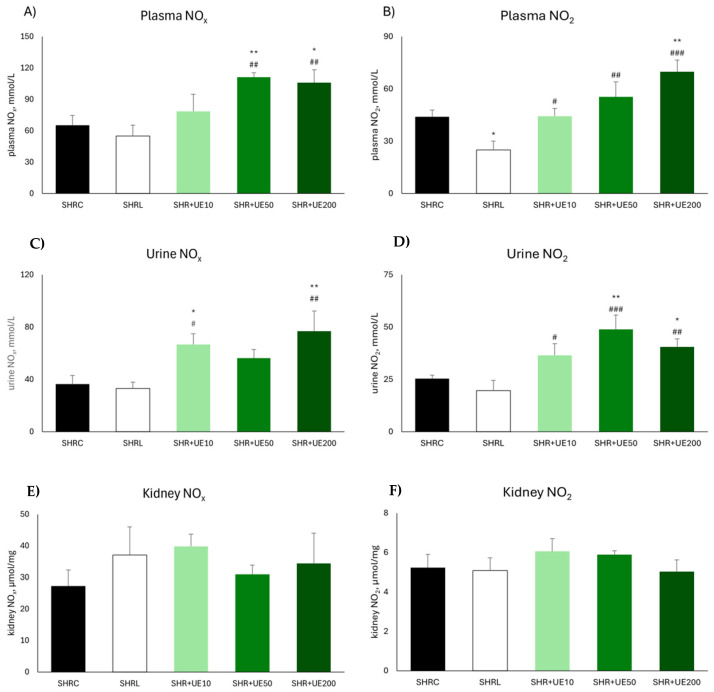
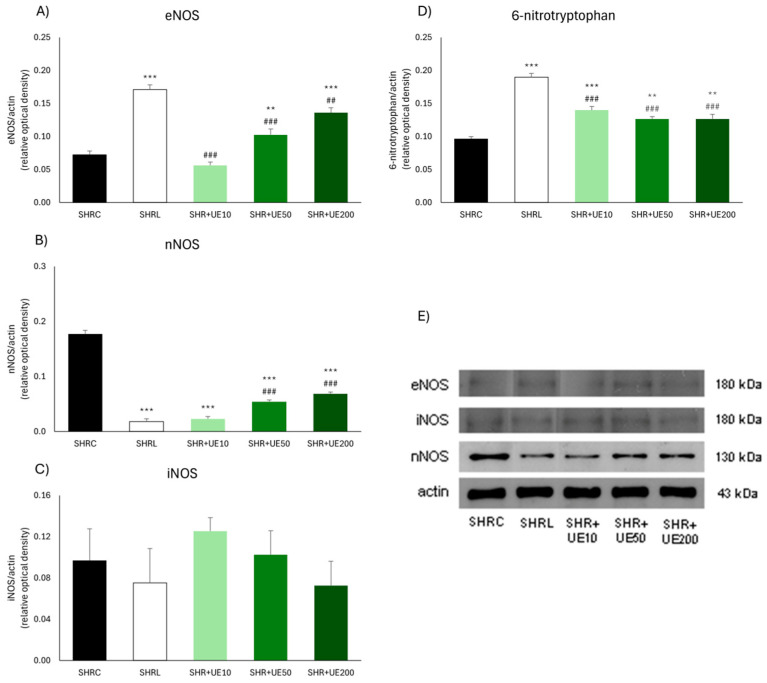
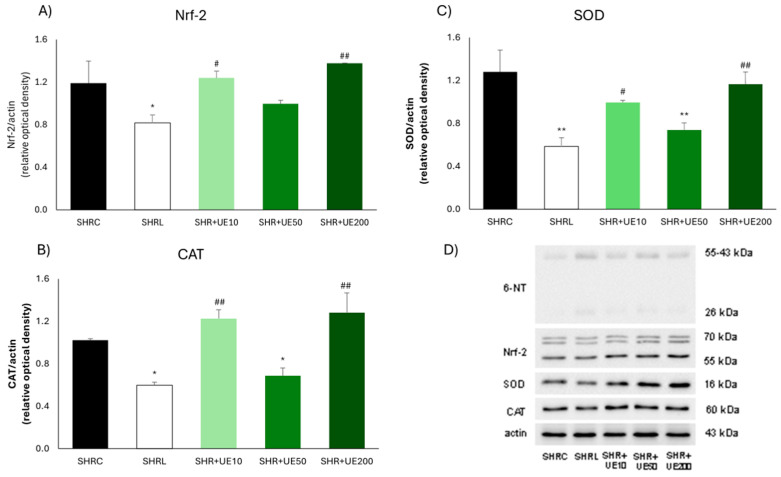
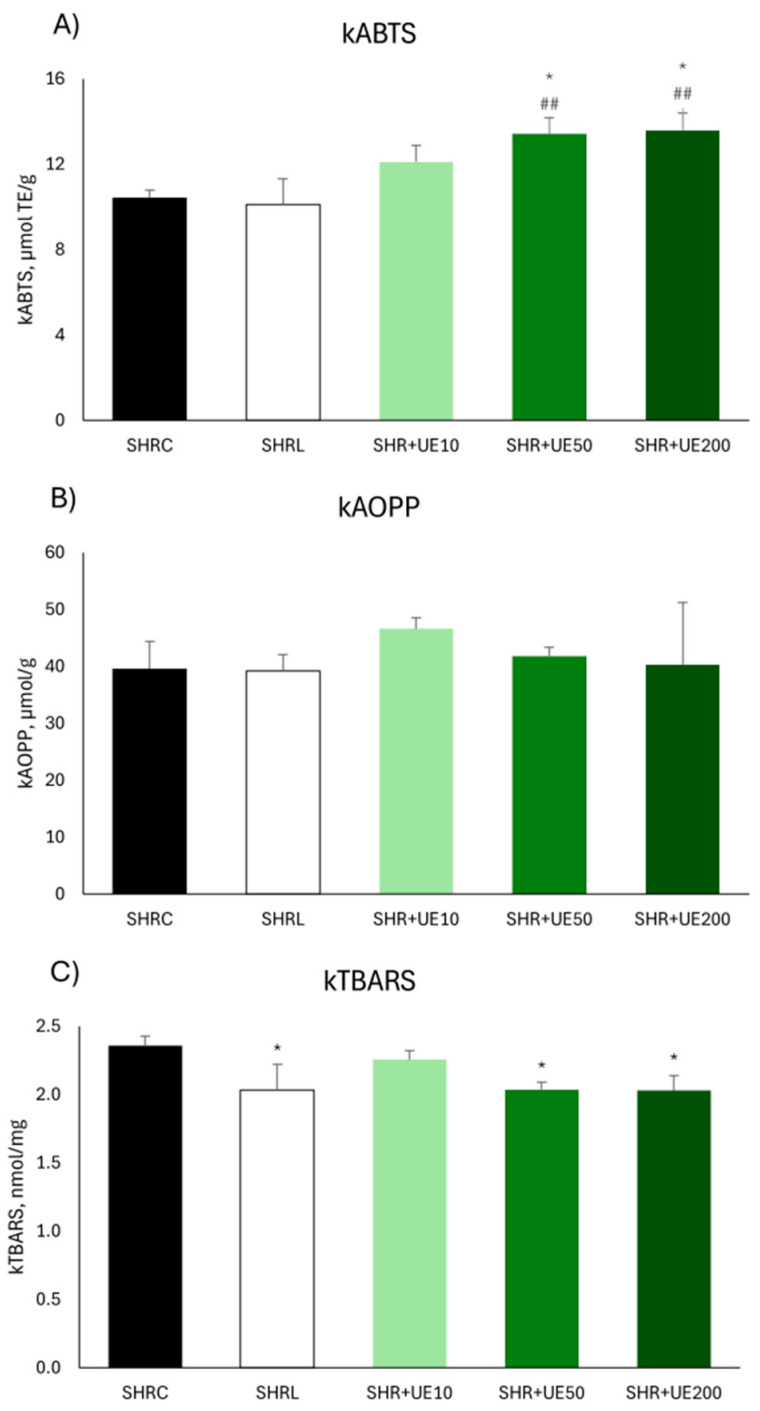
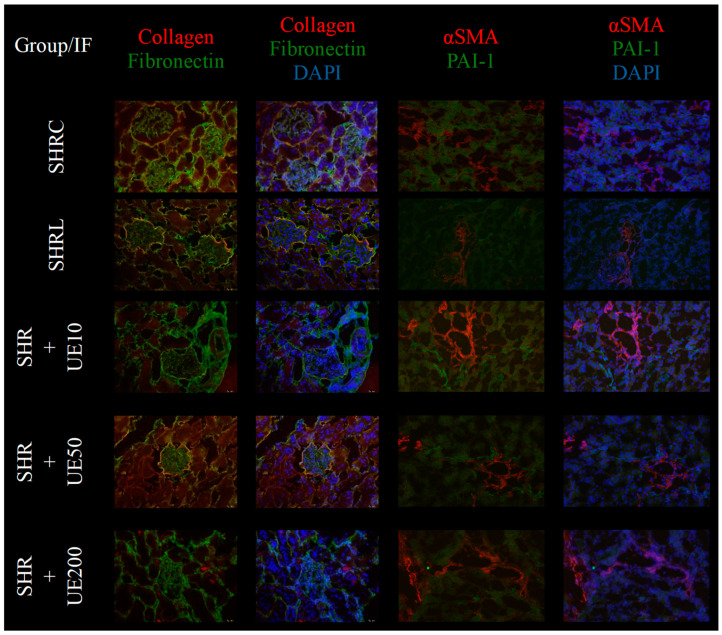
Previously, we confirmed systemic antihypertensive and antioxidant properties of Urtica dioica L. leaf extract (UE) in spontaneously hypertensive rats (SHR). Here, we aimed to evaluate whether UE can alter the NO and Nrf-2 signaling to prevent local oxidative stress and kidney damage in the model of essential hypertension. SHR were divided into five groups: SHRC-control, received 0.5 mL/day of water, SHR+L received 10 mg/kg/day of losartan, SHR+UE10, SHR+UE50, and SHR+UE200 received 10, 50, and 200 mg/kg/day during next 4 weeks. At the end of the experiment, urine samples were collected for albuminuria and nitrate/nitrite assessment. Mean arterial pressure (MAP) was measured, and blood samples were collected for plasma creatinine evaluation. Kidneys were analyzed for nitrate/nitrite, oxidative stress, and target molecules by biochemical, Western blot, and immunofluorescent techniques. Losartan and UE50 significantly reduced MAP, albuminuria, oxidative stress, fibroinflammatory markers, and NRF-2/CAT/SOD signaling, with a significant increase in 6-nitrotryptophan and eNOS expressions compared to control. The effects of UE showed dose dependence. Beneficial effects of UE and losartan were independent of NRF-2 signalization in SHR. Interestingly, all treatments induced the increase in 6-nitrotryptophan expression, thus further studies are needed to elucidate the mechanisms of such nitrated tryptophan.
Keywords: Nrf-2 signaling; Urtica dioica L.; collagen; fibronectin; hypertension; kidney; nitric oxide; nitro-tryptophan; oxidative stress; plasminogen activator inhibitor 1.
Conflict of interest statement
The authors declare no conflict of interest.
Figures
References
-
- Kodavanti U.P., Schladweiler M.C., Ledbetter A.D., Watkinson W.P., Campen M.J., Winsett D.W., Richards J.R., Crissman K.M., Hatch G.E., Costa D.L. The spontaneously hypertensive rat as a model of human cardiovascular disease: Evidence of exacerbated cardiopulmonary injury and oxidative stress from inhaled emission particulate matter. Toxicol. Appl. Pharmacol. 2000;164:250–263. doi: 10.1006/taap.2000.8899. - DOI - PubMed
-
- Mihailović-Stanojević N., Varagić J., Jovović D., Miloradović Z., Marković-Lipkovski J., Jerkić M. Aging and hypertension as factors of progressive renal failure. Med. Pregl. 2003;56((Suppl. S1)):59–64. - PubMed
-
- Chien S.-J., Lin K.-M., Kuo H.-C., Huang C.-F., Lin Y.-J., Huang L.-T., Tain Y.-L. Two different approaches to restore renal nitric oxide and prevent hypertension in young spontaneously hypertensive rats: L-citrulline and nitrate. Transl. Res. 2014;163:43–52. doi: 10.1016/j.trsl.2013.09.008. - DOI - PubMed
-
- Hermann M., Flammer A., Lüscher T.F. Nitric Oxide in Hypertension. [(accessed on 1 November 2024)];Clin. Hypertens. 2006 8:17–29. doi: 10.1111/j.1524-6175.2006.06032.x. Available online: https://onlinelibrary.wiley.com/doi/pdf/10.1111/j.1524-6175.2006.06032.x. - DOI - PMC - PubMed
MeSH terms
Substances
Grants and funding
LinkOut - more resources
Full Text Sources
Miscellaneous
