


The Association of Blood Eosinophils and Neutrophils Expressing Eosinophilic Surface Markers with the Severity and Outcome of COVID-19
- PMID: 39770705
- PMCID: PMC11727756
- DOI: 10.3390/microorganisms12122503
The Association of Blood Eosinophils and Neutrophils Expressing Eosinophilic Surface Markers with the Severity and Outcome of COVID-19
Abstract
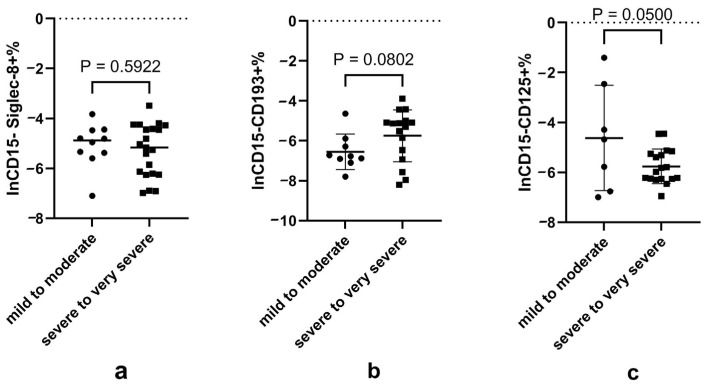
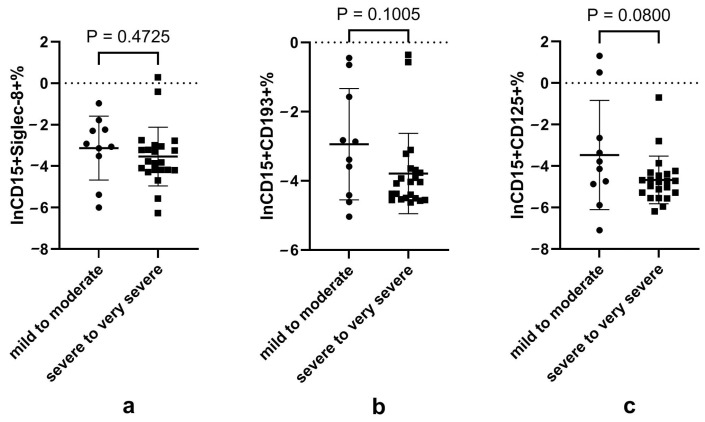
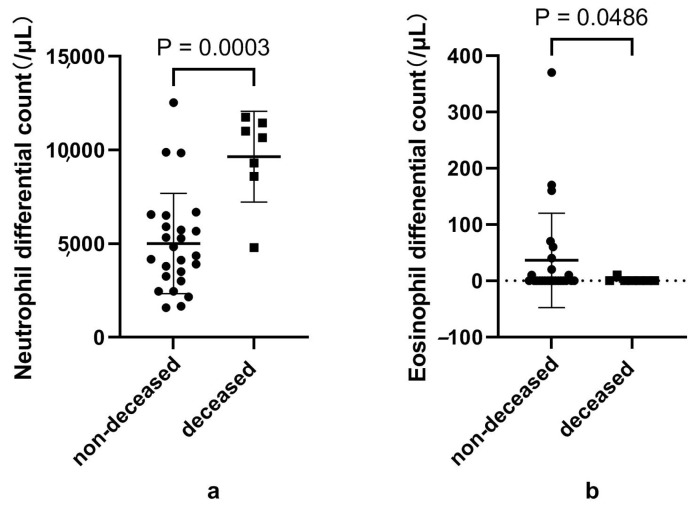
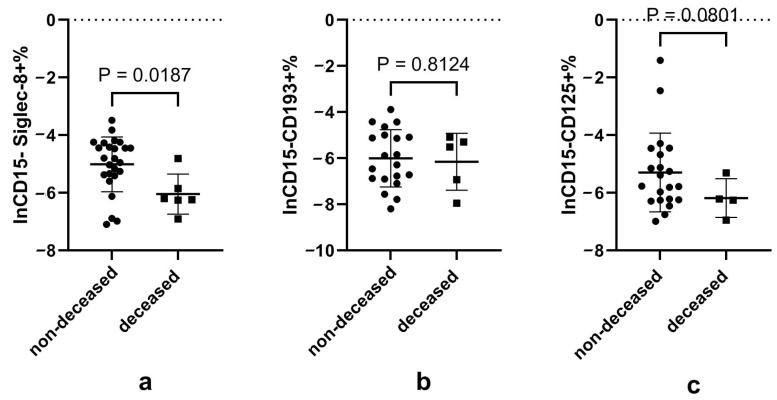
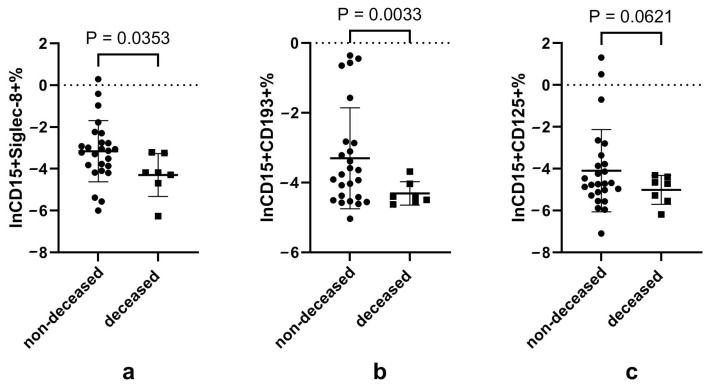
(1) Background: The implication of type 2 (T2) inflammatory response in COVID-19 remains controversial. This study aimed to evaluate the association of eosinophils, neutrophils expressing eosinophilic surface markers and T2 cytokines with the severity and outcome of COVID-19. (2) Methods: Patients who were admitted to hospital due to COVID-19 from 18 December 2022 to 31 January 2023 were enrolled. Peripheral blood WBC and differentials, T2 cellular markers (subsets of eosinophils and neutrophils expressing eosinophilic surface markers) and cytokines at admission were measured and compared between subjects with different disease severities and outcomes. (3) Results: Ten mild-to-moderate and 22 severe-to-very severe cases were enrolled for analysis. Of these patients, seven died of severe-to-very severe disease. The severe-to-very severe patients showed a higher number of neutrophils, but lower numbers of eosinophils, lymphocytes cells and neutrophils expressing eosinophilic surface markers. Similarly, deceased cases were also characterized by increased neutrophils, but decreased eosinophils and neutrophils expressing eosinophilic surface markers. The levels of T2 cytokines failed to demonstrate a significant correlation with the severity or outcome of COVID-19. (4) Conclusions: Eosinophils and neutrophils expressing eosinophilic surface markers were associated with milder disease and better outcomes of COVID-19, suggesting that a T2 inflammatory response may confer a potential protective effect against the disease.
Keywords: COVID-19; eosinophilic surface markers; eosinophils; neutrophils.
Conflict of interest statement
The authors declare no conflicts of interest.
Figures
References
-
- Qin R., He L., Yang Z., Jia N., Chen R., Xie J., Fu W., Chen H., Lin X., Huang R., et al. Identification of Parameters Representative of Immune Dysfunction in Patients with Severe and Fatal COVID-19 Infection: A Systematic Review and Meta-Analysis. Clin. Rev. Allergy Immunol. 2022;64:33–65. doi: 10.1007/s12016-021-08908-8. - DOI - PMC - PubMed
-
- Zhu Z., Cai J., Tang Q., Mo Y.Y., Deng T., Zhang X., Xu K., Wu B., Tang H., Zhang Z. Circulating eosinophils associated with responsiveness to COVID-19 vaccine and the disease severity in patients with SARS-CoV-2 omicron variant infection. BMC Pulm. Med. 2023;23:177. doi: 10.1186/s12890-023-02473-w. - DOI - PMC - PubMed
-
- Rutkowska E., Kwiecień I., Pietruszka-Wałęka E., Więsik-Szewczyk E., Rzepecki P., Jahnz-Różyk K. Analysis of Leukocyte Subpopulations by Flow Cytometry during Hospitalization Depending on the Severity of COVID-19 Course. Biomedicines. 2023;11:2728. doi: 10.3390/biomedicines11102728. - DOI - PMC - PubMed
Grants and funding
LinkOut - more resources
Full Text Sources
