


A Meal with Ultra-Processed Foods Leads to a Faster Rate of Intake and to a Lesser Decrease in the Capacity to Eat When Compared to a Similar, Matched Meal Without Ultra-Processed Foods
- PMID: 39771019
- PMCID: PMC11676177
- DOI: 10.3390/nu16244398
A Meal with Ultra-Processed Foods Leads to a Faster Rate of Intake and to a Lesser Decrease in the Capacity to Eat When Compared to a Similar, Matched Meal Without Ultra-Processed Foods
Abstract
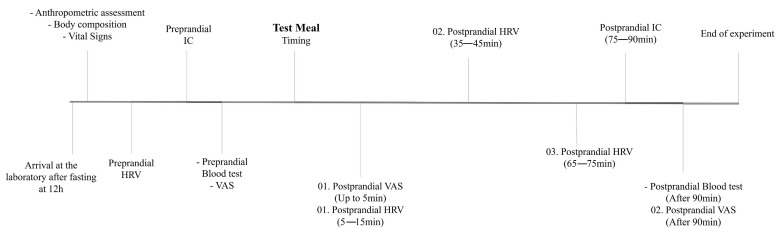
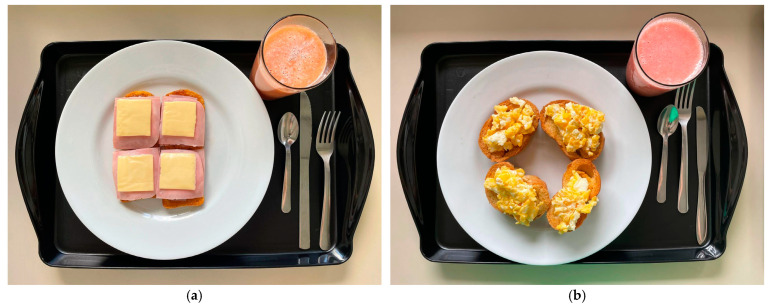
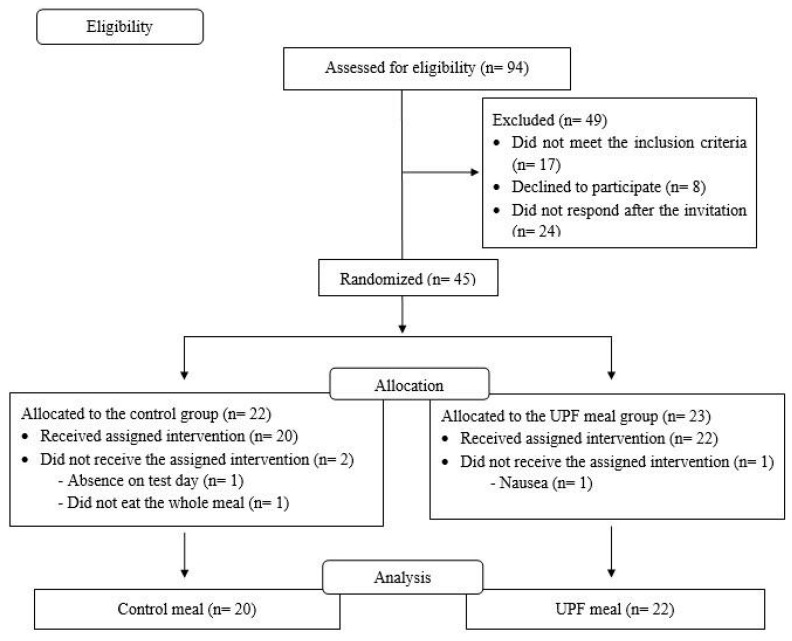
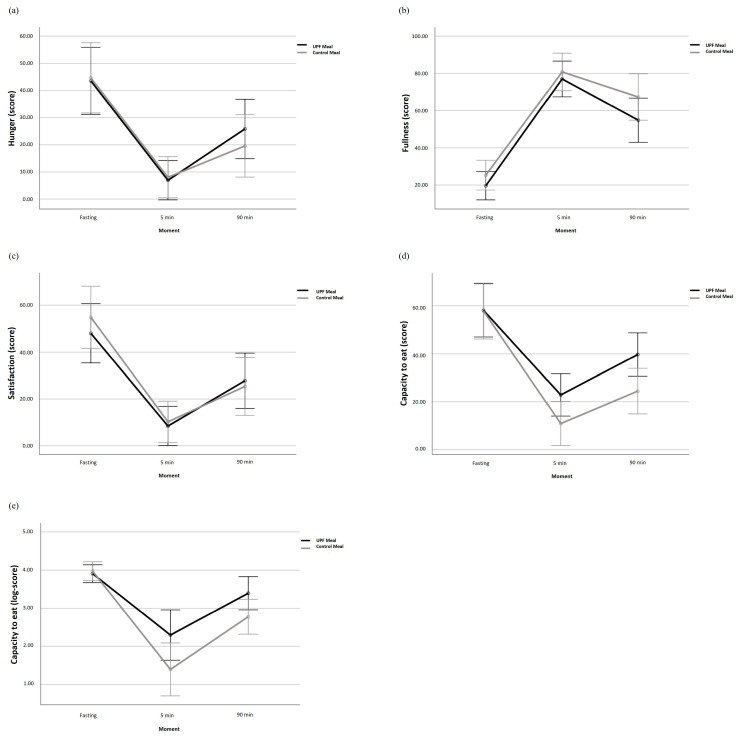
Background/Objectives: It is unknown whether the negative health effects associated with ultra-processed foods (UPFs) are due to their nutritional composition or to the extent of food processing itself. We evaluated the impact of a test meal composed only of UPF, according to the NOVA classification, compared to a similar meal without UPF in adults with obesity. Methods: This is a parallel, randomized trial. Adult individuals with obesity, according to BMI, % body fat, and/or waist circumference were included. Individuals ate one out of two test meals, matched for energy density, macronutrients, sodium, and fiber, differing in NOVA classification, as a breakfast after a 12-h fast. The rate of intake, appetite, satiety hormones, energy expenditure, and autonomic function were measured. Data were analyzed using mixed analysis of variance. Results: Forty-two individuals were included. We found a significantly faster intake rate (07:52 ± 3:00 vs. 11:07 ± 03:16 min), with less chewing and bites, and greater capacity to eat (39.68 ± 22.69 vs. 23.95 ± 18.92 mm) after the UPF meal, without observed differences in the metabolic outcomes. In an exploratory analysis, after adjusting by sex, leptin levels showed a greater decrease after the test meal in the control group. Conclusions: Although we found a faster intake rate in the UPF meal, only marginal effects were found on the participants' capacity to eat after the UPF meal. The high similarity between meals, despite differences according to the NOVA classification, may explain these results. As our study was small, these findings require further investigation.
Keywords: appetite regulation; energy metabolism; food intake; heart rate; hormones; insulin resistance.
Conflict of interest statement
The authors declare that there are no conflicts of interest.
Figures
References
-
- Monteiro C.A., Cannon G., Levy R., Moubarac J.-C., Jaime P., Martins A.P., Canella D., Louzada M., Parra D. NOVA. The Star Shines Bright. World Nutr. 2016;7:28–38.
-
- Lane M.M., Gamage E., Du S., Ashtree D.N., McGuinness A.J., Gauci S., Baker P., Lawrence M., Rebholz C.M., Srour B., et al. Ultra-Processed Food Exposure and Adverse Health Outcomes: Umbrella Review of Epidemiological Meta-Analyses. BMJ. 2024;384:e077310. doi: 10.1136/bmj-2023-077310. - DOI - PMC - PubMed
Publication types
MeSH terms
Substances
Grants and funding
LinkOut - more resources
Full Text Sources
Medical
Research Materials
