


Ethyltoluenes Regulate Inflammatory and Cell Fibrosis Signaling in the Liver Cell Model
- PMID: 39771071
- PMCID: PMC11679060
- DOI: 10.3390/toxics12120856
Ethyltoluenes Regulate Inflammatory and Cell Fibrosis Signaling in the Liver Cell Model
Abstract
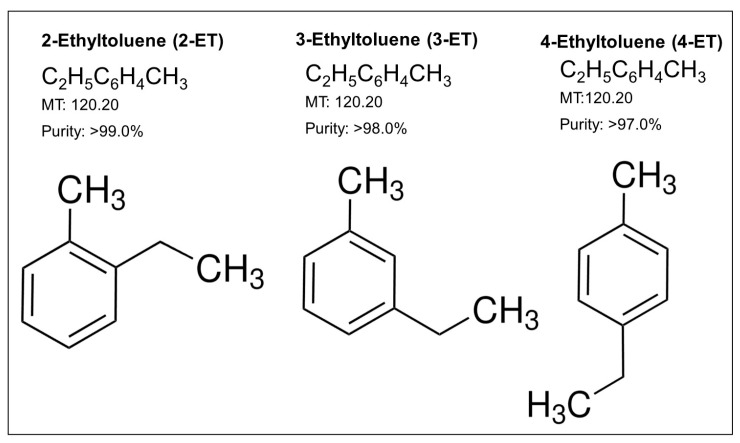
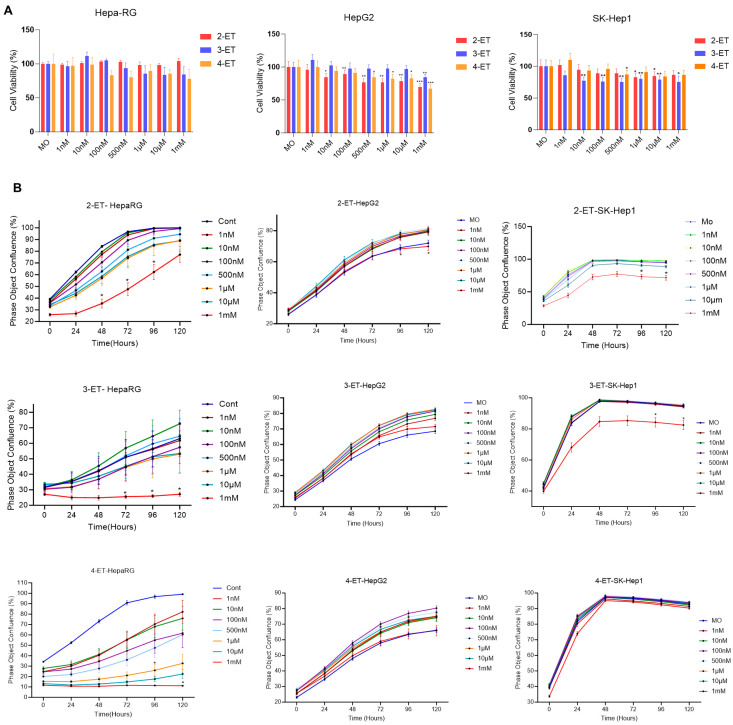
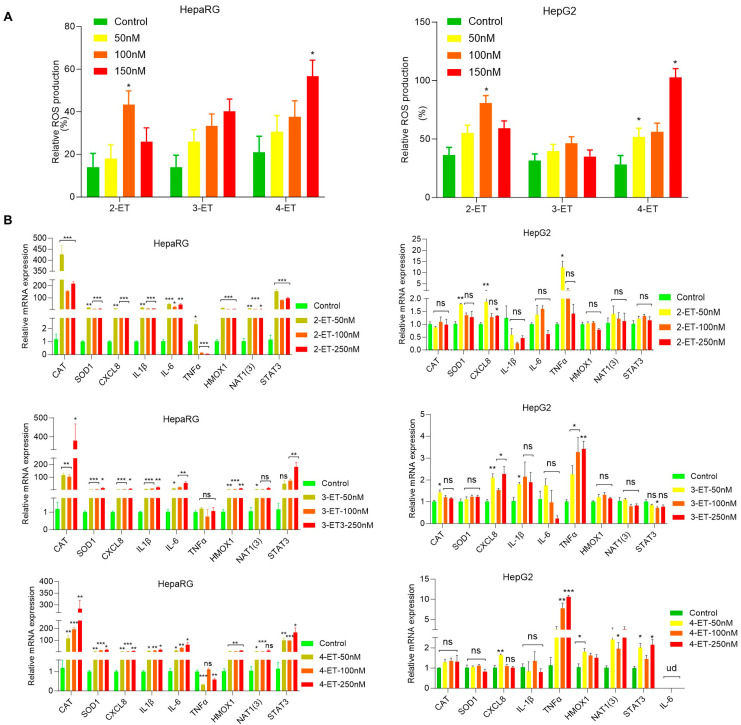
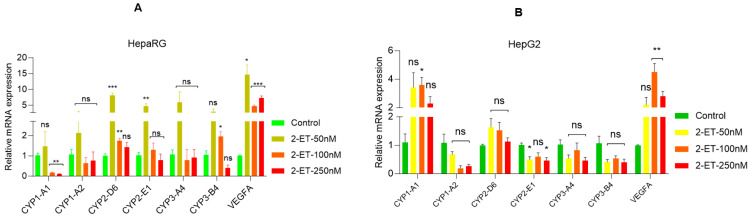
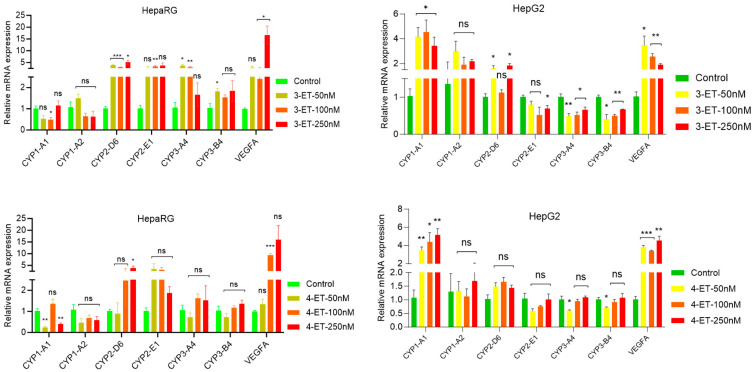
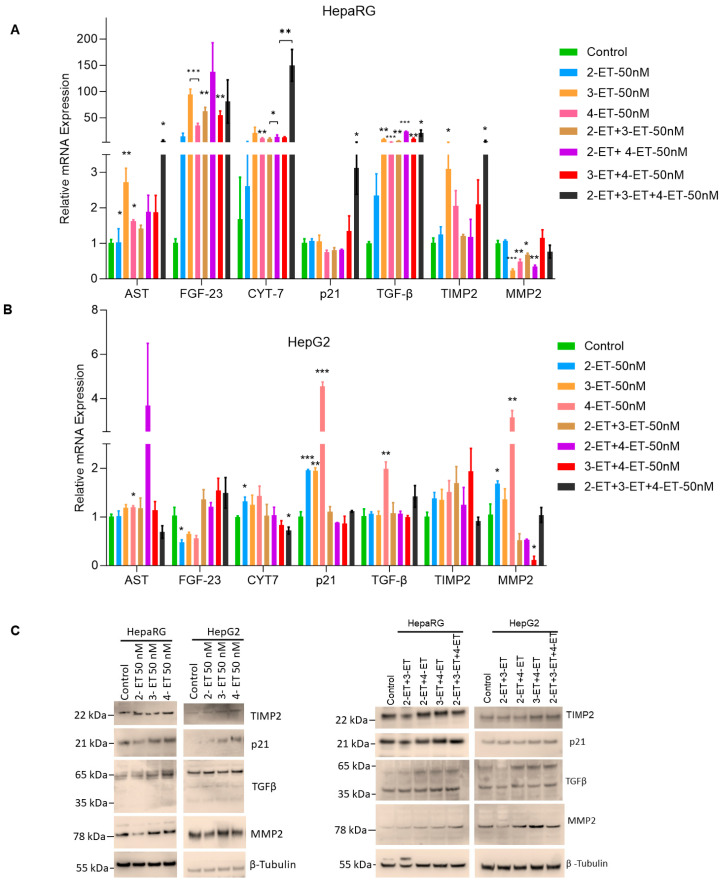
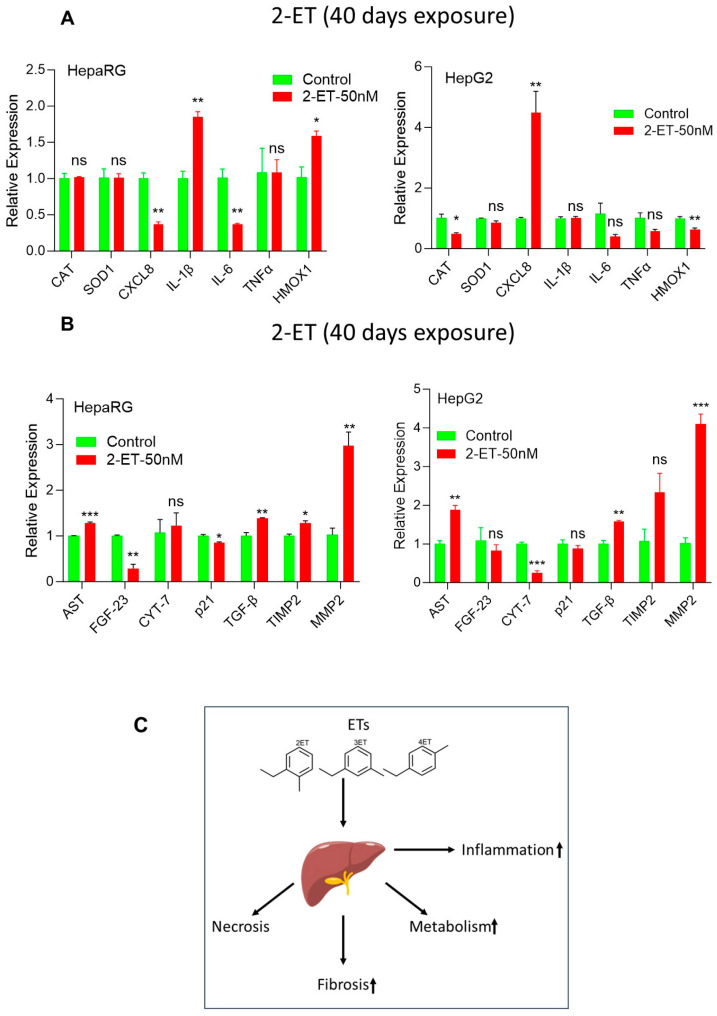
Crude oil naphtha fraction C9 alkylbenzenes consist of trimethylbenzenes, ethyltoluenes, cumene, and n-propylbenzene. The major fraction of C9 alkylbenzenes is ethyltoluenes (ETs) consisting of three isomers: 2-ethyltoluene (2-ET), 3-ethyltoluene (3-ET), and 4-ethyltoluene (4-ET). Occupational and environmental exposure to ETs can occur via inhalation and ingestion and cause several health problems. Exposure to ETs causes eye and upper respiratory tract irritation, coughing, gagging, vomiting, griping, diarrhea, distress, and depressed respiration. Previous studies suggest that ETs target the respiratory tract and liver and produce several lesions in the nose, lungs, and liver areas. In the current study, we investigated the impact of low concentrations of ETs on cell metabolism, cell inflammation, steatosis, and fibrosis signaling in liver cell models in vitro. Dose-dependent exposure of 2-ET, 3-ET, and 4-ET to HepaRG and hepatocellular carcinoma (HCC) HepG2 and SK-Hep1 cells affects cell survival/real-time proliferation and increases ROS production. ETs induce inflammatory CAT, SOD1, CXCL8, IL1B, HMOX1, NAT1 (3), and STAT3 gene expression. Exposure of 2-ET, 3-ET, and 4-ET to HepaRG and HCC HepG2 and SK-Hep1 cells affects mitochondrial respiration/cellular energetics and upregulates metabolic CYP1-A1, CYP1-A2, CYP2-D6, CYP2-E1, CYP3-A4, CYP3-B4, and VEGFA gene expression. However, no significant change in lipogenesis-related gene expression and modulation of cell steatosis was observed after ET exposure. Acute exposure to induvial ETs and in combination or chronic 2-ET exposure alone modulates cell fibrosis markers such as AST, FGF-23, Cyt-7 p21, TGFβ, TIMP2, and MMP2 in liver cell models, suggesting that ETs target liver cells and may dysregulate liver function.
Keywords: cell proliferation; ethyltoluenes; fibrosis; inflammation; liver cell models; steatosis.
Conflict of interest statement
The authors declare that they have no conflicts of interest.
Figures
References
-
- Schmidt R., Griesbaum K., Behr A., Biedenkapp D., Voges H.-W., Garbe D., Paetz C., Collin G., Mayer D., Höke H. Ullmann’s Encyclopedia of Industrial Chemistry. Wiley & Sons; Hoboken, NJ, USA: 2014. Hydrocarbons; pp. 1–74. - DOI
-
- Atanda L.A., Aitani A.M., Al-Khattaf S.S. Experimental and kinetic studies of ethyltoluenes production via different alkylation reactions. Chem. Eng. Res. Des. 2015;95:34–46. doi: 10.1016/j.cherd.2015.01.001. - DOI
-
- McMullin T.S., Bamber A.M., Bon D., Vigil D.I., Van Dyke M. Exposures and Health Risks from Volatile Organic Compounds in Communities Located near Oil and Gas Exploration and Production Activities in Colorado (U.S.A.) Int. J. Environ. Res. Public Health. 2018;15:1500. doi: 10.3390/ijerph15071500. - DOI - PMC - PubMed
Grants and funding
LinkOut - more resources
Full Text Sources
Research Materials
Miscellaneous
