


Cardiac Biomarkers in a Brazilian Indigenous Population Exposed to Arboviruses: A Cross-Sectional Study
- PMID: 39772209
- PMCID: PMC11680384
- DOI: 10.3390/v16121902
Cardiac Biomarkers in a Brazilian Indigenous Population Exposed to Arboviruses: A Cross-Sectional Study
Abstract
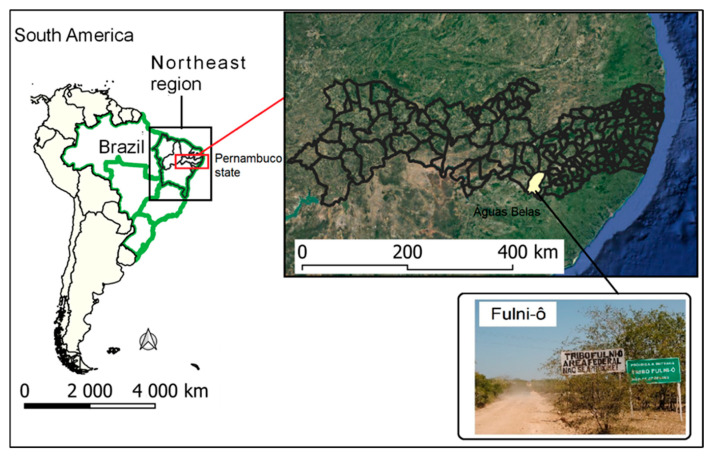
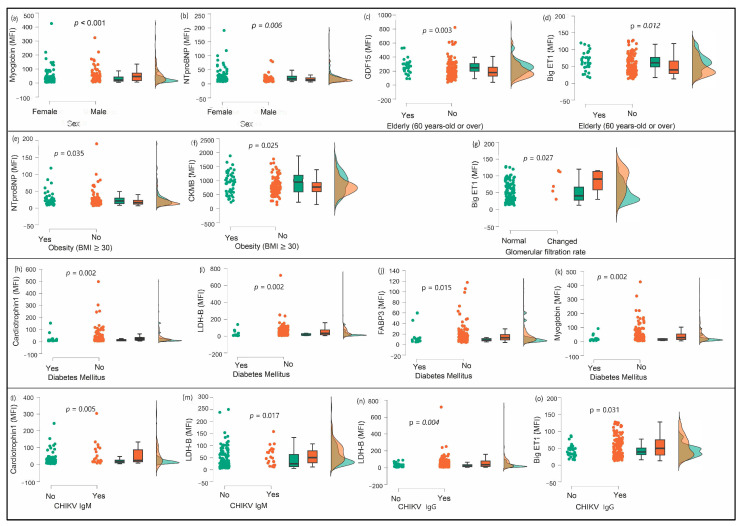
Arthropod-borne viral diseases are acute febrile illnesses, sometimes with chronic effects, that can be debilitating and even fatal worldwide, affecting particularly vulnerable populations. Indigenous communities face not only the burden of these acute febrile illnesses, but also the cardiovascular complications that are worsened by urbanization. A cross-sectional study was conducted in an Indigenous population in the Northeast Region of Brazil to explore the association between arboviral infections (dengue, chikungunya, and Zika) and cardiac biomarkers, including cardiotrophin 1, growth differentiation factor 15, lactate dehydrogenase B, fatty-acid-binding protein 3, myoglobin, N-terminal pro-B-type natriuretic peptide, cardiac troponin I, big endothelin 1, and creatine kinase-MB, along with clinical and anthropometric factors. The study included 174 individuals from the Fulni-ô community, with a median age of 47 years (interquartile range 39.0 to 56.0). High rates of previous exposure to dengue, chikungunya, and Zika were observed (92.5%, 78.2%, and 95.4% anti-IgG, respectively), while acute exposure (anti-IgM) remained low. The biomarkers were linked to age (especially in the elderly), obesity, chronic kidney disease, and previous or recent exposure to chikungunya. This study pioneers the use of Luminex xMAP technology to reveal the association between cardiac inflammatory biomarkers and exposure to classical arboviruses in an Indigenous population undergoing urbanization.
Keywords: Zika; arboviruses; cardiac biomarkers; cardiac involvement; chikungunya; dengue.
Conflict of interest statement
The authors declare no conflicts of interest.
Figures
References
-
- World Health Organization (WHO) Global Arbovirus Initiative [Internet]. Geneva: WHO. [(accessed on 27 November 2024)]. Available online: https://www.who.int/initiatives/global-arbovirus-initiative.
Publication types
MeSH terms
Substances
LinkOut - more resources
Full Text Sources
Research Materials
Miscellaneous
