


Dystonia caused by ANO3 variants is due to attenuated Ca2+ influx by ORAI1
- PMID: 39773217
- PMCID: PMC11707858
- DOI: 10.1186/s12916-024-03839-5
Dystonia caused by ANO3 variants is due to attenuated Ca2+ influx by ORAI1
Abstract
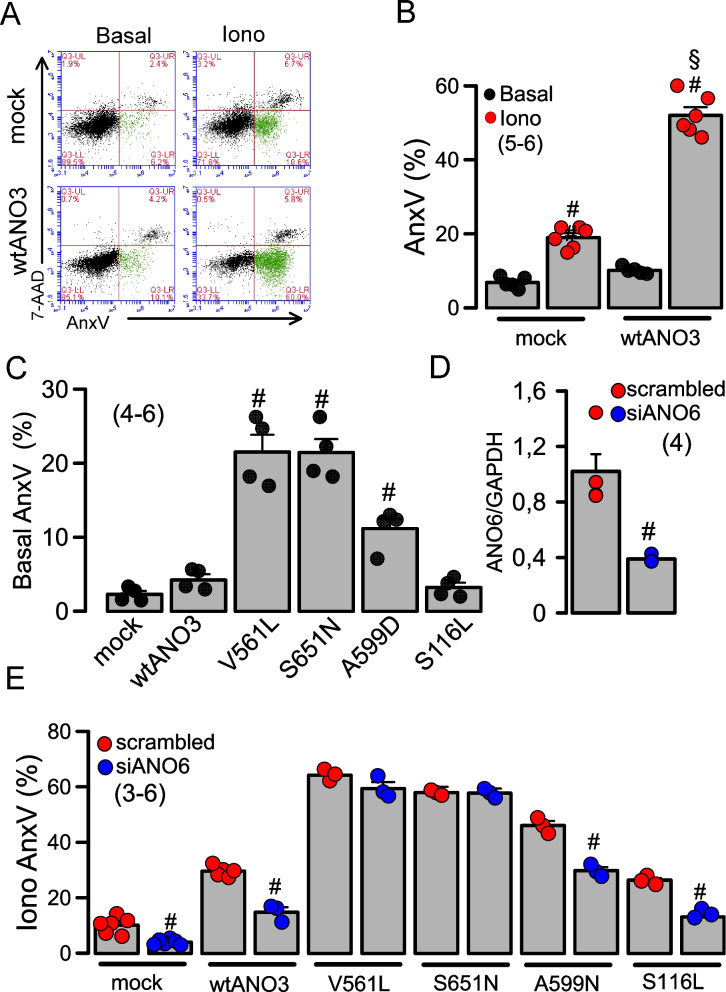
Background: Dystonia is a common neurological hyperkinetic movement disorder that can be caused by mutations in anoctamin 3 (ANO3, TMEM16C), a phospholipid scramblase and ion channel. We previously reported patients that were heterozygous for the ANO3 variants S651N, V561L, A599D and S651N, which cause dystonia by unknown mechanisms.
Methods: We applied electrophysiology, Ca2+ measurements and cell biological methods to analyze the molecular mechanisms that lead to aberrant intracellular Ca2+ signals and defective activation of K+ channels in patients heterozygous for the ANO3 variants.
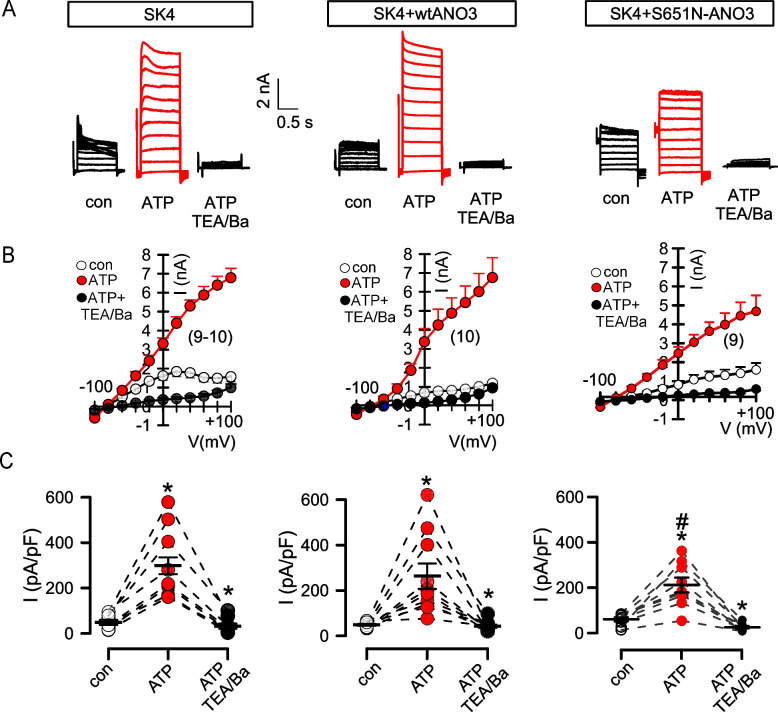
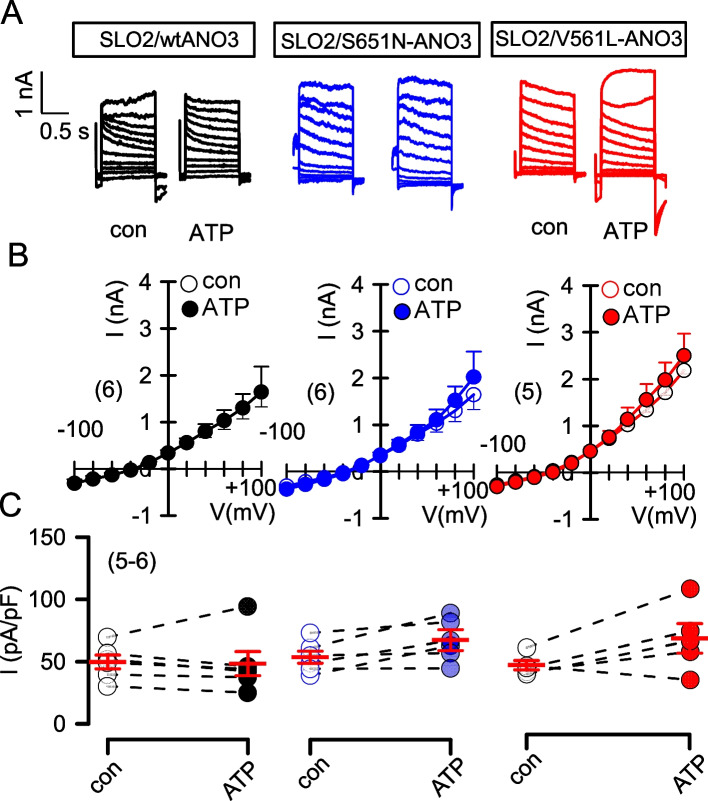
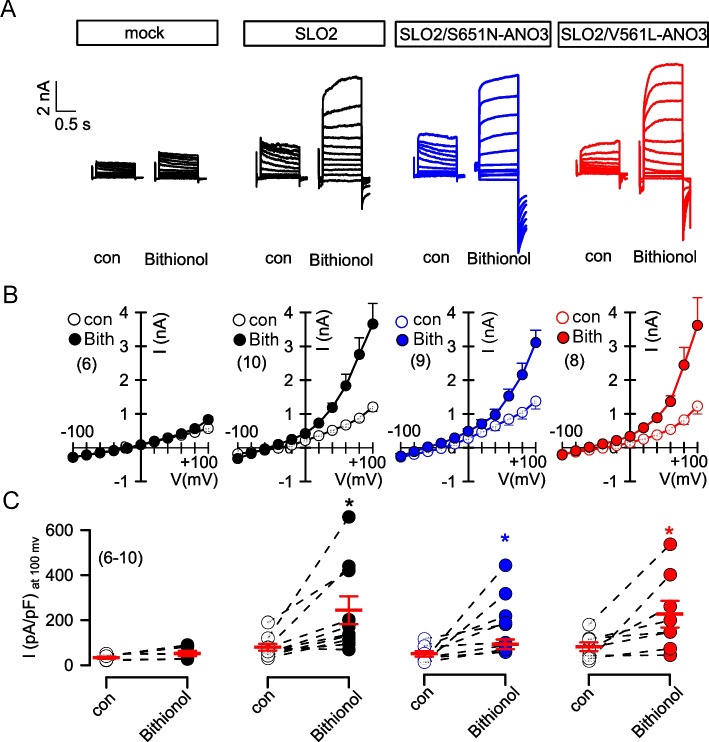
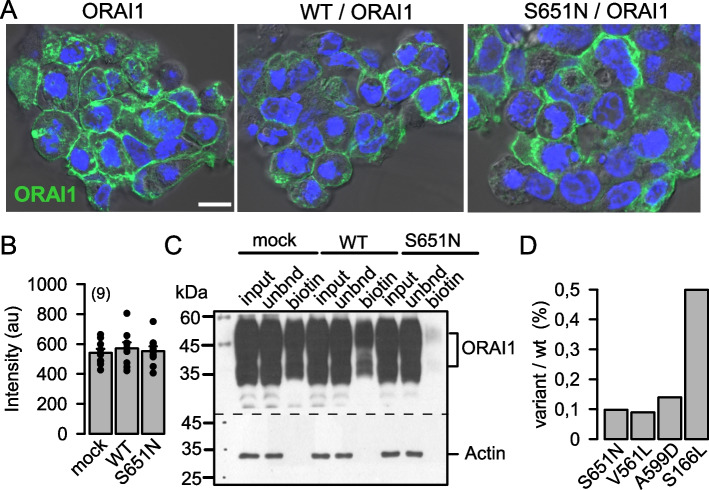
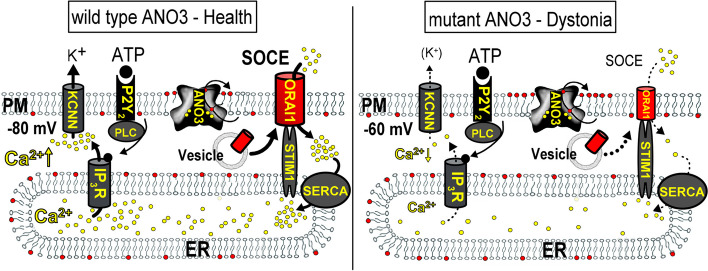
Results: Upon expression, emptying of the endoplasmic reticulum Ca2+ store (store release) and particularly store-operated Ca2+ entry (SOCE) were strongly inhibited, leading to impaired activation of KCa3.1 (KCNN) K+ channels, but not of Na+-activated K+ channels (KNa; SLO2). The data provide evidence for a strongly impaired expression of store-operated ORAI1 Ca2+ influx channels in the plasma membrane of cells expressing ANO3 variants.
Conclusions: Dysregulated Ca2+ signaling by ANO3 variants may impair the activation of K+ channels in striatal neurons of the brain, thereby causing dystonia. Furthermore, the data provide a first indication of a possible regulation of protein expression in the plasma membrane by ANO3, as has been described for other anoctamins.
Keywords: ANO3; Anoctamin 3; Ca2+ signaling; Dystonia; K+ channels; TMEM16C.
© 2025. The Author(s).
Conflict of interest statement
Declarations. Ethics approval and consent to participate: This study was approved by the institutional review board at Hospital Sant Joan De Déu, Barcelona, Spain (ART-04–23). Informed consent for the publication of clinical and genetic data, was obtained from all participants. Consent for publication: Not required. Competing interests: The authors declare no competing interests.
Figures

References
-
- Kunzelmann K, Ousingsawat J, Schreiber R: Intracellular anoctamins. Cell Calcium (submitted) 2024. - PubMed
Publication types
MeSH terms
Substances
LinkOut - more resources
Full Text Sources
Medical
Miscellaneous
