


Navigating the fear: assessing nursing students' concerns and preventive practices in response to Monkeypox in Egypt
- PMID: 39773708
- PMCID: PMC11708079
- DOI: 10.1186/s12912-024-02589-2
Navigating the fear: assessing nursing students' concerns and preventive practices in response to Monkeypox in Egypt
Abstract
Background: Monkeypox has emerged as a global health concern, necessitating preventive measures and awareness among healthcare students. Understanding nursing students' fears, concerns, and preventive practices regarding Monkeypox can help improve preparedness and response strategies.
Aim: This study aimed to assess the levels of fear, concerns, and preventive practices related to monkeypox among nursing students at Beni Suef University, Egypt, during the 2024-2025 academic year.
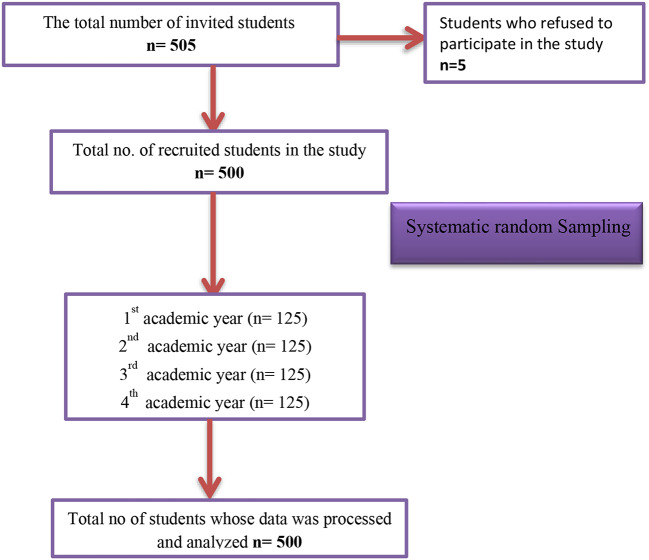
Methods: A cross-sectional descriptive design was employed, involving 505 nursing students systematically randomized recruited. Data collection utilized three validated tools: the Monkeypox Fear Scale, Monkeypox Concern Scale, and Monkeypox Preventive Practices Scale. Reliability was confirmed with Cronbach's alpha values ranging from 0.87 to 0.94. Data analysis included descriptive statistics, Spearman correlation, and multiple linear regression using SPSS Version 23.
Results: Most (56.2%) students rarely worried about Monkeypox infection, though 49.2% reported anxiety influenced by media coverage. High preventive practices were noted, with 60.6% frequently practicing hygiene measures. A strong positive correlation between Monkeypox concern and fear (r = 0.646, p < 0.001) and a moderate positive correlation between Monkeypox concern and preventive practices (r = 0.229, p = 0.001). Fear was also significantly correlated with preventive practices (r = 0.432, p < 0.001). Multiple linear regression analysis (R² = 0.216, F = 22.633, p < 0.001) revealed that fear was a strong positive predictor of preventive practices, while Monkeypox concern had a positive but non-significant effect (B = 0.138, p = 0.156). Age was not a significant predictor (B = 0.251, p = 0.637), whereas family income showed a significant negative association (B = -1.885, p = 0.010).
Conclusion: The study revealed moderate fear and concerns among nursing students, with generally high adherence to preventive practices.
Implication: Findings suggest the need for targeted health education programs to address monkeypox-related concerns and enhance preventive measures, thus improving nursing students' readiness to respond to emerging health threats.
Keywords: Concerns; Cross-sectional study; Egypt; Fear; Health education; Monkeypox; Nursing students; Preventive practices.
© 2024. The Author(s).
Conflict of interest statement
Declarations. Ethical approval: The study was approved by the Research Ethics Committee of the Faculty of Nursing at Beni Suef University, Egypt, under reference number (FMBSUREC/01102024/Salama). All procedures adhered strictly to the ethical standards outlined in the Helsinki Declaration. Before participation, each individual was given comprehensive information regarding the study’s objectives and procedures. Written informed consent was obtained from every participant. The research maintained a solid commitment to ethical principles, including voluntary participation, anonymity, and confidentiality. Participants were explicitly informed of their right to withdraw from the study at any time without any repercussions. Consent for publication: Not applicable. Clinical trial number: Not applicable. Competing interests: The authors declare no competing interests.
Figures
References
-
- Control E.C.f.D.P.a. Risk assessment for the EU/EEA of the monkeypox epidemic caused by monkeypox virus clade I in affected African countries. ECDC; 2024.
-
- Control. E.C.f.D.P.a. Epidemiological update: Mpox due to Monkeypox virus clade I. ECDC; 2024.
-
- Organization WH. 2022-24 Mpox (Monkeypox) outbreak: Global trends. 2024.
LinkOut - more resources
Full Text Sources
