


An implementation trial to mAnage siCkle CELl disEase through incReased AdopTion of hydroxyurEa in Nigeria (ACCELERATE): Study protocol
- PMID: 39774400
- PMCID: PMC11709263
- DOI: 10.1371/journal.pone.0311900
An implementation trial to mAnage siCkle CELl disEase through incReased AdopTion of hydroxyurEa in Nigeria (ACCELERATE): Study protocol
Abstract
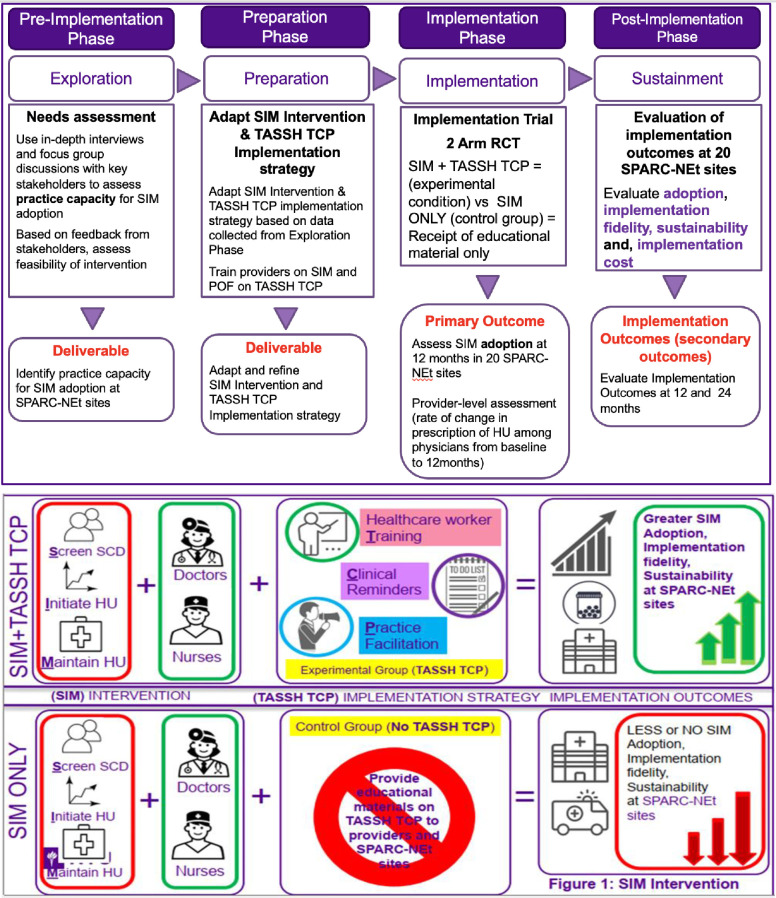
Background: Despite the proven efficacy of evidence-based healthcare interventions in reducing adverse outcomes and mortality associated with Sickle Cell Disease (SCD), a vast majority of affected individuals in Africa remain deprived of such care. Hydroxyurea (HU) utilization among SCD patients in Sub-Saharan Africa (SSA) stands at less than 1%, while in Nigeria, approximately 13% of patients benefit from HU therapy. To enhance HU utilization, targeted implementation strategies addressing provider-level barriers are imperative. Existing evidence underscores the significance of addressing barriers such as inadequate healthcare worker training to improve HU adoption. The ACCELERATE study aims to evaluate the adoption of HU among providers through the Screen, Initiate, and Maintain (SIM) intervention, facilitated by healthcare worker training, clinical reminders, and task-sharing strategies, thereby enhancing patient-level SCD management in Nigeria.
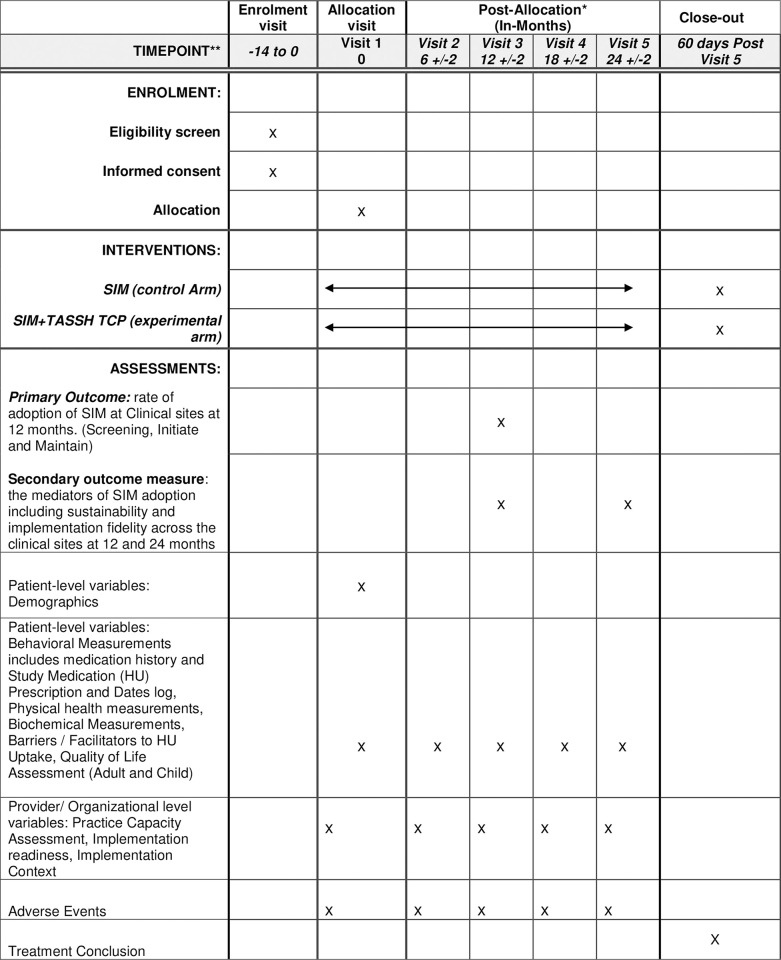
Methods: This study will implement the SIM intervention, encompassing patient screening, initiation of HU treatment, and maintenance of dosage, which will be implemented via the TAsk-Strengthening Strategy for Hemoglobinopathies (TASSH TCP), derived from our team's TAsk-Strengthening Strategy for Hypertension control (TASSH) trials. Employing a sequential exploratory mixed-methods approach within the Exploration, Preparation, Implementation, and Sustainment (EPIS) framework, this study will assess SIM adoption by providers in Nigeria. The primary outcome is the rate of SIM adoption at clinical sites at 12 months, with secondary outcomes including sustainability/maintenance of SIM intervention and implementation fidelity.
Discussion: This study's findings will offer crucial insights into effective SCD management strategies, leveraging existing SCD clinical networks and resources in Nigeria to enhance HU adoption among providers in a scalable and sustainable manner. Additionally, the study will inform best practices for implementing HU therapy in resource-constrained settings, benefiting healthcare providers, policymakers, and stakeholders invested in improving SCD care delivery.
Trial registration: NCT06318143.
Copyright: © 2025 Peprah et al. This is an open access article distributed under the terms of the Creative Commons Attribution License, which permits unrestricted use, distribution, and reproduction in any medium, provided the original author and source are credited.
Conflict of interest statement
The authors have declared that no competing interests exist.
Figures
References
-
- Ohene-Frempong K., et al.., Screening newborns for sickle cell disease in Ghana. Pediatrics, 2008. 121(2): p. S120. - PubMed
Publication types
MeSH terms
Substances
Associated data
Grants and funding
LinkOut - more resources
Full Text Sources
Medical
Research Materials
