


Pre-stack seismic inversion for reservoir characterization in Pleistocene to Pliocene channels, Baltim gas field, Nile Delta, Egypt
- PMID: 39774632
- PMCID: PMC11706975
- DOI: 10.1038/s41598-024-75015-x
Pre-stack seismic inversion for reservoir characterization in Pleistocene to Pliocene channels, Baltim gas field, Nile Delta, Egypt
Abstract
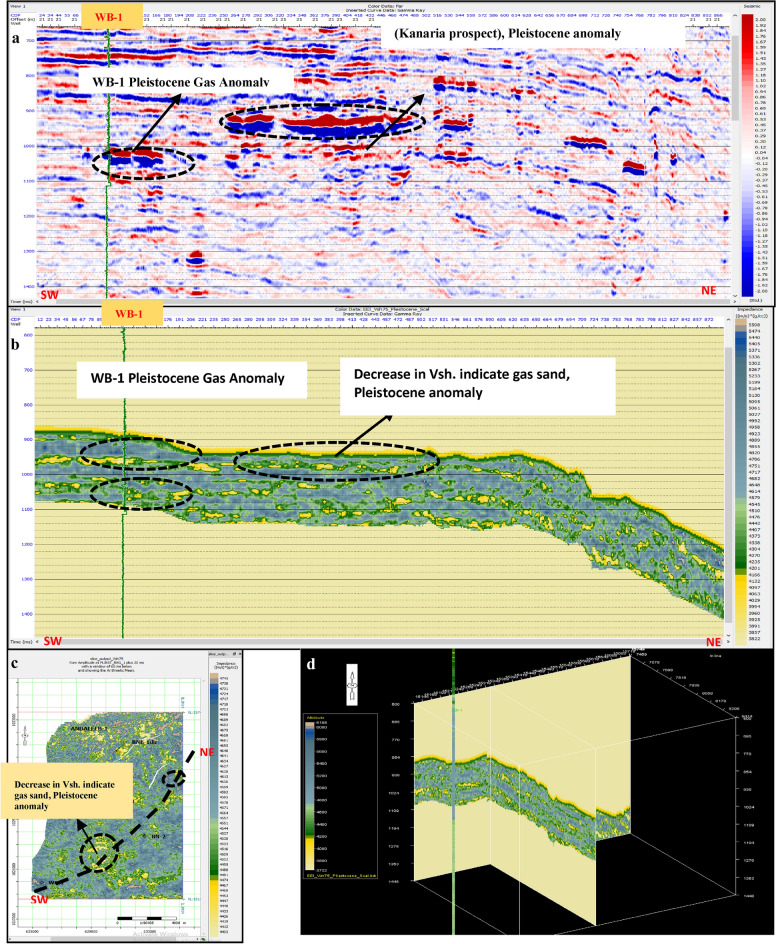
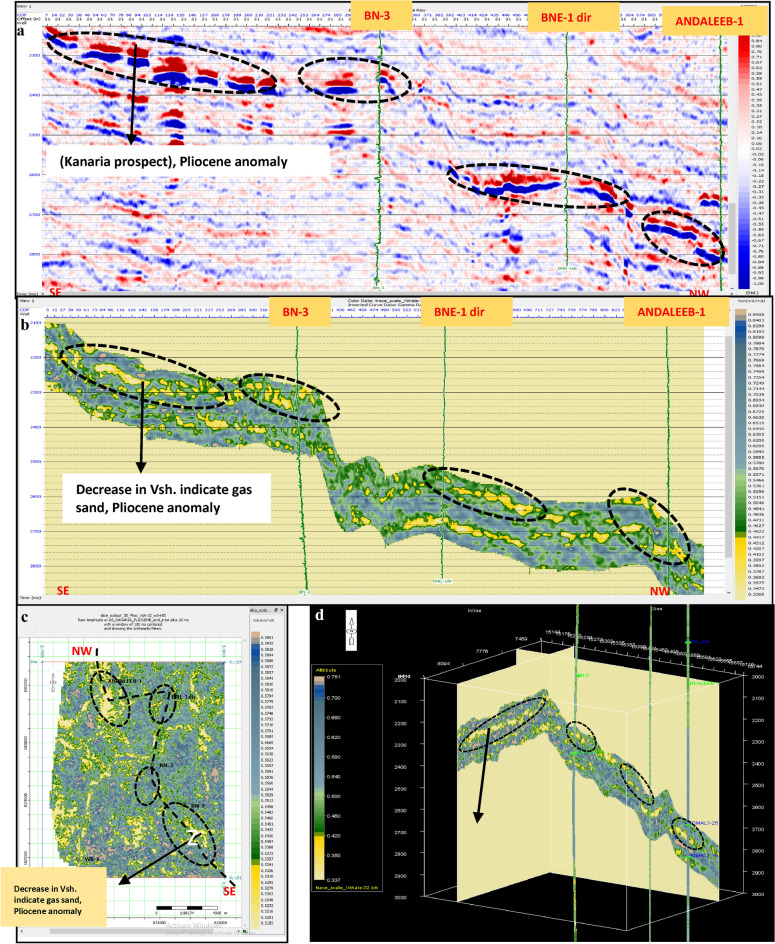
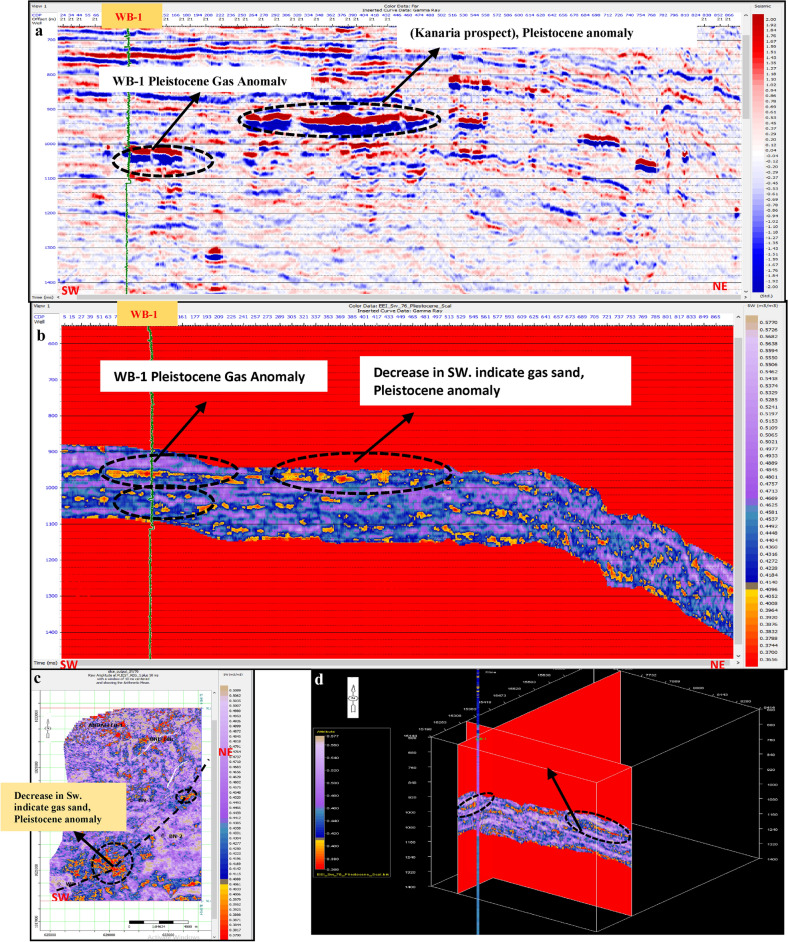
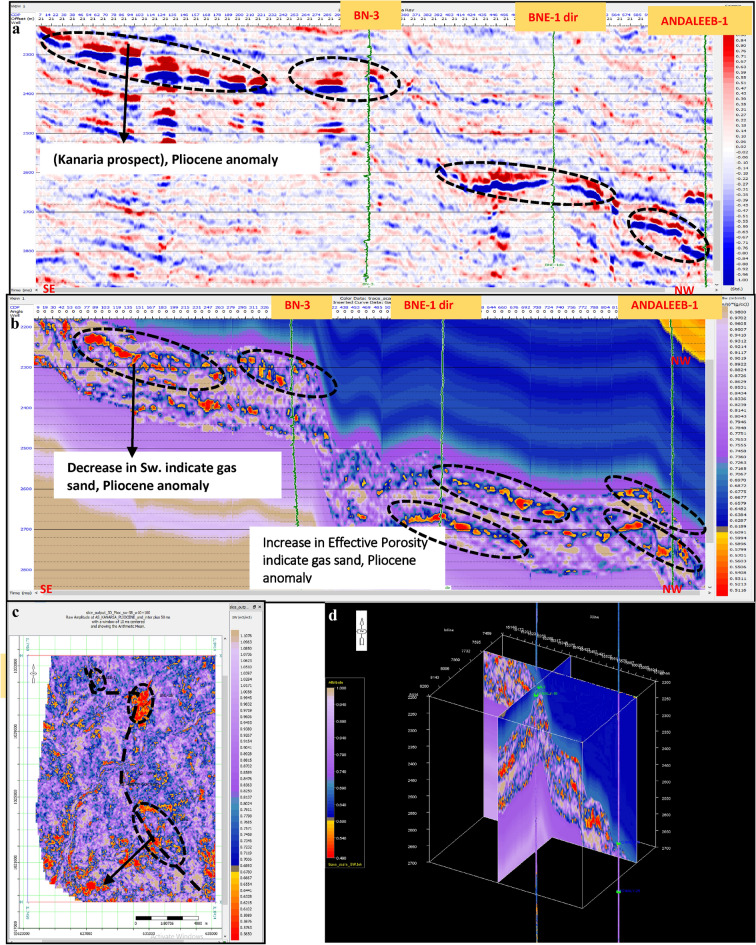
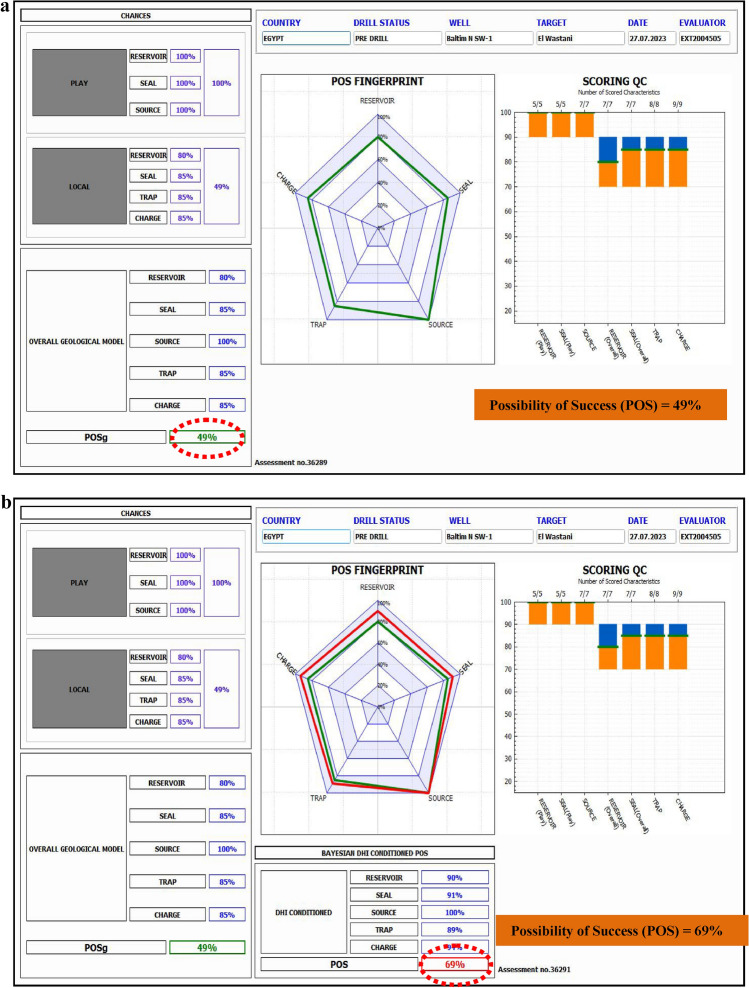
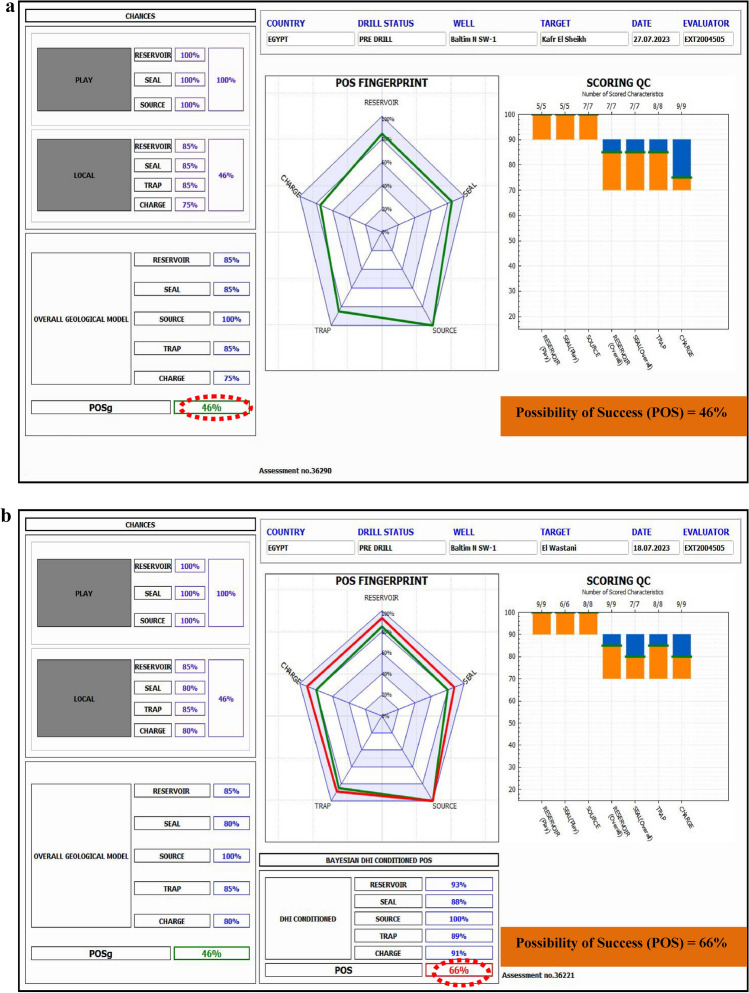
The Nile Delta, North Africa's leading gas-producing region, was the focus of this study aimed at delineating gas-bearing sandstone reservoirs from the Pleistocene to Pliocene formations using a combination of pre-stack inversion and rock physics analysis. This research employed seismic inversion techniques, including full-angle stack seismic volumes, well logs, and 3-D with rock physics modeling to refine volumes of P-wave velocity (Vp), S-wave velocity (Vs), and density. Traditional seismic attributes, such as far amplitude, proved insufficient for confirming gas presence, highlighting partial angle stacks, integrated the need for advanced methods. Extended Elastic Impedance (EEI) analysis was used to predict fluids and identify lithology in clastic reservoir environments. The EEI approach facilitated the determination of optimal projection angles for key petrophysical properties such as porosity, shale volume, and water saturation. This method was applied to the middle Pliocene (Kafr El Sheikh Formation) and the Pleistocene (El Wastani Formation), revealing promising drilling sites. In the Kafr El Sheikh Formation, porosity ranged from 16 to 29%, shale volume from 21 to 40%, and hydrocarbon saturation from 25 to 90%. The study concludes that integrating pre-stack seismic inversion with EEI significantly enhances the likelihood of identifying gas-bearing sands while reducing exploration risks. The improved POS for the Pleistocene anomaly gas bearing sand (from 49 to 69%) and the middle Pliocene anomaly (from 46 to 66%) underscores the effectiveness of this approach in the Baltim Field, Offshore Nile Delta, and supports further drilling and development wells.
Keywords: Baltim field; EEI; Gas bearing sand; Offshore Nile Delta; Pre-stack seismic inversion.
© 2024. The Author(s).
Conflict of interest statement
Competing interests: The authors declare no competing interests.
Figures
References
-
- Abdel-Fattah, M. I., Hamdan, H. A. & Sarhan, M. A. Hydrocarbon potential and reservoir characteristics of incised-valley transgressive sandstones: A case study of the Messinian gas reservoirs (Nile Delta Basin, Egypt). J. Afr. Earth Sci.207, 105073. 10.1016/j.jafrearsci.2023.105073 (2023). - DOI
-
- El-Fawal, F. M., Sarhan, M. A., Collier, R. E. L., Basal, A. & Aal, M. H. A. Sequence stratigraphic evolution of the post-rift megasequence in the northern part of the Nile Delta basin, Egypt. Arab. J. Geosci.9(11), 585. 10.1007/s12517-016-2602-8 (2016). - DOI
-
- Sarhan, M. A. New prospective gas plays in Pliocene sands, offshore nile Delta basin: a case study from Kamose-1 well at north Sinai concession. Egypt10.1016/j.ptlrs.2021.12.007 (2021). - DOI
-
- Rizzini, A., Vezzani, F., Cococcetta, V. & Milad, G. Stratigraphy and sedimentation of a Neogene-Quaternary section in the Nile Delta area, (A.R.E.). Mar Geol.27, 327–348. 10.1016/0025-3227(78)90038-5 (1978). - DOI
-
- Hemdan, S., Jonathan M. Nile Delta Gas Origin and Biogenic Gas Potential, AAPG Search and Discovery Article #90161©2013 AAPG European Regional Conference, Barcelona, Spain, 8–10 April 2013 (2013).
LinkOut - more resources
Full Text Sources
