


Mechanical Cell Interactions on Curved Interfaces
- PMID: 39775998
- PMCID: PMC11706888
- DOI: 10.1007/s11538-024-01406-w
Mechanical Cell Interactions on Curved Interfaces
Abstract
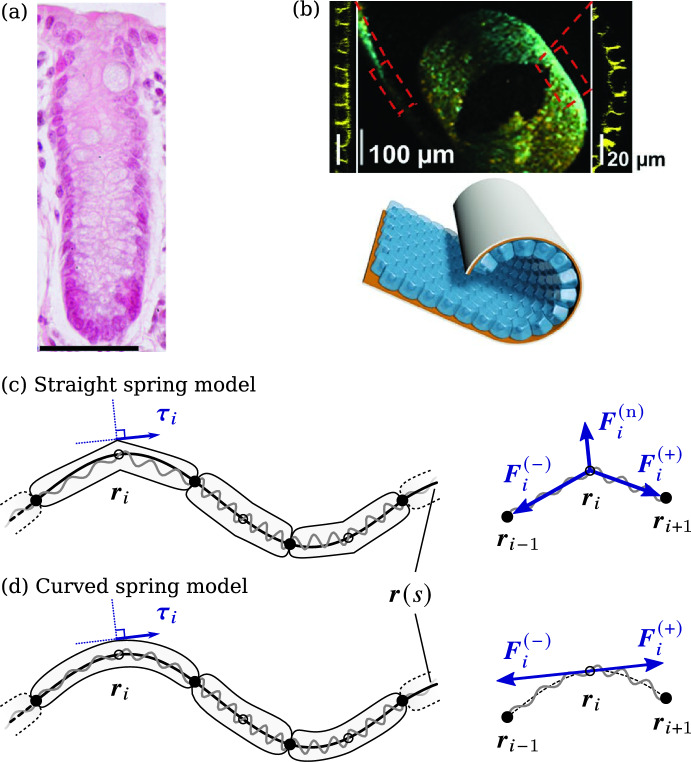
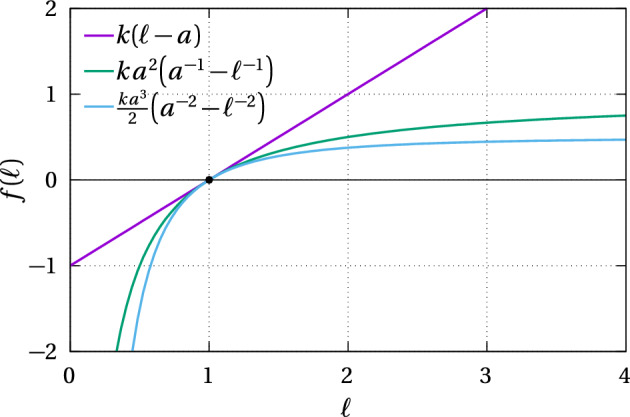
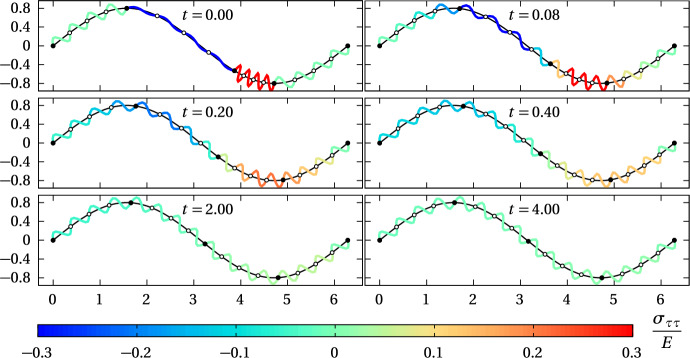
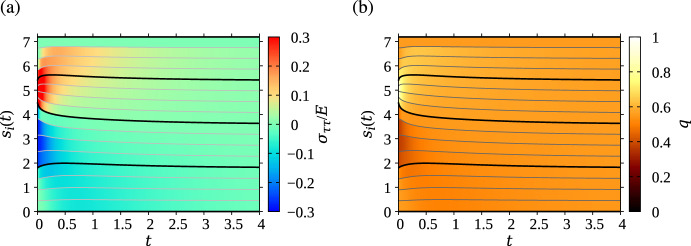
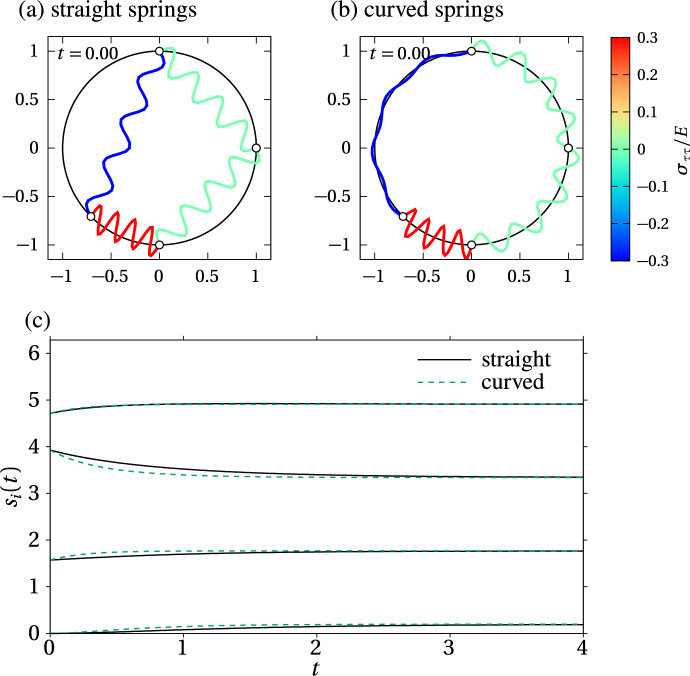
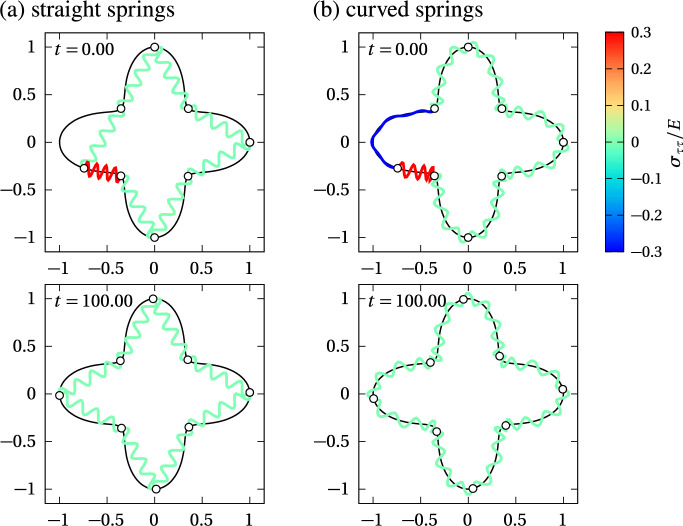
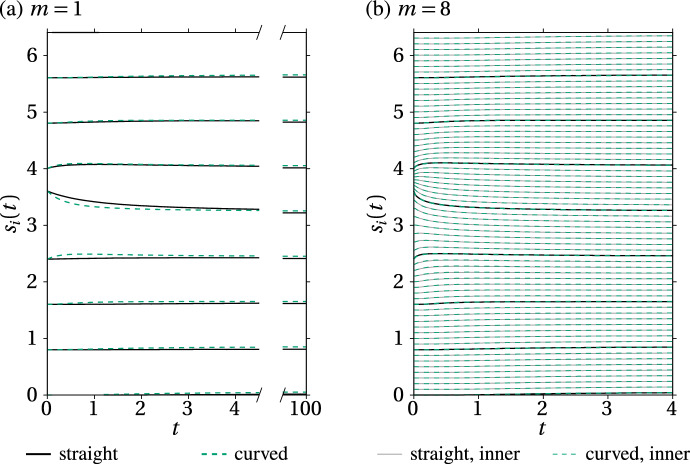
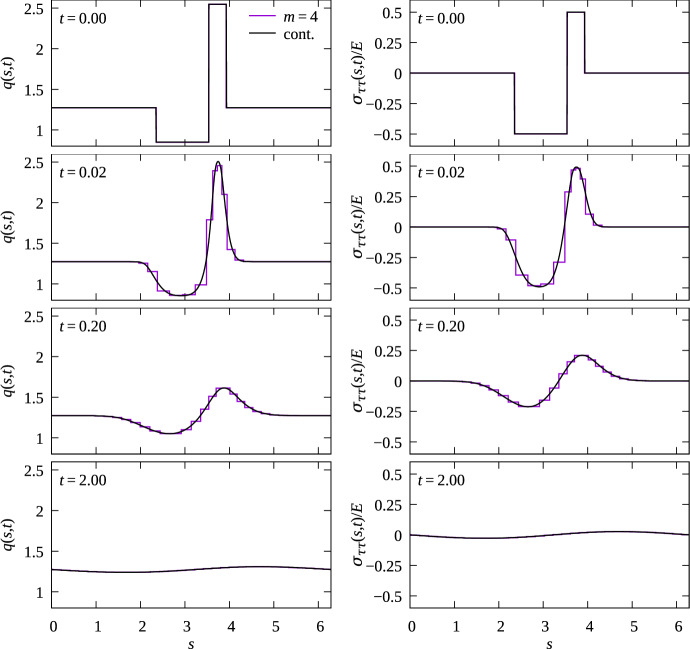
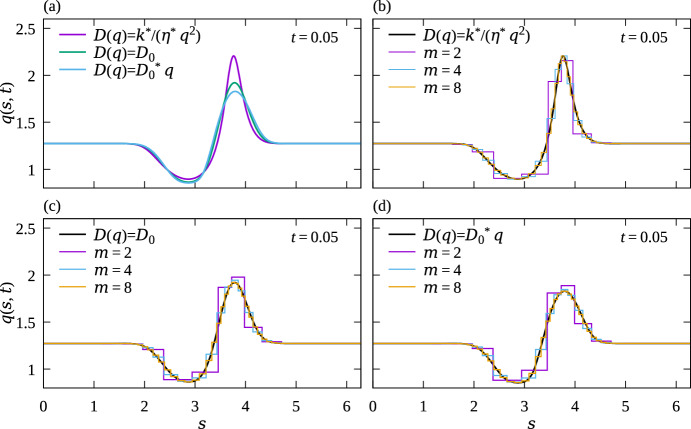
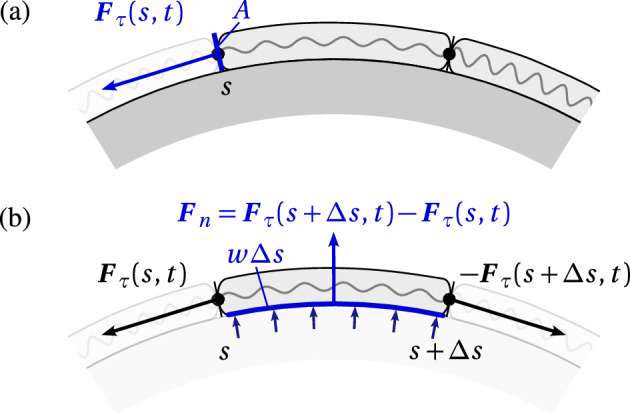
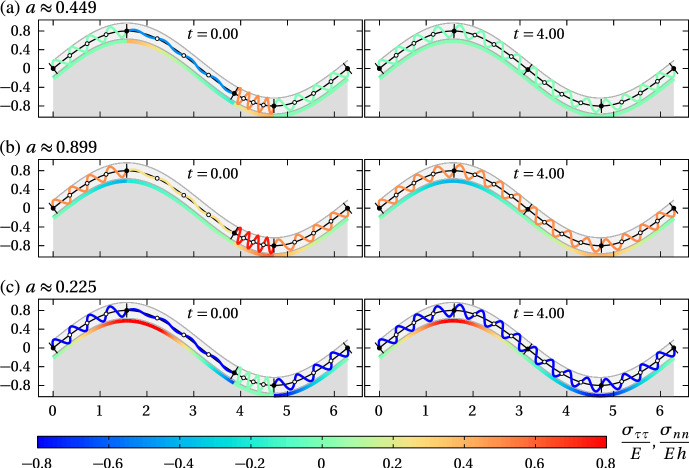
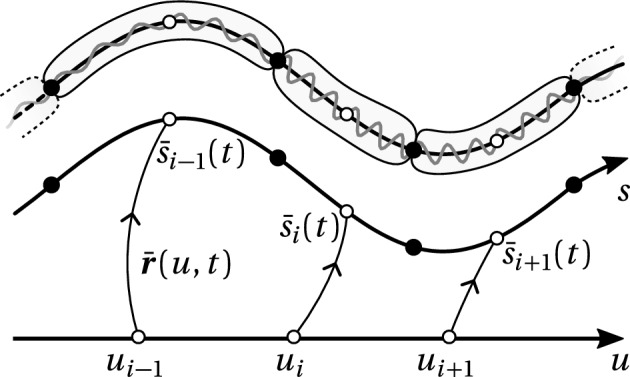
We propose a simple mathematical model to describe the mechanical relaxation of cells within a curved epithelial tissue layer represented by an arbitrary curve in two-dimensional space. This model generalises previous one-dimensional models of flat epithelia to investigate the influence of curvature for mechanical relaxation. We represent the mechanics of a cell body either by straight springs, or by curved springs that follow the curve's shape. To understand the collective dynamics of the cells, we devise an appropriate continuum limit in which the number of cells and the length of the substrate are constant but the number of springs tends to infinity. In this limit, cell density is governed by a diffusion equation in arc length coordinates, where diffusion may be linear or nonlinear depending on the choice of the spring restoring force law. Our results have important implications about modelling cells on curved geometries: (i) curved and straight springs can lead to different dynamics when there is a finite number of springs, but they both converge quadratically to the dynamics governed by the diffusion equation; (ii) in the continuum limit, the curvature of the tissue does not affect the mechanical relaxation of cells within the layer nor their tangential stress; (iii) a cell's normal stress depends on curvature due to surface tension induced by the tangential forces. Normal stress enables cells to sense substrate curvature at length scales much larger than their cell body, and could induce curvature dependences in experiments.
Keywords: Coarse-graining; Diffusion; Mathematical model; Mechanobiology; Surface tension; Tissue growth; Tissue mechanics.
© 2025. The Author(s).
Conflict of interest statement
Declarations. Conflict of interest: Author Prof. Matthew J. Simpson is Editor-in-Chief of the Bulletin of Mathematical Biology. Ethics approval and consent to participate: Not applicable. Consent for publication: All authors gave final approval for publication and agreed to be held accountable for the work performed therein.
Figures
References
-
- Alias MA, Buenzli PR (2018) Osteoblasts infill irregular pores under curvature and porosity controls: a hypothesis-testing analysis of cell behaviours. Biomech Model Mechaniobiol 17:1357–1371. 10.1007/s10237-018-1031-x - PubMed
-
- Alias MA, Buenzli PR (2019) A level-set method for the evolution of cells and tissue during curvature-controlled growth. Int J Numer Meth Biomed Engng 2019:e3279. 10.1002/cnm.3279 - PubMed
MeSH terms
Grants and funding
LinkOut - more resources
Full Text Sources
