


Developing and applying a training needs analysis tool for healthcare workers managing snakebite envenoming: A cross-sectional study in Eswatini
- PMID: 39776319
- PMCID: PMC11709266
- DOI: 10.1371/journal.pntd.0012778
Developing and applying a training needs analysis tool for healthcare workers managing snakebite envenoming: A cross-sectional study in Eswatini
Abstract
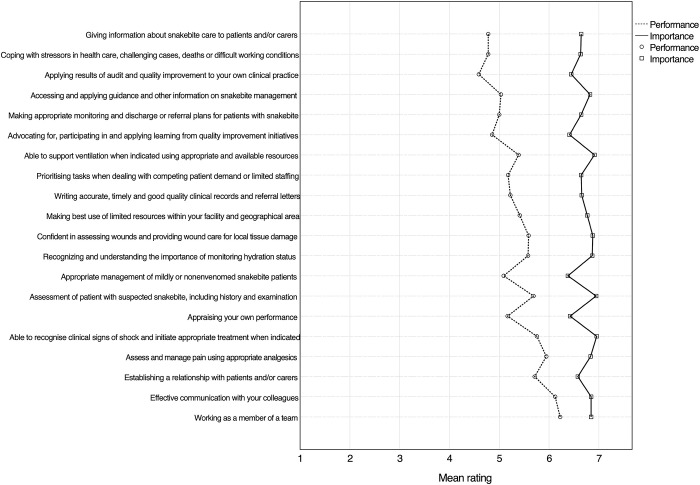
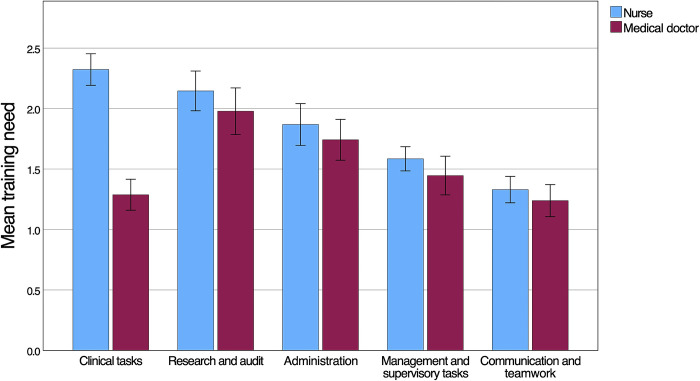
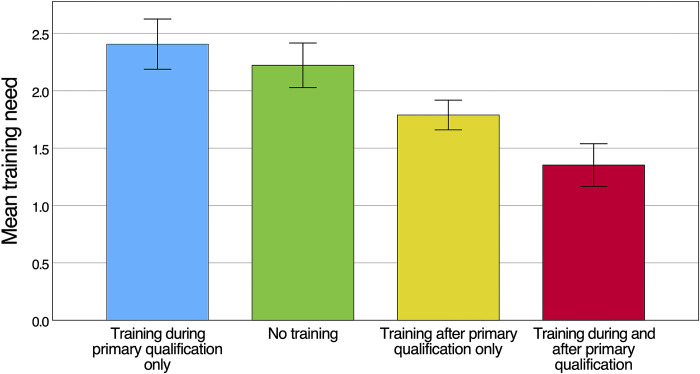
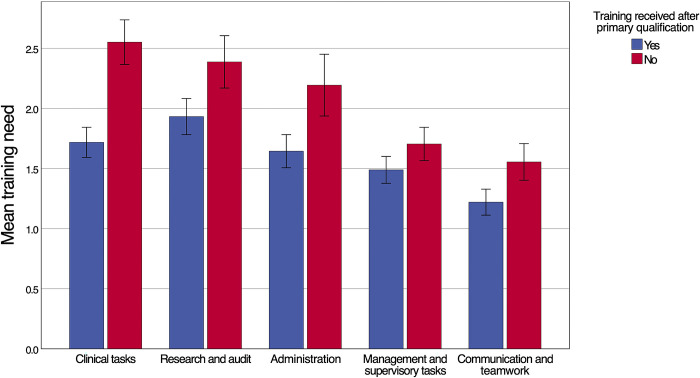
A considerable number of patients present to hospitals in Eswatini each year following bites by venomous snakes. Effectively diagnosing and treating patients with snakebite envenoming requires healthcare workers to have a variety of generic and snakebite-specific medical skills. In several countries, however, healthcare workers have been found to have limited skills in managing snakebite patients. We used the Delphi method to adapt the Hennessy-Hicks training needs analysis questionnaire to the context of snakebite envenoming and subsequently used the adapted questionnaire to assess the self-perceived training needs of 90 healthcare workers from ten hospitals in Eswatini. Two-thirds (63%) of participants were nursing staff and one third (34%) medical doctors. Overall, 74% of healthcare workers had previously received training on snakebite. Although a training need was reported for all skills included in the survey, the extent of the training need varied between different skills and groups of healthcare workers. The highest average training need was registered in the domains 'research and audit' and 'clinical tasks' with the latter accounting for nine of the ten skills with the highest training need. Nurses reported a higher training need than doctors, especially for clinical tasks. Receiving snakebite training before as well as after obtaining the primary qualification was associated with the lowest average training need, particularly in clinical skills. Ninety-three percent of interviewed healthcare workers would welcome more frequent training opportunities on the clinical management of snakebite patients. This newly developed snakebite training needs analysis tool can aid in adapting training initiatives to a dynamic and evolving healthcare workforce and it is designed to be transferrable to snakebite endemic settings worldwide.
Copyright: © 2025 Steinhorst et al. This is an open access article distributed under the terms of the Creative Commons Attribution License, which permits unrestricted use, distribution, and reproduction in any medium, provided the original author and source are credited.
Conflict of interest statement
The authors have declared that no competing interests exist.
Figures


References
-
- Kasturiratne A, Wickremasinghe AR, De Silva N, Gunawardena NK, Pathmeswaran A, Premaratna R, et al.. The global burden of snakebite: A literature analysis and modelling based on regional estimates of envenoming and deaths. PLoS Med. 2008;5: e218. doi: 10.1371/journal.pmed.0050218 - DOI - PMC - PubMed
-
- The World Health Organization. Guidelines for the management of snake-bites. 2010. [cited 2024 Nov 17]. Available from: https://apps.who.int/iris/handle/10665/204464
-
- World Health Organization (WHO). Guidelines for the Prevention and Clinical Management of Snakebite in Africa. Brazzaville; 2010 [cited 2024 Nov 17]. Available from: https://www.who.int/publications-detail-redirect/9789290231684
MeSH terms
LinkOut - more resources
Full Text Sources
