


Hippocampal dendritic spines store-operated calcium entry and endoplasmic reticulum content is dynamic microtubule dependent
- PMID: 39779788
- PMCID: PMC11711194
- DOI: 10.1038/s41598-024-85024-5
Hippocampal dendritic spines store-operated calcium entry and endoplasmic reticulum content is dynamic microtubule dependent
Abstract
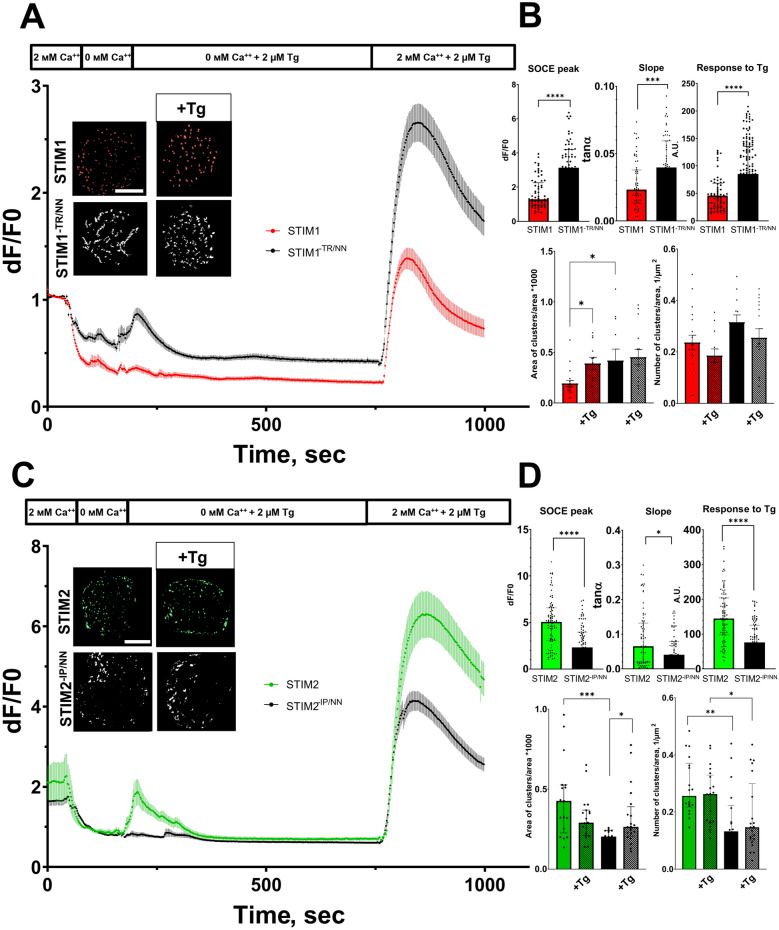
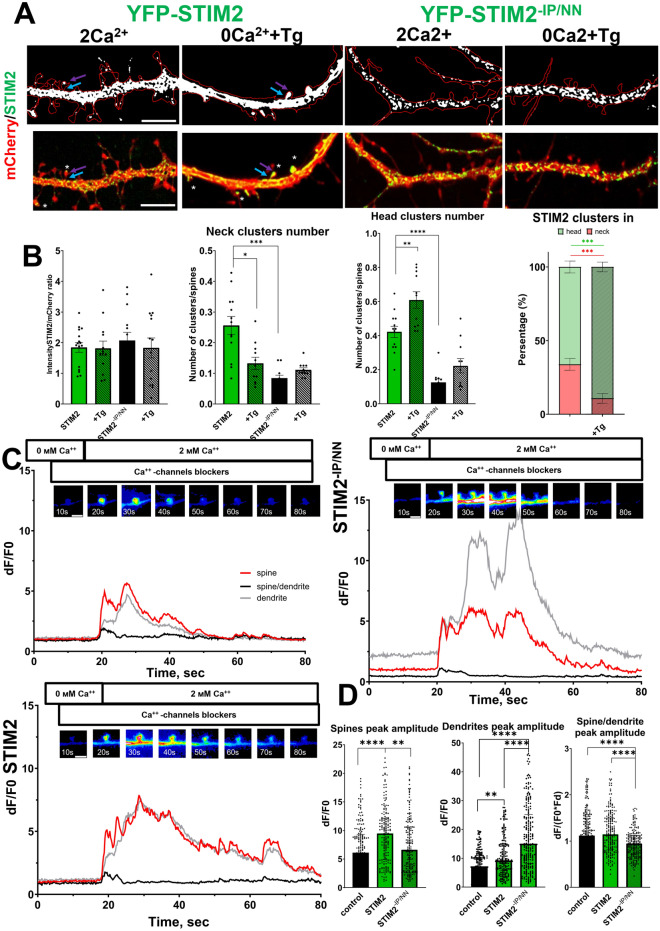
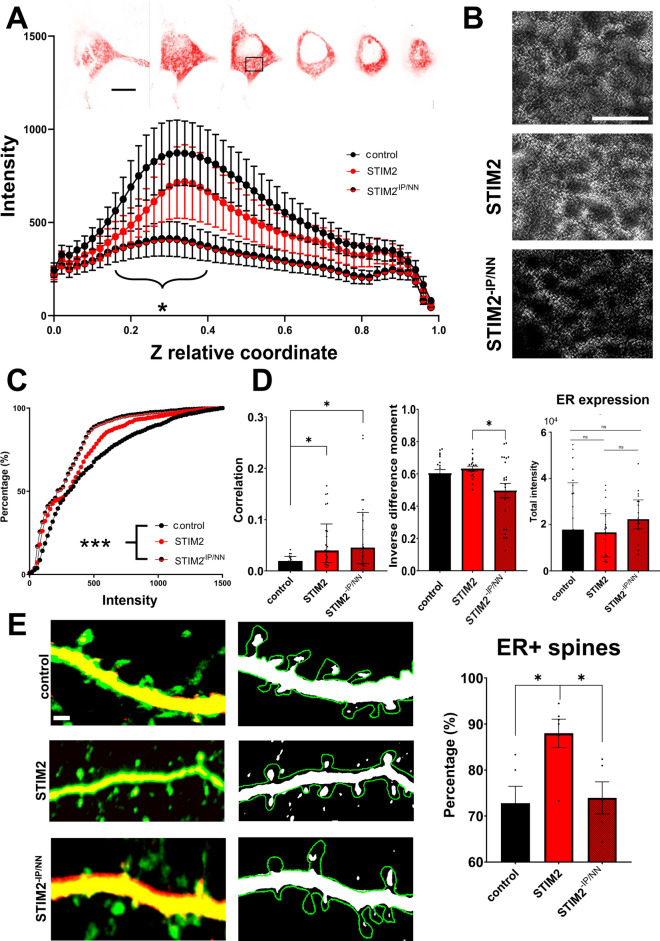
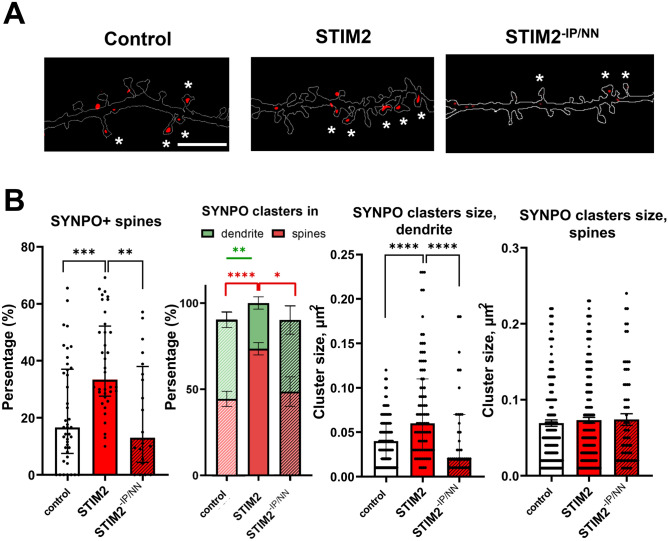
One of the mechanisms of calcium signalling in neurons is store-operated calcium entry (SOCE), which is activated when the calcium concentration in the smooth endoplasmic reticulum (ER) decreases and its protein-calcium sensor STIM (stromal interacting molecule) relocate to the endoplasmic reticulum and plasma membrane junctions, forms clusters and induces calcium entry. In electrically non-excitable cells, STIM1 is coupled with the positive end of a tubulin microtubule through interaction with EB1 (end-binding) protein, which controls its oligomerization, SOCE and participates in ER movement. STIM2 homologue, which is specific for mature hippocampal dendritic spines, is known to interact with EB3 protein, however, not much is known about the role of this interaction in STIM2 clustering or ER trafficking in neurons. Intriguingly, in neurons, reducing the expression of EB3 protein or disrupting the interaction of STIM2 protein with EB proteins results in decreased SOCE, in contrast to experiments with STIM1 in non-excitable cells. In this study, these two homologues are compared side-by-side in HEK-293T, and it is shown for the first time that their clustering and SOCE is oppositely regulated by dynamic tubulin microtubules. In particular, for STIM2, the interaction with dynamic microtubule cytoskeleton is required for clustering and is shown to potentiate SOCE, while for STIM1 this interaction restricts clustering, resulting in SOCE decrease. After store depletion in primary hippocampal neurons, the wild type STIM2 is redistributed from the necks to the heads of dendritic spines, while the STIM2 variant with a mutation that disrupts the interaction with EB proteins is excluded from dendritic spines. In addition, overexpression of the mutant variant leads to ER reorganization in neuronal soma and reduction of ER presence in spines. It also leads to a reduction in the number of spines containing the spine apparatus formed by ER cisternae, as well as a reduction in dendritic spines SOCE. These effects are opposite of those detected during overexpression of the wild type STIM2. Considered together, these findings underline the important role of dynamic microtubules in regulation of neuronal SOCE and ER morphology.
Keywords: Dendritic spine; Dynamic microtubules; EB proteins; End-binding proteins; Endoplasmic reticulum; STIM puncta; Spine apparatus; Store-operated calcium entry.
© 2024. The Author(s).
Conflict of interest statement
Declarations. Competing interests: The authors declare no competing interests.
Figures
References
-
- Berridge, M. J. Neuronal calcium signaling. Neuron21(1), 13–26 (1998). - PubMed
-
- Putney J. W., Jr. Store-operated calcium channels. Handb. Cell Signal.66, 911–914 (2010).
-
- Parekh, A. B. & Putney, J. W. Jr. Store-operated calcium channels. Physiol. Rev.85(2), 757–810 (2005). - PubMed
-
- Lewis, R. S. Calcium signaling mechanisms in T lymphocytes. Annu. Rev. Immunol.19(1), 497–521 (2001). - PubMed
Publication types
MeSH terms
Substances
Grants and funding
LinkOut - more resources
Full Text Sources
Miscellaneous
