


Dynamic biomechanical effects of medial meniscus tears on the knee joint: a finite element analysis
- PMID: 39780245
- PMCID: PMC11715105
- DOI: 10.1186/s13018-024-05401-8
Dynamic biomechanical effects of medial meniscus tears on the knee joint: a finite element analysis
Abstract
Background: Meniscus tears can change the biomechanical environment of the knee joint and might accelerate the development of osteoarthritis. The aim of this study was to investigate the dynamic biomechanical effects of different medial meniscus tear positions and tear gaps on the knee during walking.
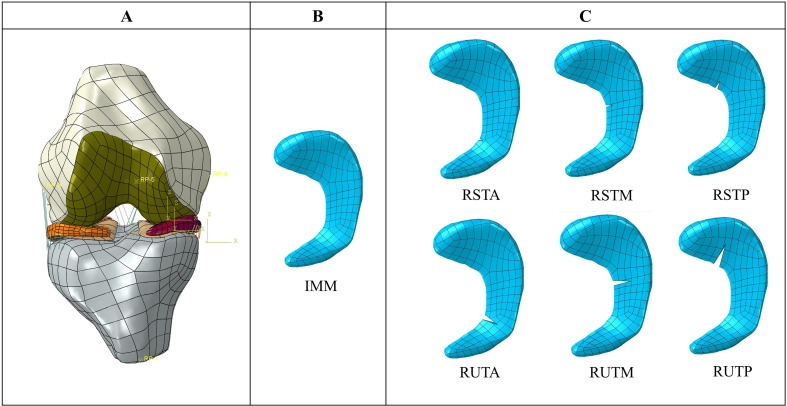
Methods: Seven finite element models of the knee joint were constructed, including the intact medial meniscus (IMM), radial stable tears in the anterior, middle, and posterior one-third regions of the medial meniscus (RSTA, RSTM, RSTP), and the corresponding unstable tears (RUTA, RUTM, RUTP). The seven models applied a 1000 N axial static load and a human walking load, as defined by the ISO14243-1 standard.
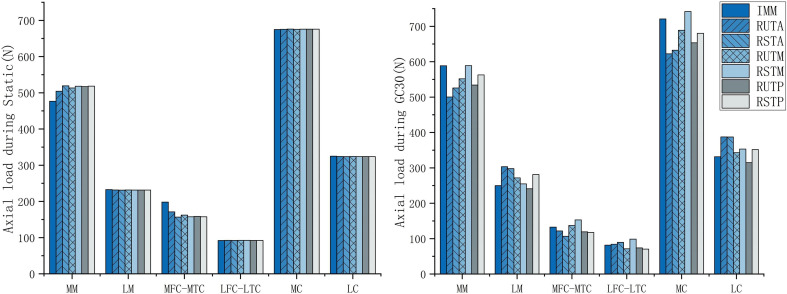
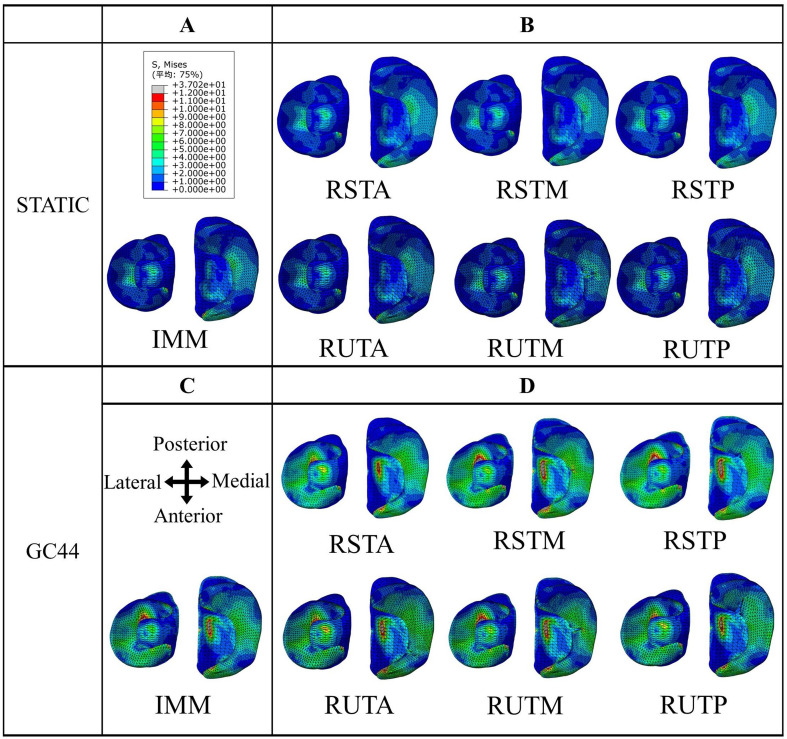
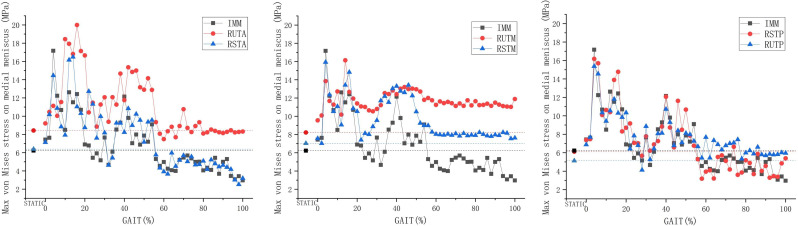
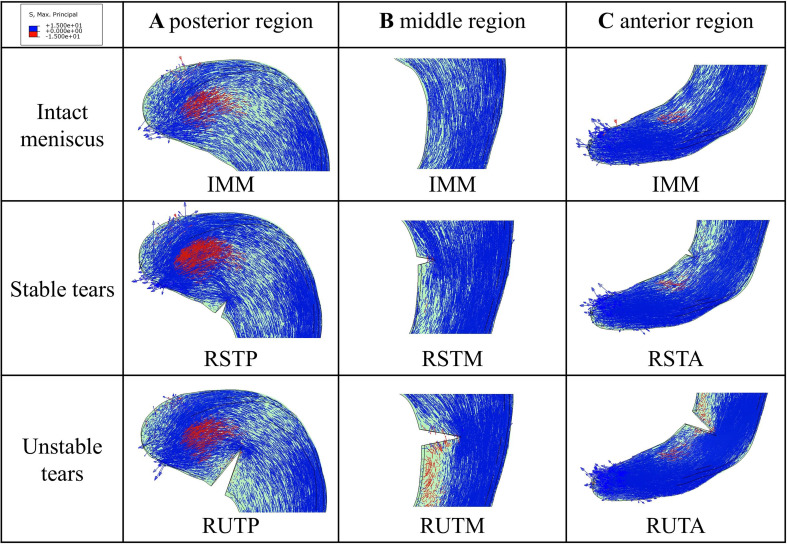
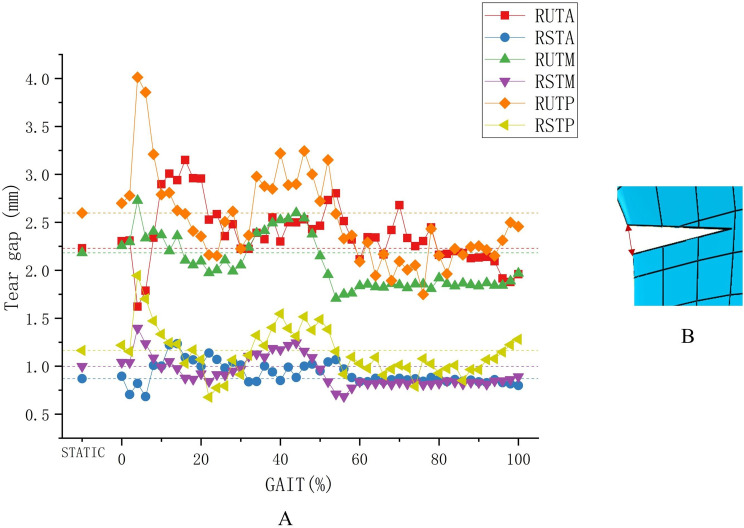
Results: Compared with the results under static loading, the axial load ratio of the medial and lateral compartments was redistributed (ranging from 0.7:1 to 2.9:1). The stress concentration was in the middle and posterior portions of the lateral compartment, not in the anterior and middle portions of the medial compartment under dynamic analysis. Compared with that of the IMM, the maximum von Mises stress on the medial meniscus increased by approximately 24.68-57.14% in the RUTA, RUTM, and RSTM models, with a greater difference observed in the hoop stress on both sides of the radial tear. The peak radial tear gap appeared at GC6 and GC44, and the tear gap remained at a high level from GC30-GC60.
Conclusions: Radial tears should be considered for repair, and reinforced sutures should be placed on the anterior or middle regions of the meniscus. Greater attention should be given to the dynamic biomechanical effects on the knee joint during preoperative diagnosis and postoperative rehabilitation.
Keywords: Biomechanics; Finite element analysis; Knee; Meniscal tear.
© 2024. The Author(s).
Conflict of interest statement
Declarations. Ethics approval and consent to participate: This study was approved by the board of the research ethics committee in Peking University Third Hospital (IRB00006761-M2019299). The volunteer involved in the study consent to participate in the study. Consent for publication: All individual data consent to publish. Competing interests: The authors declare no competing interests.
Figures
References
MeSH terms
Grants and funding
LinkOut - more resources
Full Text Sources
Miscellaneous
