


Establishment and evaluation of a method for measuring ornithine transcarbamylase activity in micro blood of neonates
- PMID: 39780260
- PMCID: PMC11708073
- DOI: 10.1186/s13023-025-03529-2
Establishment and evaluation of a method for measuring ornithine transcarbamylase activity in micro blood of neonates
Abstract
Background: Ornithine transcarbamylase deficiency exhibits a high degree of clinical heterogeneity, making its screening and classification challenging in some instances. In this study, we first established a simple and stable method for testing ornithine transcarbamylase activity using micro blood from newborns, rather than relying on venous blood.
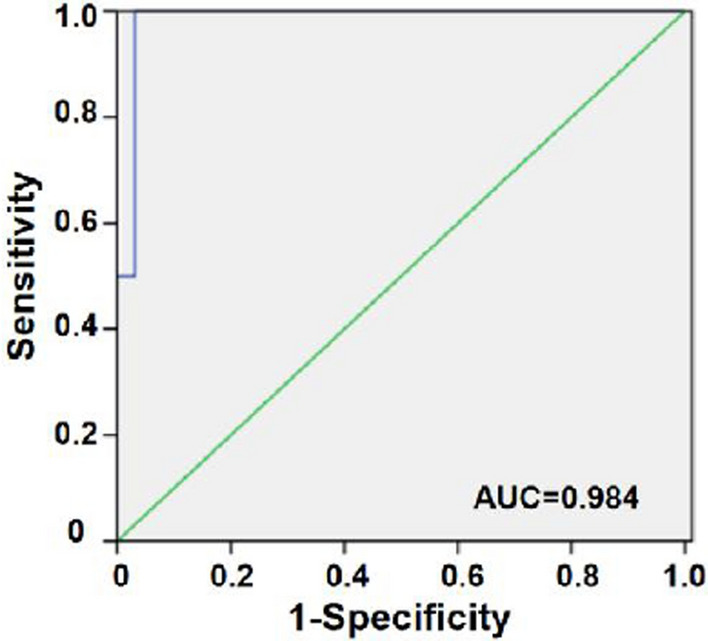
Methods: The activity of ornithine transcarbamylase was assessed by measuring the concentration of citrulline produced in the reaction with carbamoyl phosphate and ornithine, using serum, plasma or micro blood. Correlation analysis was evaluated using Sangerbox Tools. The Receiver Operating Characteristic curve was used in SPSS Statistics 17.0 to evaluate the diagnostic efficiency of Ornithine transcarbamylase deficiency.
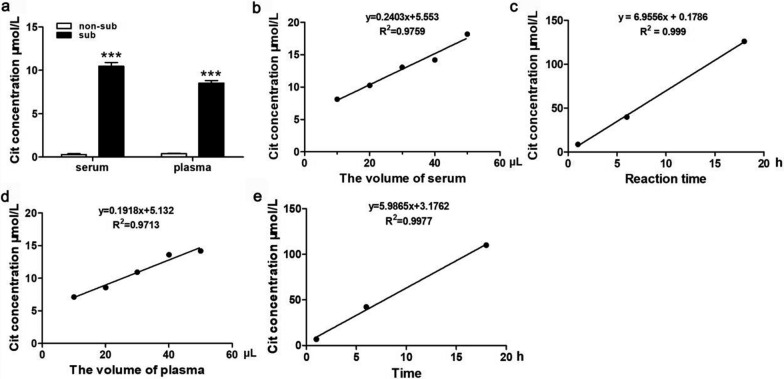
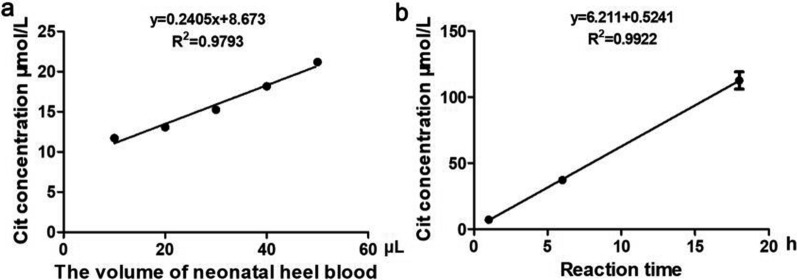
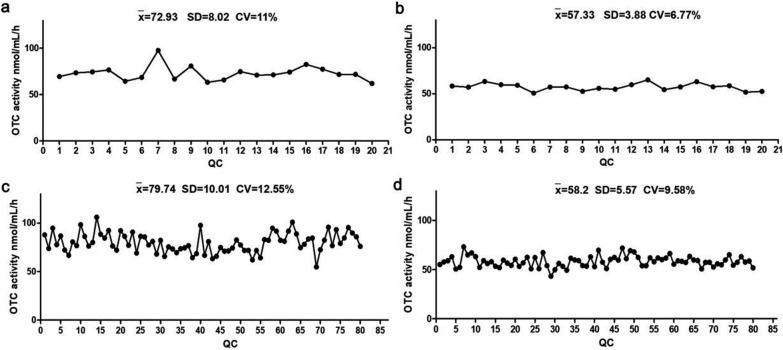
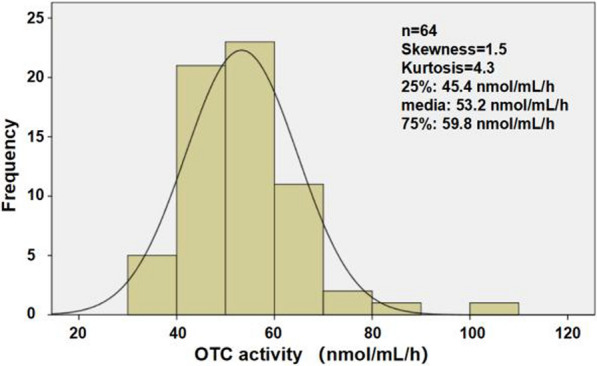
Results: A strong linear relationship was observed between ornithine transcarbamylase activity and both micro blood volume and reaction time (R2 = 0.9793, 0.9922 respectively). The intra-coefficient variation and inter-coefficient variation were 11% and 12.5% with a 1-h reaction time, and 6.77% and 9.58% with a 3-h reaction time, respectively. And the inter-coefficient variation was lower than the most widely used colorimetry method (5.1-21.1%). The Limit of Blank was 0.57 nmol/mL/h. The reference interval for normal newborn population is greater than or equal to 39.6 nmol/mL/h. Notably, the method exhibited a 100% sensitivity, surpassing the sensitivity of colorimetry method (94.3%), along with and a specificity of 96.9% for diagnosing ornithine transcarbamylase deficiency.
Conclusions: We pioneered a method for testing OTC activity that normally carried on venous blood can be effectively performed on microblood heel samples. Meanwhile, our method presents a simpler, more stable and reproducible approach compared to colorimetry.
Keywords: Citrulline; Micro blood; Newborns; Ornithine transcarbamylase activity; Ornithine transcarbamylase deficiency; Tandem mass spectrometry.
© 2025. The Author(s).
Conflict of interest statement
Declarations. Ethics approval and consent to participate: The human studies were conducted following the ethical standards of the institutional and/or national research committee (Nanjing Women and Children's Healthcare Hospital + [2014]36) and the 2013 Helsinki Declaration and its later amendments or comparable ethical standards. Informed consent was obtained from the patients or their guardians. Consent for publication: All authors read and approved the final manuscript. Competing interests: There are no conflicts to declare.
Figures
References
-
- Lee T, Yoshii K, Yoshida S, Suga T, Nakamura K, Sasai H, et al. Retrospective evaluations revealed pre-symptomatic citrulline concentrations measured by newborn screening were significantly low in late-onset ornithine transcarbamylase deficiency patients. Clin Chim Acta. 2020;510:633–7. 10.1016/j.cca.2020.08.027. - PubMed
MeSH terms
Substances
Grants and funding
LinkOut - more resources
Full Text Sources
