


Impact of Standardized Heart Failure Management Center Construction on the Management of Patients With Chronic Heart Failure
- PMID: 39780449
- PMCID: PMC11711211
- DOI: 10.1002/clc.70076
Impact of Standardized Heart Failure Management Center Construction on the Management of Patients With Chronic Heart Failure
Abstract
Background: Heart failure is extremely harmful to human health and social economics. The purpose of standardized heart failure management center (SHFMC) is to correct the non-standardization of heart failure treatment.
Hypothesis: SHFMC has a positive impact on the management and prognosis of patients with chronic heart failure (CHF).
Methods: The SHFMC database of Jiaxing First Hospital was retrospectively analyzed. Two hundred sixty-three patients with CHF who were hospitalized in the cardiovascular medicine department of Jiaxing First Hospital in Zhejiang Province from January 2020 to December 2020 were identified as study subjects. The SHFMC opening day, July 1, 2020, was used as the dividing line around which the patients were divided into Group A (before the completion of SHFMC, n = 137) and Group B (after, n = 126). The baseline data, treatment standardization, long-term efficacy, 1-year all-cause mortality, and readmission rate of the two groups were compared.
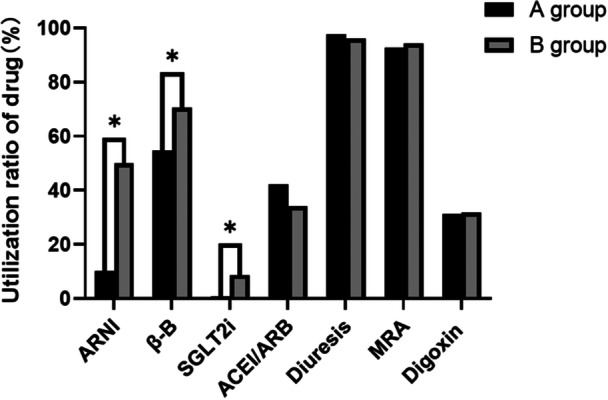
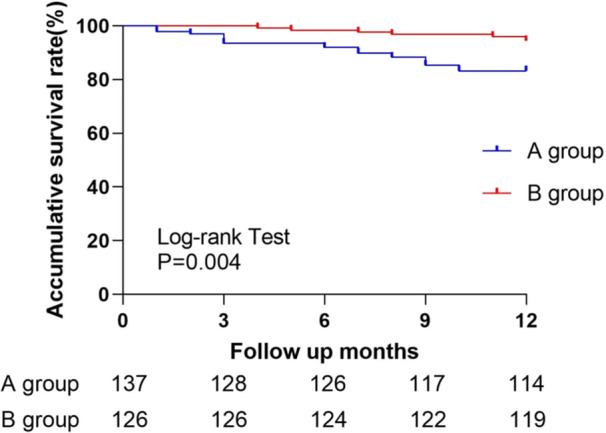
Results: The use of angiotensin receptor enkephalinase inhibitors (ARNIs), β-blockers (β-Bs), and sodium-glucose cotransport protein 2 inhibitors (SGLT2is) increased significantly, and the long-term outcome, readmission rate, and 1-year all-cause mortality of patients improved in group B.
Conclusions: The construction of SHFMC has been associated with consistent improvements in the standardization of CHF treatment, long-term patient outcomes, 1-year cumulative survival rates, and readmission rates.
Keywords: chronic heart failure; readmission rate; sodium‐glucose cotransport protein 2 inhibitors; standardized heart failure management center; treatment standardization.
© 2025 The Author(s). Clinical Cardiology published by Wiley Periodicals LLC.
Conflict of interest statement
The authors declare no conflicts of interest.
Figures

References
-
- James S. L., Abate D., Abate K. H., et al., “Gbd 2017 Disease and Injury Incidence and Prevalence Collaborators. Global, Regional, and National Incidence, Prevalence, and Years Lived With Disability for 354 Diseases and Injuries for 195 Countries and Territories, 1990–2017: A Systematic Analysis for the Global Burden of Disease Study 2017,” The Lancet 392 (2018): 1789–1858, 10.1016/s0140-6736(18)32279-7. - DOI - PMC - PubMed
MeSH terms
LinkOut - more resources
Full Text Sources
Medical
