


Identification of Factors Influencing Donor-Derived Cell-Free DNA Levels up to One Year After Kidney Transplant
- PMID: 39781105
- PMCID: PMC11707014
- DOI: 10.1155/joot/7673476
Identification of Factors Influencing Donor-Derived Cell-Free DNA Levels up to One Year After Kidney Transplant
Abstract
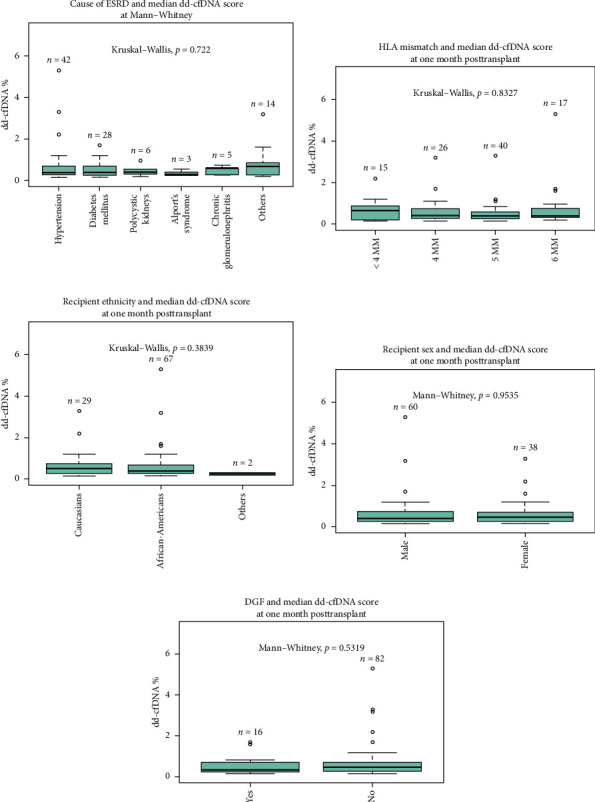
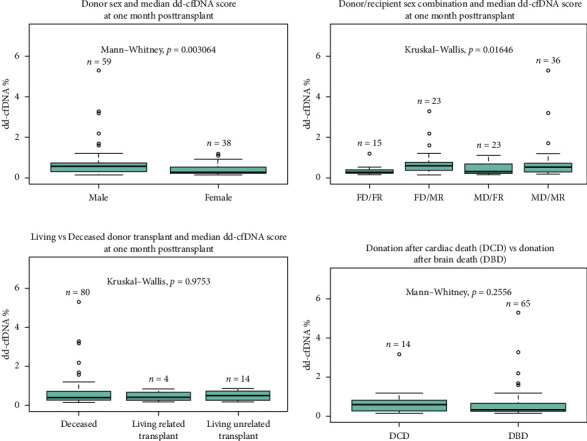
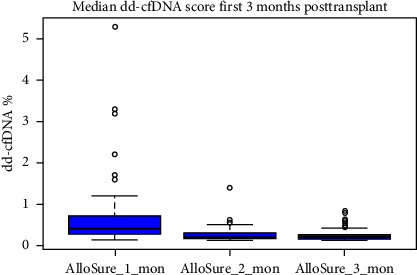
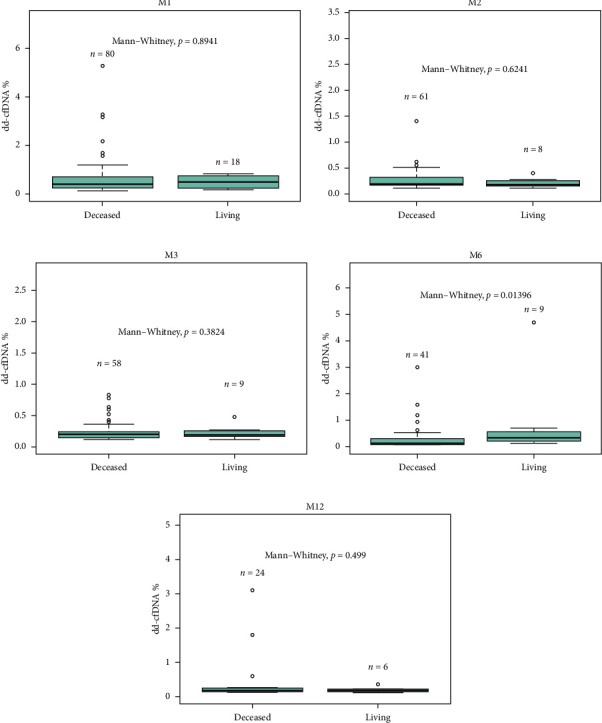
Introduction: Donor-derived cell-free DNA (dd-cfDNA) in the peripheral blood of allograft recipients has shown to early identify allograft injury. In this study, we assessed the factors that influence the amount of circulating dd-cfDNA during the first month postkidney transplant as well as its longitudinal trend. Materials and Methods: A consecutive series of 98 adult kidney transplant recipients at a single center between July 2018 and January 2020 were included in this study. All demographic and operative details were collected for donors and recipients of the organ transplant. Median eGFR, dd-cfDNA, and serum creatinine were calculated at 1, 2, 3, 6, and 12 month posttransplant. Descriptive statistics were used for patient demographics. Nonparametric comparisons of dd-cfDNA cumulative distributions between dichotomized groupings were evaluated using Kruskal-Wallis or Mann-Whitney U tests. Results: The median age of recipients was 54.5 years (IQR: 42.7-62.2). The cause of ESRD among recipients was hypertension (43%) and Type II diabetes mellitus (29%). Eighty-two percentage of patients received a deceased donor allograft, 14% received a living unrelated allograft, and 4% received a living related allograft. Sixteen percentage of recipients experienced delayed graft function (DGF). Median creatinine level at 1 month posttransplant was 1.75 mg/dL (IQR: 1.34-2.26) and median eGFR at 1 month posttransplant was 49.6 mL/min/1.73 m2 (IQR: 35-65). The median dd-cfDNA score at 1 month posttransplant for all recipients was 0.4% (IQR: 0.15-5.3). Donor sex was a statistically significant differential for dd-cfDNA score. Recipients from male donors had a significantly higher median dd-cf DNA score at 1 month posttransplant versus those who received a female kidney (0.57% vs. 0.28%, p < 0.01). Highest median score was recorded at the first month posttransplant (0.4%, IQR: 0.26-0.74), and a sustained downward trend was observed through Month 2 (0.19%, IQR: 0.17-0.31) and Month 3 (0.19%, IQR: 0.15-0.26). Correlation between 1-, 2-, 3-, 6-, and 12-month posttransplant median dd-cfDNA scores between deceased donor and living donor (LRD and LURD) cohorts was not statistically significant. Conclusion: This study provides further insight into donor and recipient variables' effects on dd-cfDNA in the early posttransplant phase by analyzing a more diverse cohort of patients and adds to the knowledge around interpreting dd-cfDNA scores with clinical correlation for posttransplant management.
Copyright © 2024 Ahmad Mirza et al.
Conflict of interest statement
The authors declare no conflicts of interest.
Figures
References
LinkOut - more resources
Full Text Sources
Research Materials
Miscellaneous
