


PFAS Exposure and Male Reproductive Health: Implications for Sperm Epigenetics
- PMID: 39788533
- PMCID: PMC11893235
- DOI: 10.1055/s-0044-1801363
PFAS Exposure and Male Reproductive Health: Implications for Sperm Epigenetics
Abstract
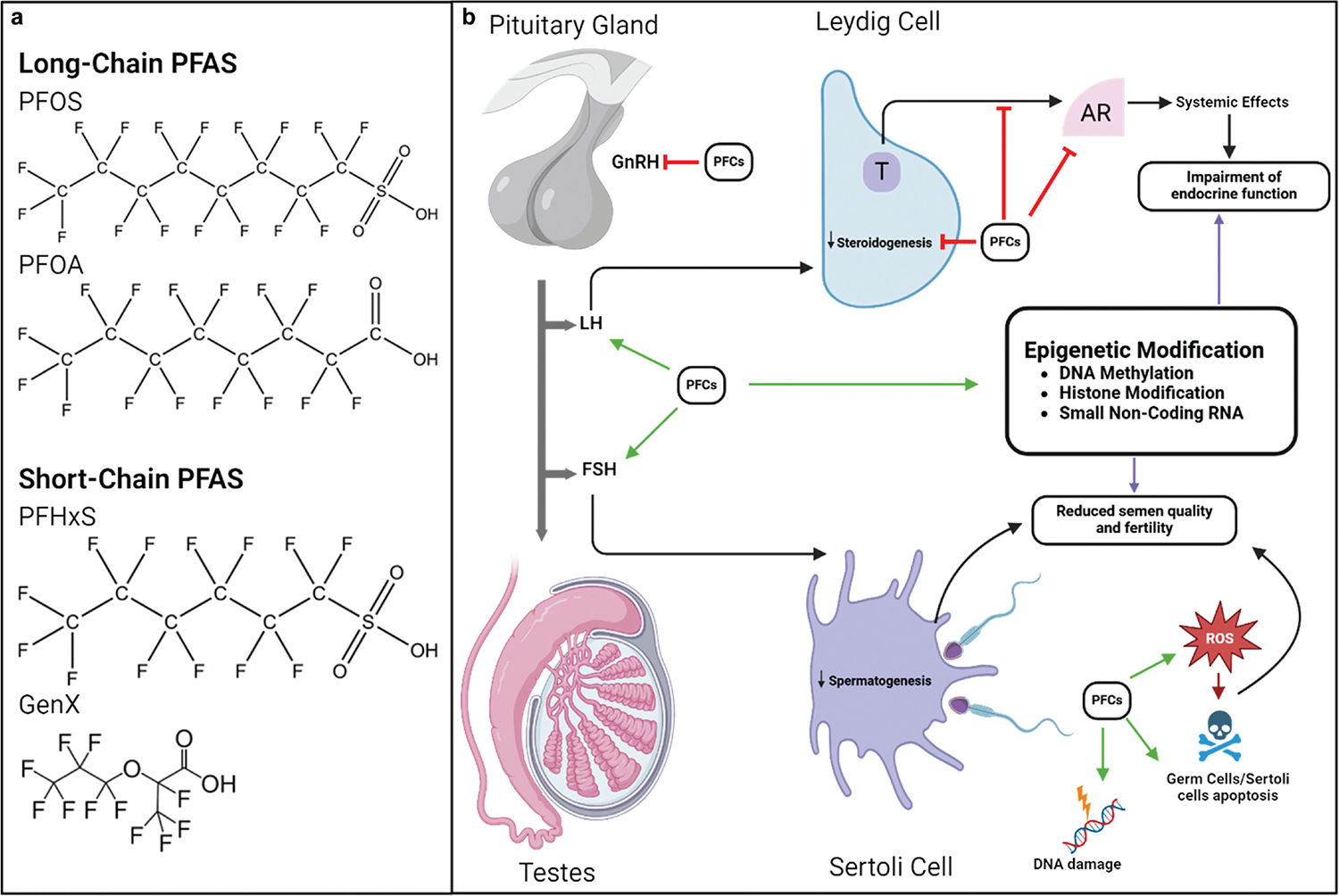
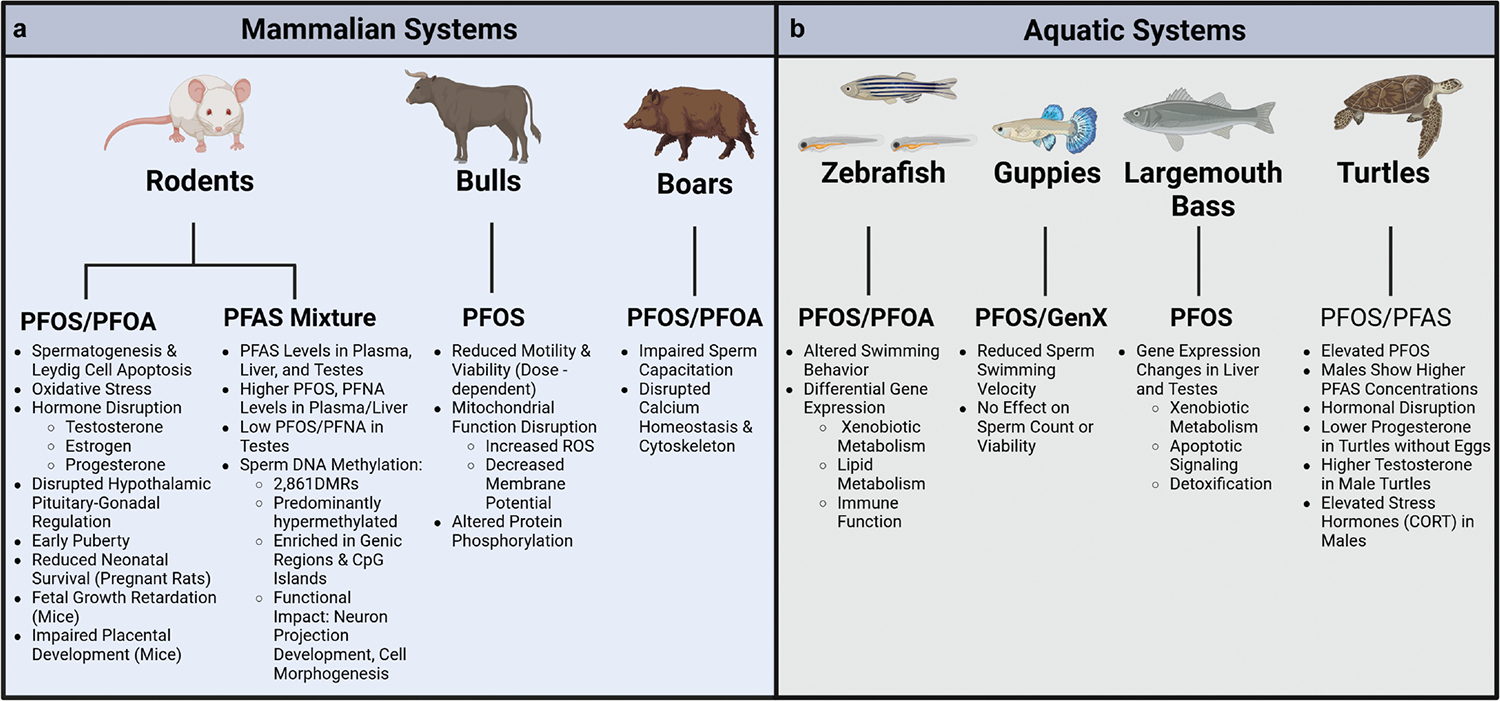
Per- and polyfluoroalkyl substances (PFASs) are persistent environmental contaminants found in human tissues and persist in the environment, posing significant risks to reproductive health. This review examines the impact of PFAS exposure on male reproductive health, with a focus on sperm epigenetics. PFASs disrupt endocrine function by altering key reproductive hormones and impairing sperm motility, quality, and viability. Epidemiologic and animal studies highlight inconsistent yet concerning associations between PFAS exposure and semen parameters, as well as altered gene expression and DNA methylation patterns. Moreover, PFAS exposure during critical windows of development has been linked to differential impacts on male versus female pubertal development, cognitive outcomes, and reproductive physiology, emphasizing the complexity of PFAS interactions. This comprehensive analysis highlights the need for continued research into the mechanisms by which PFASs influence reproductive health and development with potential implications for sperm epigenetics. The review emphasizes the importance of understanding the epigenetic mechanisms behind these disruptions, particularly DNA methylation and its role in heritable changes. Investigating the epigenetic modifications driven by PFAS exposure is crucial for elucidating the mechanisms by which these chemicals influence reproductive health. Future research should focus on understanding these epigenetic changes in both immediate fertility outcomes and transgenerational health risks.
Thieme. All rights reserved.
Conflict of interest statement
None declared.
Figures

References
-
- OECD. Toward a new comprehensive global database OFPER- and polyfluoroalkyl substances (PFASS): Summary report on updating the OECD 2007 list of per- and polyfluoroalkyl substances (PFASS) 2018
-
- EPA, Multi-Industry Per- and Polyfluoroalkyl Substances (PFAS) Study – 2021 Preliminary Report 2021. United States Environmental Protection Agency Office of Water. Available at: https://www.epa.gov/system/files/documents/2021-09/multi-industry-pfas-s.... Accessed January 6, 2025
Publication types
MeSH terms
Substances
Grants and funding
LinkOut - more resources
Full Text Sources
Medical
