


Molecular logic for cellular specializations that initiate the auditory parallel processing pathways
- PMID: 39788966
- PMCID: PMC11717940
- DOI: 10.1038/s41467-024-55257-z
Molecular logic for cellular specializations that initiate the auditory parallel processing pathways
Abstract
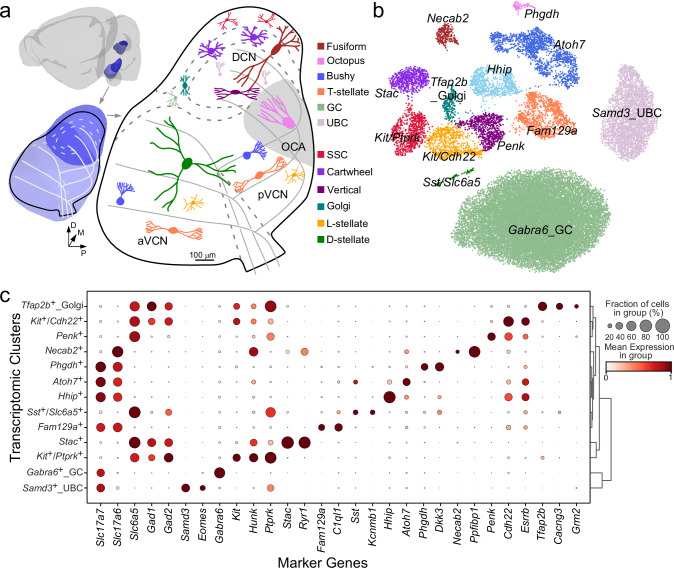
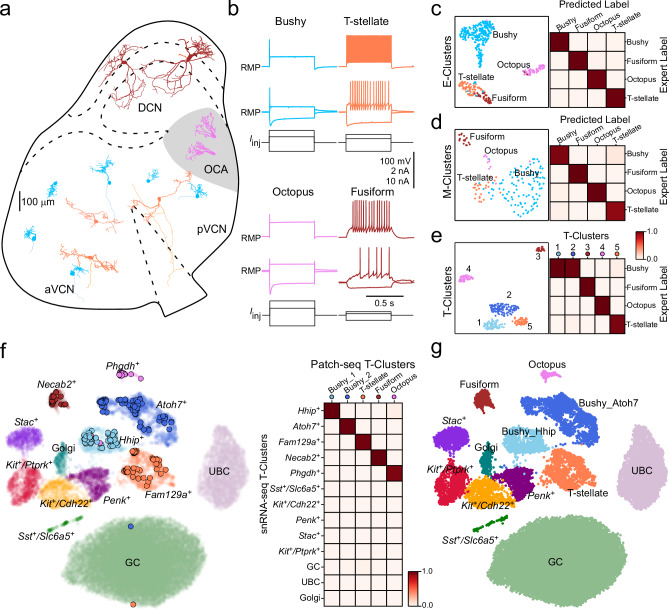
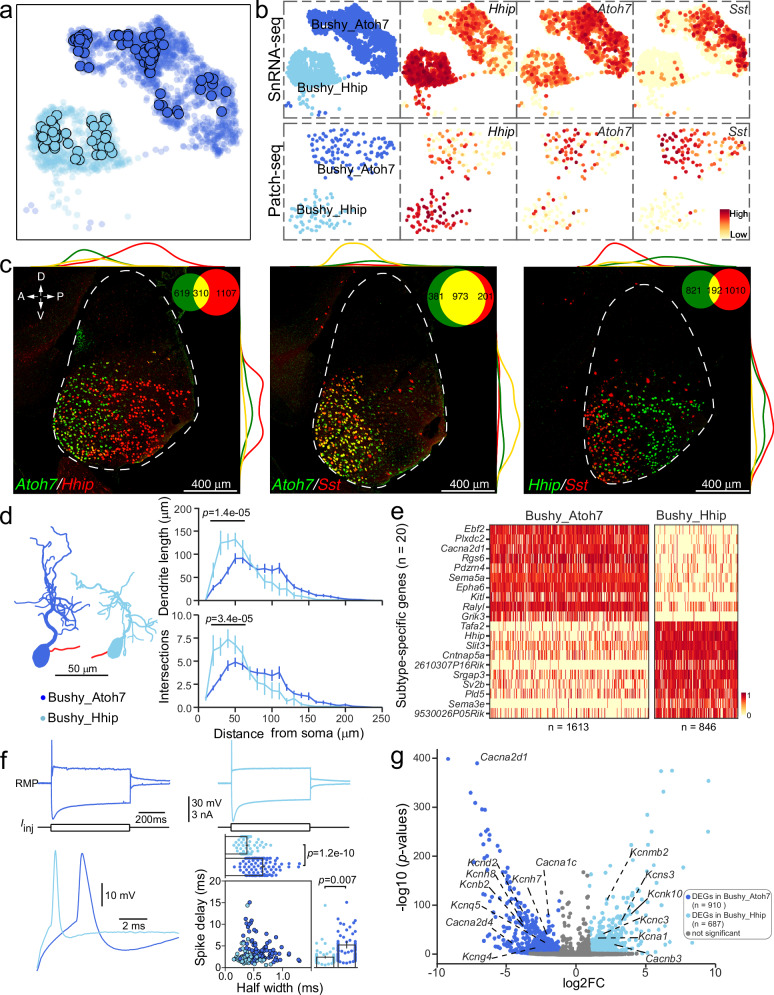
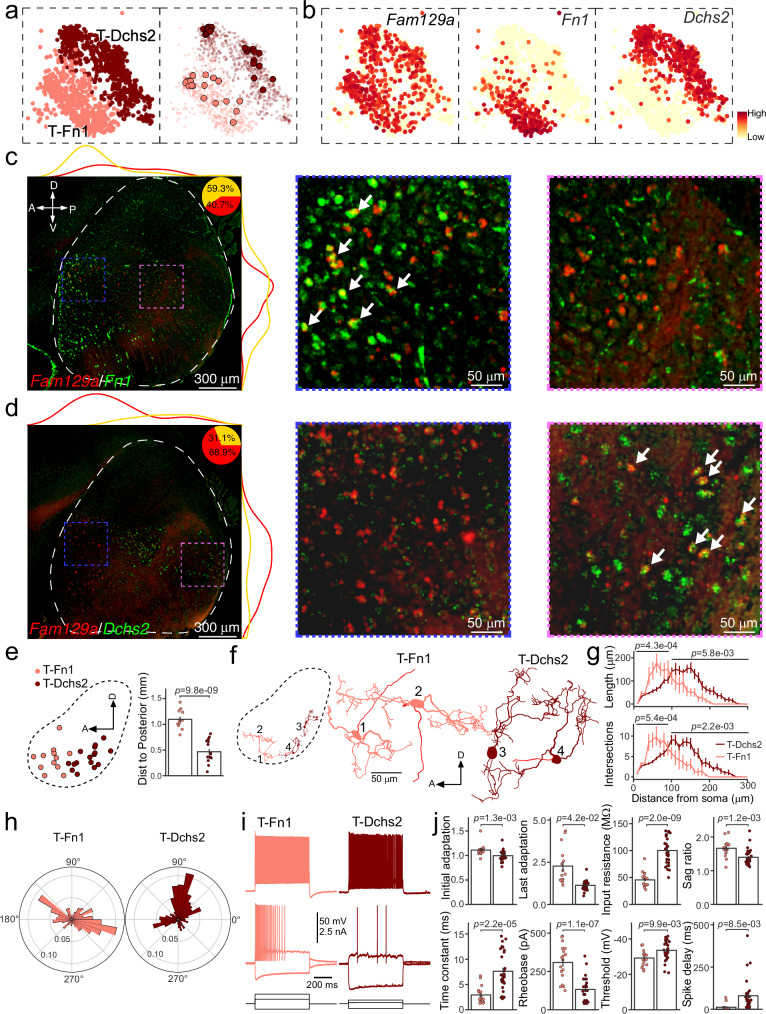
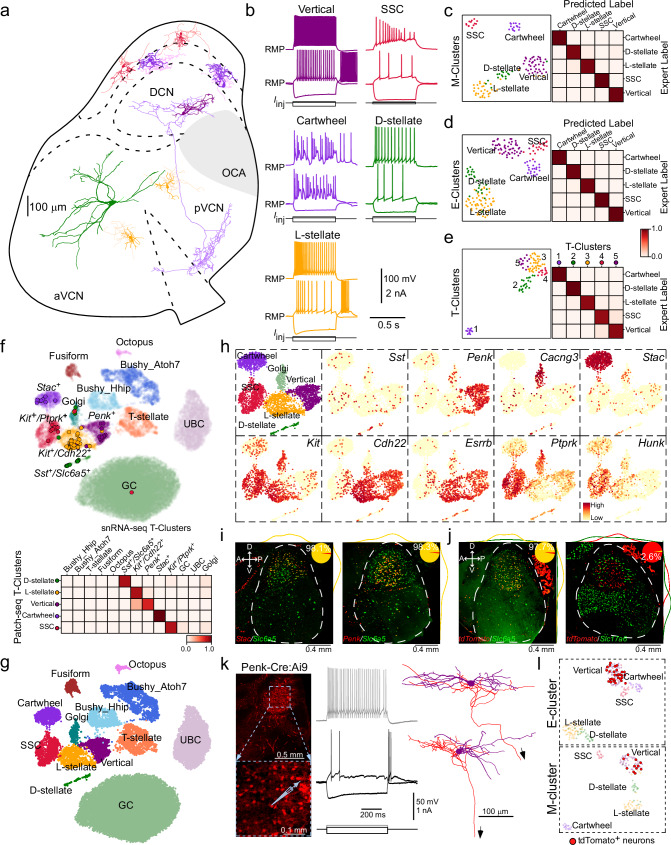
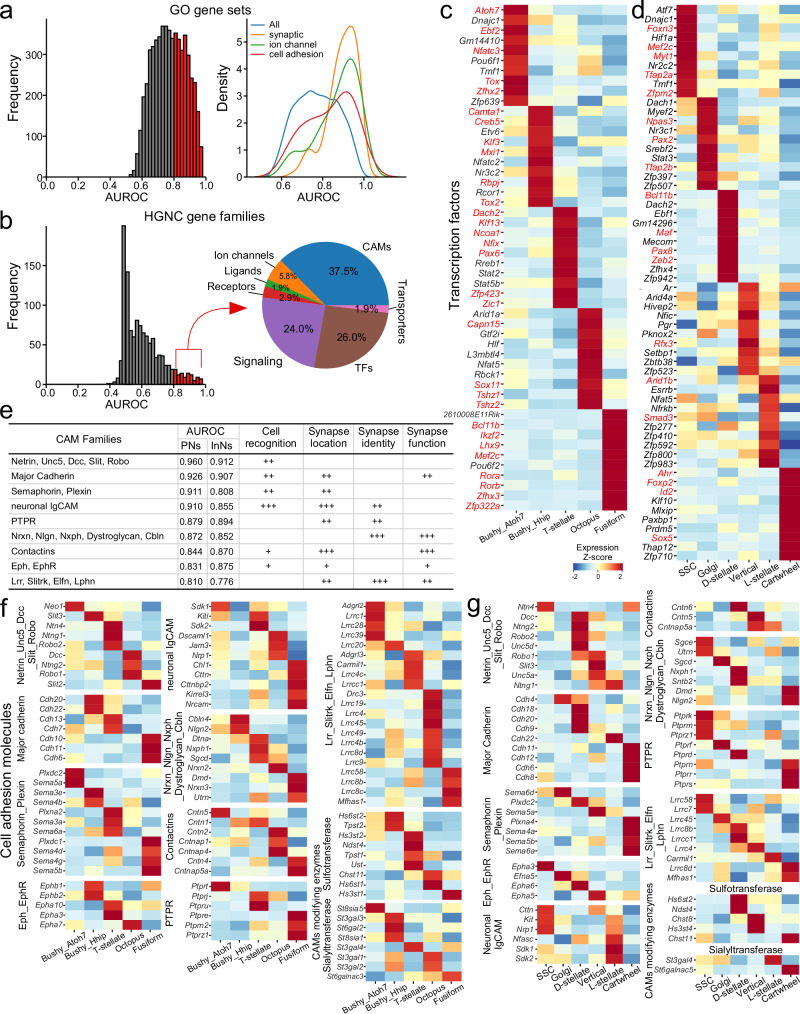
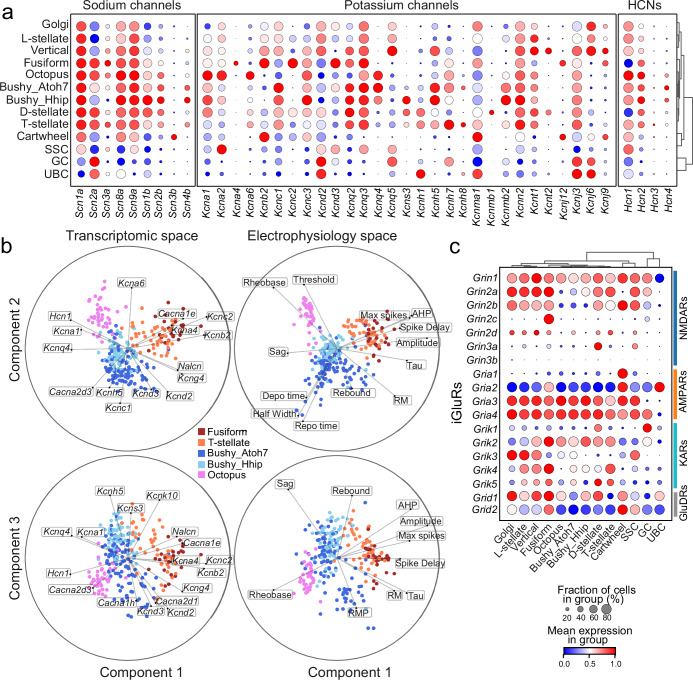
The cochlear nuclear complex (CN), the starting point for all central auditory processing, encompasses a suite of neuronal cell types highly specialized for neural coding of acoustic signals. However, the molecular logic governing these specializations remains unknown. By combining single-nucleus RNA sequencing and Patch-seq analysis, we reveal a set of transcriptionally distinct cell populations encompassing all previously observed types and discover multiple hitherto unknown subtypes with anatomical and physiological identity. The resulting comprehensive cell-type taxonomy reconciles anatomical position, morphological, physiological, and molecular criteria, enabling the determination of the molecular basis of the specialized cellular phenotypes in the CN. In particular, CN cell-type identity is encoded in a transcriptional architecture that orchestrates functionally congruent expression across a small set of gene families to customize projection patterns, input-output synaptic communication, and biophysical features required for encoding distinct aspects of acoustic signals. This high-resolution account of cellular heterogeneity from the molecular to the circuit level reveals the molecular logic driving cellular specializations, thus enabling the genetic dissection of auditory processing and hearing disorders with a high specificity.
© 2025. The Author(s).
Conflict of interest statement
Competing interests: The authors declare no competing interests.
Figures
Update of
-
Molecular logic for cellular specializations that initiate the auditory parallel processing pathways.bioRxiv [Preprint]. 2024 Oct 6:2023.05.15.539065. doi: 10.1101/2023.05.15.539065. bioRxiv. 2024. Update in: Nat Commun. 2025 Jan 9;16(1):489. doi: 10.1038/s41467-024-55257-z. PMID: 37293040 Free PMC article. Updated. Preprint.
References
-
- Oertel, D., McGinley, M. & and Cao, X.-J. in Encylopedia of Neuroscience (Springer, 2009).
-
- Rhode, W. S. & Greenberg, S. in The Mammalian Auditory Pathway: Neurophysiology (eds. Arthur N. Popper & Richard R. Fay) 94–152 (Springer, 1992).
MeSH terms
Grants and funding
- R35NS116798/U.S. Department of Health & Human Services | NIH | National Institute of Neurological Disorders and Stroke (NINDS)
- R01NS110767/U.S. Department of Health & Human Services | NIH | National Institute of Neurological Disorders and Stroke (NINDS)
- P30 EY002520/EY/NEI NIH HHS/United States
- R01DC004450/U.S. Department of Health & Human Services | NIH | National Institute on Deafness and Other Communication Disorders (NIDCD)
- R01 NS110767/NS/NINDS NIH HHS/United States
- P50 HD103555/HD/NICHD NIH HHS/United States
- R01DC017797/U.S. Department of Health & Human Services | NIH | National Institute on Deafness and Other Communication Disorders (NIDCD)
- R35 NS116798/NS/NINDS NIH HHS/United States
- S10 OD016167/OD/NIH HHS/United States
- R01 DC017797/DC/NIDCD NIH HHS/United States
- R01 MH120404/MH/NIMH NIH HHS/United States
- R01 DC004450/DC/NIDCD NIH HHS/United States
- R01MH122169; R01MH120404/U.S. Department of Health & Human Services | NIH | National Institute of Mental Health (NIMH)
- R01 MH122169/MH/NIMH NIH HHS/United States
LinkOut - more resources
Full Text Sources
Molecular Biology Databases
