


The mediating effects of perceived usefulness and perceived ease of use on nurses' intentions to adopt advanced technology
- PMID: 39789568
- PMCID: PMC11716174
- DOI: 10.1186/s12912-024-02648-8
The mediating effects of perceived usefulness and perceived ease of use on nurses' intentions to adopt advanced technology
Abstract
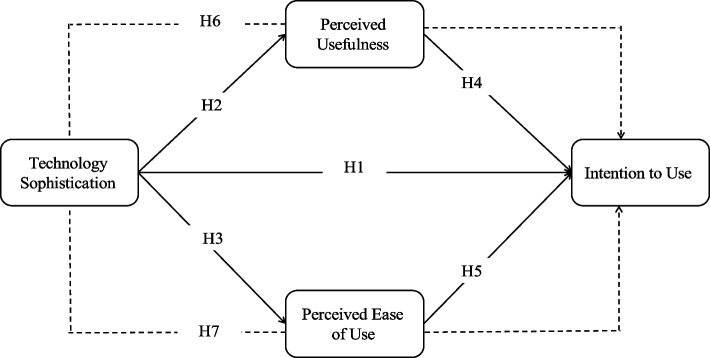
This study explored the role of technology systems in influencing nurses' intentions to adopt medical applications that enhance their performance and how technology contributes to improvements in hospital systems. The study examines the intention to use technology through the mediating effects of perceived usefulness and perceived ease of use, with technology sophistication. A random sampling method was employed to gather 687 responses from nurses. The statistical analysis was conducted using AMOS version 25.0 and SPSS. The findings indicate a significant association between technology sophistication (TS), perceived usefulness (PU), perceived ease of use (PEU), and intention to use (IU). Additionally, PU and PEU positively mediate the relationship between TS and IU. This research will benefit policymakers aiming to enhance nurses' performance by adopting modern technology. Authorities should consider introducing advanced technology systems to meet the goals of hospital administration and support nurses effectively.
Keywords: Intention to use; Nurses; Pakistan; Perceived ease of use; Perceived usefulness; Technological sophistication.
© 2025. The Author(s).
Conflict of interest statement
Declarations. Ethics approval and consent to participate: This study was approved by the Ethics Committee of Islamia University, Bahawalpur, Pakistan (No: 871 HREC/2023), following the principles outlined in the Helsinki Declaration. Participants were informed about the study’s objectives and were free to withdraw at any time. All collected data were anonymized and handled with strict confidentiality, adhering to ethical guidelines. Informed consent was obtained from all participants. Consent for publication: Not applicable. Competing interests: The authors declare no competing interests.
References
-
- Kumar P. Market-focused flexibility and innovative performance in public healthcare: evidence from India. J Public Affairs. 2022;22:e2809.
-
- Young Z, Steele R. Empirical evaluation of performance degradation of machine learning-based predictive models–A case study in healthcare information systems. Int J Inform Manage Data Insights. 2022;2(1):100070.
-
- Ahsan MM, Siddique Z. Industry 4.0 in Healthcare: a systematic review. Int J Inform Manage Data Insights. 2022;2(1):100079.
Grants and funding
LinkOut - more resources
Full Text Sources
