


Histamine N-methyltransferase (HNMT) as a potential auxiliary biomarker for predicting adaptability to anti-HER2 drug treatment in breast cancer patients
- PMID: 39789599
- PMCID: PMC11720525
- DOI: 10.1186/s40364-024-00715-5
Histamine N-methyltransferase (HNMT) as a potential auxiliary biomarker for predicting adaptability to anti-HER2 drug treatment in breast cancer patients
Erratum in
-
Correction: Histamine N-methyltransferase (HNMT) as a potential auxiliary biomarker for predicting adaptability to anti-HER2 drug treatment in breast cancer patients.Biomark Res. 2025 Aug 7;13(1):100. doi: 10.1186/s40364-025-00819-6. Biomark Res. 2025. PMID: 40775794 Free PMC article. No abstract available.
Abstract
Background: Up to 23% of breast cancer patients recurred within a decade after trastuzumab treatment. Conversely, one trial found that patients with low HER2 expression and metastatic breast cancer had a positive response to trastuzumab-deruxtecan (T-Dxd). This indicates that relying solely on HER2 as a single diagnostic marker to predict the efficacy of anti-HER2 drugs is insufficient. This study highlights the interaction between histamine N-methyltransferase (HNMT) and HER2 as an adjunct predictor for trastuzumab response. Furthermore, modulation of HER2 expression by HNMT may explain why those with low HER2 expression still respond to T-Dxd.
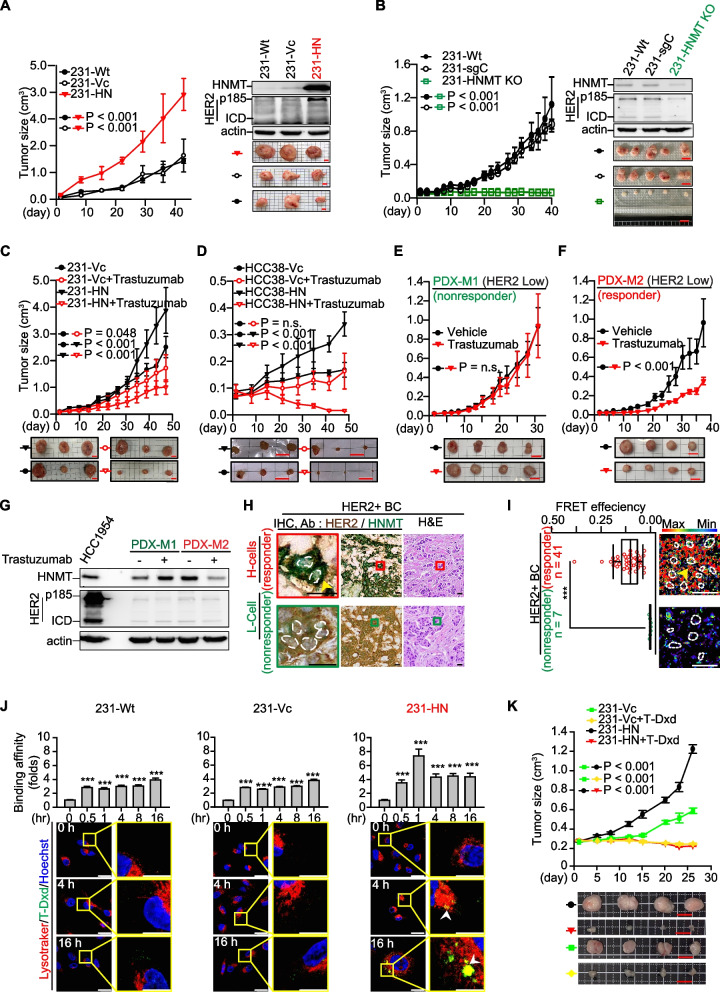
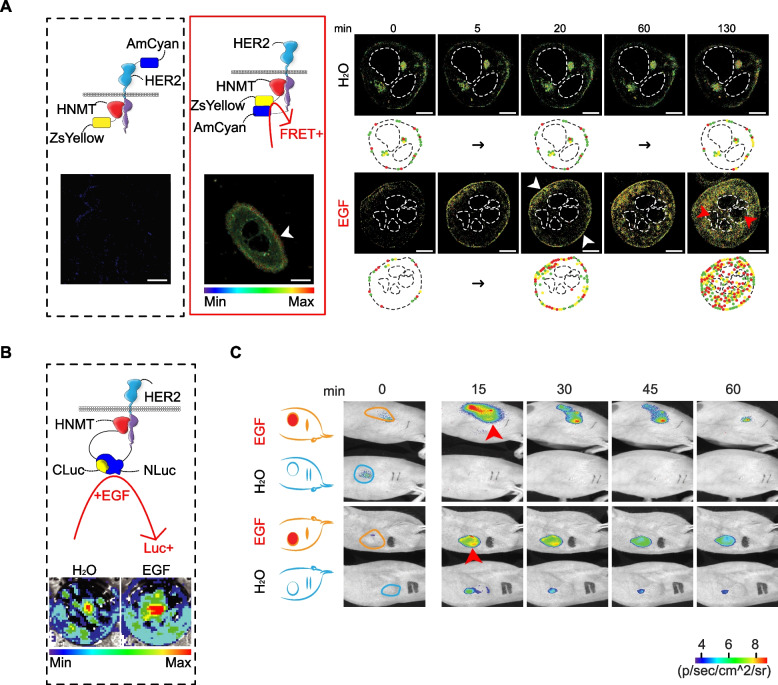
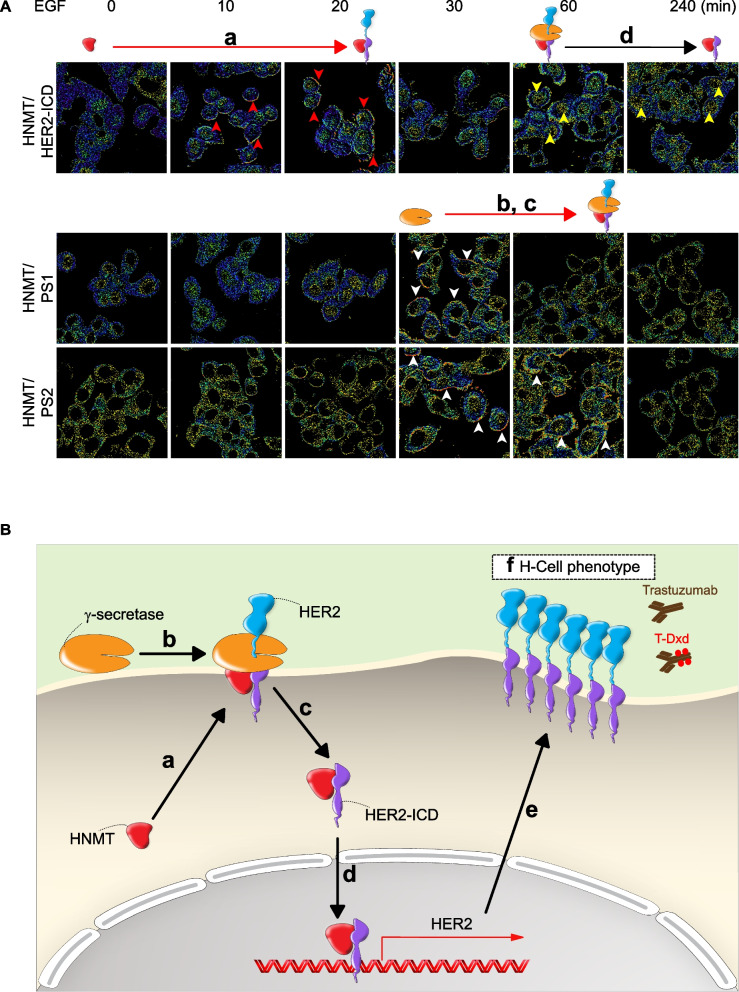
Methods: We investigated the impact of HNMT protein expression on the efficacy of anti-HER2 therapy in both in vivo and ex vivo models of patient-derived xenografts and cell line-derived xenografts. Our analysis included Förster resonance energy transfer (FRET) to assess the interaction strength between HNMT and HER2 proteins in trastuzumab-resistant and sensitive tumor tissues. Additionally, we used fluorescence lifetime imaging microscopy (FLIM), cleaved luciferase, and immunoprecipitation to study the interaction dynamics of HNMT and HER2. Furthermore, we evaluated the influence of HNMT activity on the binding of anti-HER2 antibodies to their targets through flow cytometry. We also observed the nuclear translocation of HNMT/HER2-ICD cells using fluorescent double staining and DeltaVision microscopy. Finally, ChIP sequencing was employed to identify target genes affected by the HNMT/HER2-ICD complex.
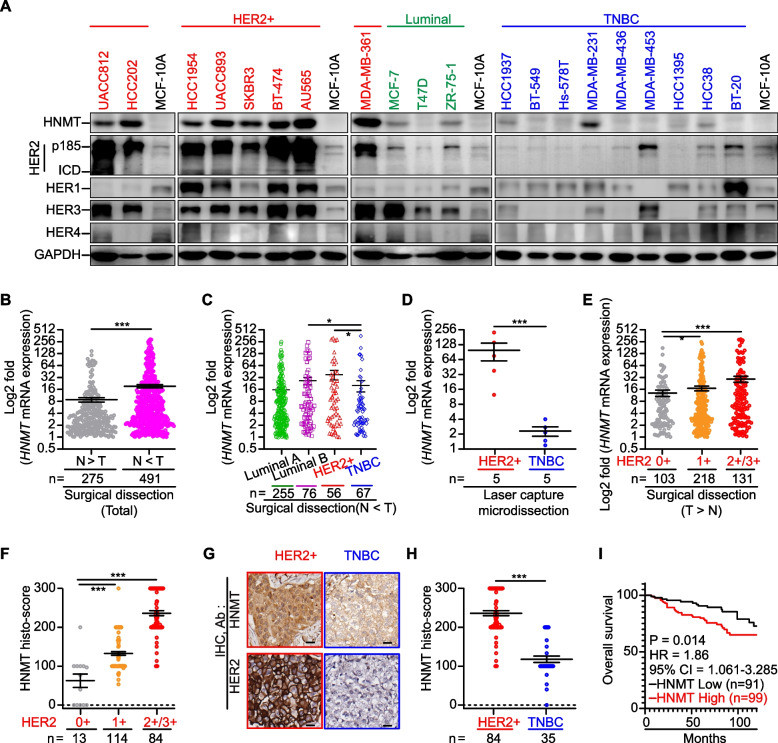
Results: This study highlights HNMT as a potential auxiliary biomarker for diagnosing HER2 + breast cancer. FRET analysis demonstrated a significant interaction between HNMT and HER2 protein in trastuzumab-sensitive tumor tissue (n = 50), suggesting the potential of HNMT as a predictor of treatment response. Mechanistic studies revealed that the interaction between HNMT and HER2 contributes to increased HER2 protein expression at the transcriptional level, thereby impacting the efficacy of anti-HER2 therapy. Furthermore, a subset of triple-negative breast cancers characterized by HNMT overexpression was found to be sensitive to HER2 antibody-drug conjugates such as T-Dxd.
Conclusions: These findings offer crucial insights for clinicians evaluating candidates for anti-HER2 therapy, especially for HER2-low breast cancer patients who could gain from T-Dxd treatment. Identifying HNMT expression could help clinicians pinpoint patients who would benefit from anti-HER2 therapy.
Keywords: Anti-HER2 therapy responder; Breast cancer; H-cell phenotype; Histamine N-methyltransferase; Nuclear translocation.
© 2025. The Author(s).
Conflict of interest statement
Declarations. Ethics approval and consent to participate: The study was conducted following the Declaration of Helsinki and was approved by the Institutional Review Board of Taipei Medical University Hospital (IRB number: CRC-14–10-01 and N201812005). All animal experiments were approved by the Institutional Animal Care and Use Committee (IACUC) of the National Defense Medical Center, Taiwan (LAC-101–0064 and IACUC-20–054). This study was conducted following the Guide for the Care and Use of Laboratory Animals. All participants in this study provided written informed consent. Consent for publication: Not applicable. Competing interests: The authors declare no competing interests.
Figures

References
-
- Sung H, et al. Global cancer statistics 2020: GLOBOCAN estimates of incidence and mortality worldwide for 36 cancers in 185 countries. CA Cancer J Clin. 2021;71(3):209–49. - PubMed
-
- Harbeck N, et al. Breast cancer. Nat Rev Dis Primers. 2019;5(1):66. - PubMed
-
- DeSantis CE, et al. Breast cancer statistics, 2019. CA Cancer J Clin. 2019;69(6):438–51. - PubMed
-
- Slamon DJ, et al. Studies of the HER-2/neu proto-oncogene in human breast and ovarian cancer. Science. 1989;244(4905):707–12. - PubMed
-
- Kumler I, Tuxen MK, Nielsen DL. A systematic review of dual targeting in HER2-positive breast cancer. Cancer Treat Rev. 2014;40(2):259–70. - PubMed
LinkOut - more resources
Full Text Sources
Research Materials
Miscellaneous
