


Assessment of Initial Oxygenation Levels of Chronic Obstructive Pulmonary Disease (COPD) and Their Impact on Basis and Vital Tools: Retrospective Cohort Study From India
- PMID: 39791024
- PMCID: PMC11717386
- DOI: 10.7759/cureus.75470
Assessment of Initial Oxygenation Levels of Chronic Obstructive Pulmonary Disease (COPD) and Their Impact on Basis and Vital Tools: Retrospective Cohort Study From India
Abstract
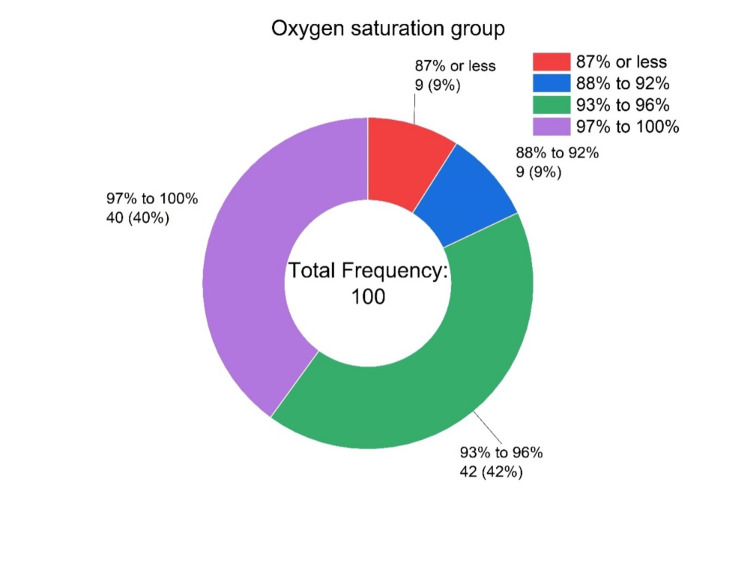
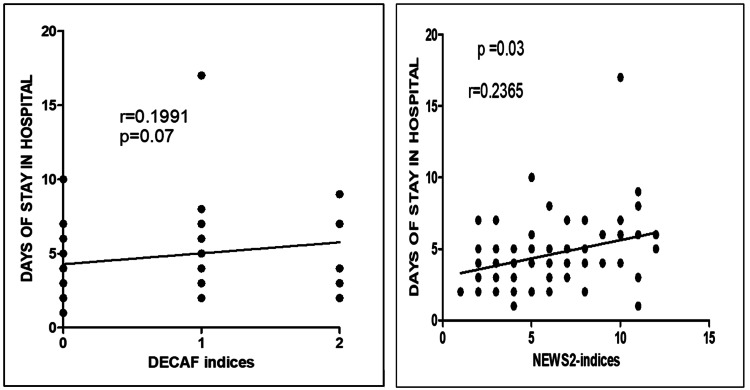
Introduction Chronic obstructive pulmonary disease (COPD) is a significant contributor to global morbidity and mortality. Despite well-established management protocols, treatment remains suboptimal due to high costs and mortality rates. This study aims to compare the impact of initial oxygenation status, Dyspnea, Eosinopenia, Consolidation, Acidemia, and Atrial Fibrillation (DECAF), and National Early Warning Score 2 (NEWS2) scores on management outcomes in COPD patients. Methods In this retrospective study, we analyzed 100 consecutive patients admitted for COPD exacerbation. Patients were categorized into four groups based on admission oxygen saturation (SpO2): Group A (≤87%), Group B (88-92%), Group C (93-96%), and Group D (97-100%). Data collected included oxygen saturation, chest X-rays, laboratory findings, DECAF, and NEWS2 scores. Results The mean age of the cohort was 68.54 ± 10.95 years. Groups A and B (SpO2 ≤ 93-96%) had significantly higher rates of hypercapnia (50%), non-invasive ventilation use (63%), and prolonged hospital stays (15%) compared to Groups C and D (p < 0.05). A strong correlation was found between initial SpO2 and both DECAF (p = 0.04) and NEWS2 (p = 0.001) scores. DECAF correlated with arterial oxygen (pO2) and carbon dioxide (pCO2) levels, while NEWS2 was linked with pCO2, albumin, and white blood cell (WBC) counts (p < 0.05). Both DECAF and NEWS2 predicted longer hospital stays (p < 0.05). Conclusion An initial SpO2 ≤ 93-96% was an independent predictor of higher hypercapnia rates, extended hospitalization, and increased use of non-invasive ventilation. This emphasizes the importance of initial oxygenation status in the clinical assessment of COPD patients.
Keywords: copd patients; copd: chronic obstructive pulmonary disease; decaf indices; news2 indices; oxygenation levels.
Copyright © 2024, Ghosh et al.
Conflict of interest statement
Human subjects: Consent for treatment and open access publication was obtained or waived by all participants in this study. Animal subjects: All authors have confirmed that this study did not involve animal subjects or tissue. Conflicts of interest: In compliance with the ICMJE uniform disclosure form, all authors declare the following: Payment/services info: All authors have declared that no financial support was received from any organization for the submitted work. Financial relationships: All authors have declared that they have no financial relationships at present or within the previous three years with any organizations that might have an interest in the submitted work. Other relationships: All authors have declared that there are no other relationships or activities that could appear to have influenced the submitted work.
Figures
References
-
- Global initiative for chronic obstructive lung disease: pocket guide to COPD diagnosis, management and prevention. [ Sep; 2024 ]. 2019. https://goldcopd.org/wp-content/uploads/2018/11/GOLD-2019-POCKET-GUIDE-F... https://goldcopd.org/wp-content/uploads/2018/11/GOLD-2019-POCKET-GUIDE-F...
-
- WHO: the top 10 causes of death. [ Sep; 2024 ]. 2020. https://www.who.int/news-room/fact-sheets/detail/the-top-10-causes-of-death https://www.who.int/news-room/fact-sheets/detail/the-top-10-causes-of-death
-
- Prevalence of chronic obstructive pulmonary disease in Indian nonsmokers: a systematic review & meta-analysis. Suri TM, Ghosh T, Mittal S, Hadda V, Madan K, Mohan A. Rev Environ Health. 2023;1:35. - PubMed
LinkOut - more resources
Full Text Sources