


The Effects of Social Feedback Through the "Like" Feature on Brain Activity: A Systematic Review
- PMID: 39791696
- PMCID: PMC11719588
- DOI: 10.3390/healthcare13010089
The Effects of Social Feedback Through the "Like" Feature on Brain Activity: A Systematic Review
Abstract
Background: Problematic social media (SM) use is a growing concern, particularly among adolescents who are drawn to these platforms for social interactions important to their age group. SM dependence is characterized by excessive, uncontrolled usage that impairs personal, social, and professional aspects. Despite the ongoing debate over recognizing SM addiction as a distinct diagnostic category, the impact of social feedback, particularly through the "like" button, on brain activity remains under scrutiny.
Objective: This systematic review aims to study the neural correlates of online social feedback, focusing on the effects of the "like" feedback on brain activity using fMRI and EEG.
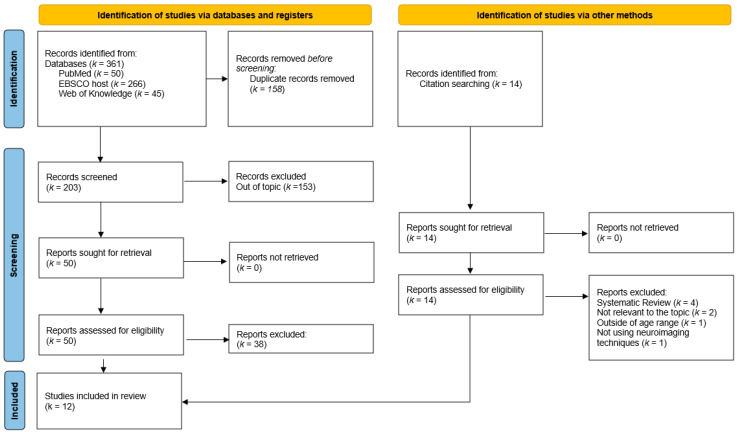
Methods: The review followed the recommendations of the Preferred Reporting Items for Systematic Reviews and Meta-Analysis Protocols (PRISMA).
Results: The review included 11 studies with 504 participants, identifying key brain structures such as the amygdala, ventromedial prefrontal cortex (vmPFC), and ventral striatum involved in reward processing. Positive feedback ("likes") activates areas like the nucleus accumbens (NACC), vmPFC, and amygdala, with NACC correlating with increased SM use intensity. Negative feedback activates the ventrolateral prefrontal cortex (vlPFC) and left medial prefrontal cortex (mPFC). Behavioral data indicates that positive feedback influences subsequent social interactions.
Conclusions: The review highlights disparities in the literature regarding the neural response to social feedback, emphasizing the need for further research to clarify the roles of sex, personality traits, and the person giving feedback. Overall, understanding the neurobiological underpinnings of SM engagement is essential for developing effective interventions to prevent or address the negative effects of excessive SM use.
Keywords: EEG; fMRI; like button; social media.
Conflict of interest statement
The authors have no conflicts of interest to disclose.
References
-
- Casale S., Akbari M., Seydavi M., Bocci Benucci S., Fioravanti G. Has the prevalence of problematic social media use increased over the past seven years and since the start of the COVID-19 pandemic? A meta-analysis of the studies published since the development of the Bergen social media addiction scale. Addict. Behav. 2023;147:107838. doi: 10.1016/j.addbeh.2023.107838. - DOI - PubMed
-
- Hou Y., Xiong D., Jiang T., Song L., Wang Q. Social media addiction: Its impact, mediation, and intervention. Cyberpsychology J. Psychosoc. Res. Cyberspace. 2019;13:4. doi: 10.5817/CP2019-1-4. - DOI
-
- Savci M., Aysan F. #Interpersonal competence, loneliness, fear of negative evaluation, and reward and punishment as predictors of social media addiction and their accuracy in classifying adolescent social media users and non-users. ADDICTA Turk. J. Addict. 2018;5:431–471.
Publication types
LinkOut - more resources
Full Text Sources
