. 2025 Jan 10;18(1):5.
doi: 10.1186/s13045-025-01660-y.

Global status and attributable risk factors of breast, cervical, ovarian, and uterine cancers from 1990 to 2021

Affiliations

Global status and attributable risk factors of breast, cervical, ovarian, and uterine cancers from 1990 to 2021

Tianye Li et al. J Hematol Oncol. .

Abstract

Background: Female-specific cancers, particularly breast, cervical, ovarian, and uterine cancers, account for nearly 40% of all cancers in women. This study aimed to analyze the global epidemiological trends of these cancers from 1990 to 2021, offering insights into their evolving patterns and providing valuable information for health policymakers to allocate healthcare resources more effectively.

Methods: Data from the Global Burden of Disease Study 2021 (GBD 2021) were used to comprehensively assess the global incidence, mortality, and disability-adjusted life years (DALYs) of female-specific cancers. Age-standardized rates facilitated cross-regional comparisons, accounting for differences in population size and demographics. The socio-demographic index (SDI) was employed to categorize regions and evaluate correlations between cancer burden and economic level. In addition, risk factors attributable to female-specific cancer deaths and DALYs were assessed based on the comparative risk assessment model of the GBD project.

Results: From 1990 to 2021, the global burden of female-specific cancers increased at varying rates. In 2021, breast cancer accounted for 2.08 million incident cases, 0.66 million deaths, and 20.25 million DALYs globally. In comparison, cervical, ovarian, and uterine cancers had lower burdens, with 0.67 million, 0.30 million, and 0.47 million incident cases, respectively. Age-standardized rates of breast, ovarian, and uterine cancers showed positive correlations with SDI, while cervical cancer exhibited a negative correlation. Attributable risk factors for breast cancer-associated deaths in 2021 included dietary risks, high body-mass index (BMI), high fasting plasma glucose, alcohol use, tobacco use, and low physical activity. Additional risk factors were unsafe sex and tobacco use for cervical cancer, high BMI and occupational risks for ovarian cancer, and high BMI for uterine cancer.

Conclusions: The burden of female-specific cancers has increased in recent decades, with significant demographic and regional discrepancies. These findings highlight the urgent need for targeted public health interventions to mitigate the global impact of these cancers.

Keywords: Breast cancer; Cancer epidemiology; Cervical cancer, Ovarian cancer, Uterine cancer; Female-specific cancer; Socio-demographic index.


Conflict of interest statement

Declarations. Ethics approval and consent to participate: Not applicable. Consent for publication: Not applicable. Competing interests: The authors declare no competing interests.

Figures
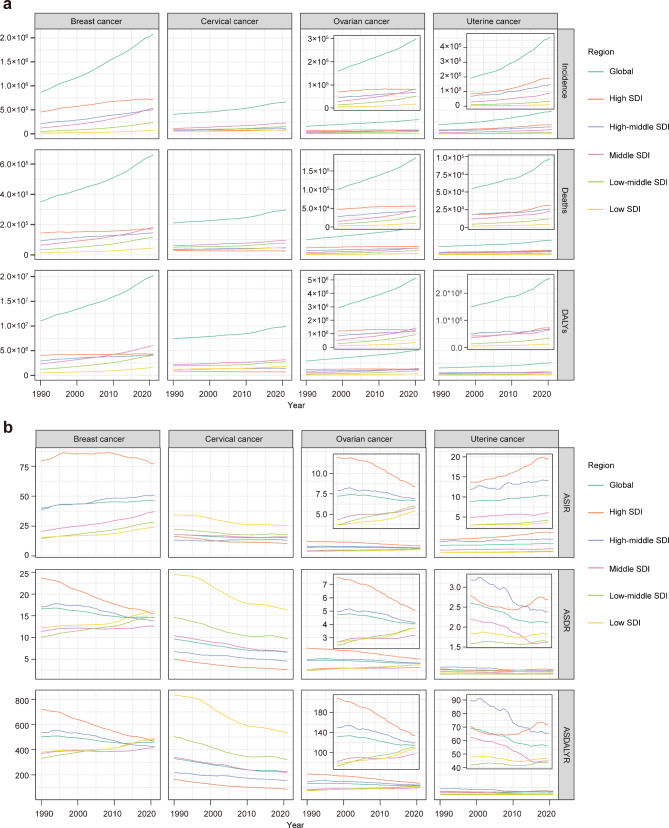
Fig. 1
Fig. 1
Global and regional trends in female cancer incidences, deaths, and disability-adjusted life years (DALYs). a. The absolute numbers for incidences, deaths, and DALYs across different socio-demographic index (SDI) regions and globally were displayed. b. displays the age-standardized incidence rates (ASIRs), age-standardized death rates (ASDRs), and age-standardized DALY rates (ASDALYR), showcasing the varying trends by SDI regions
Fig. 2
Fig. 2
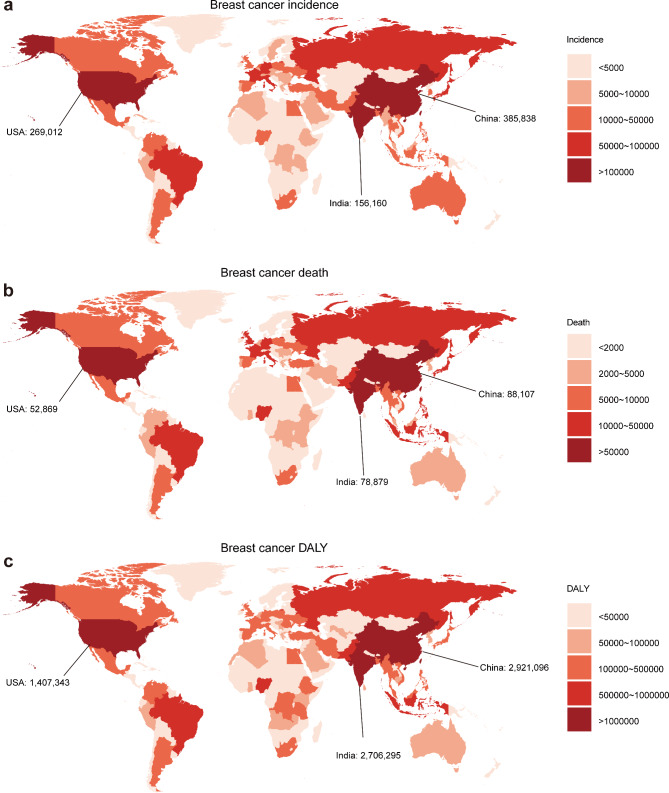
Global distribution of breast cancer incidences, deaths, and disability-adjusted life years (DALYs) in 2021. a. The incidences of breast cancer. b. The breast cancer mortality. c. The breast cancer DALYs
Fig. 3
Fig. 3
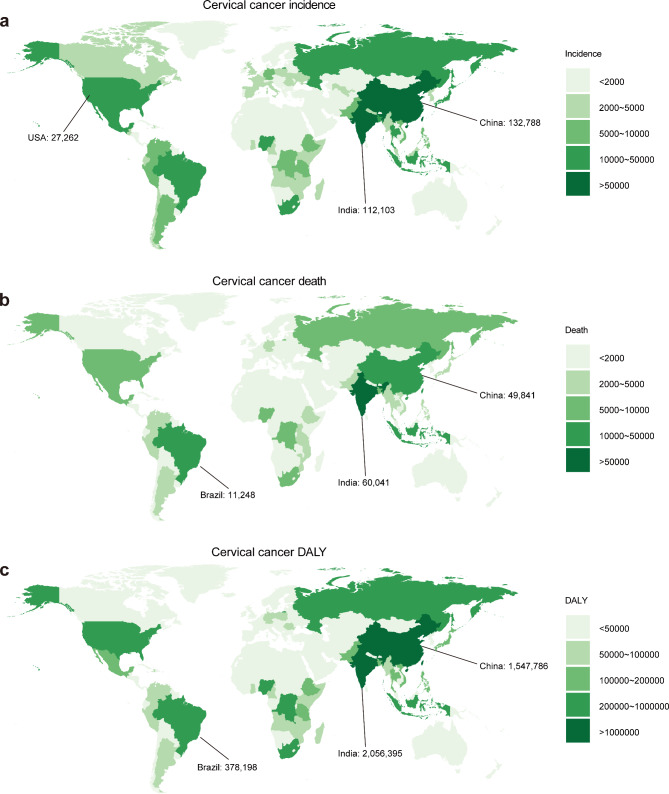
Global distribution of cervical cancer incidences, deaths, and disability-adjusted life years (DALYs) in 2021. a. The cervical cancer incidences. b. The cervical cancer mortality. c. The cervical cancer DALYs
Fig. 4
Fig. 4
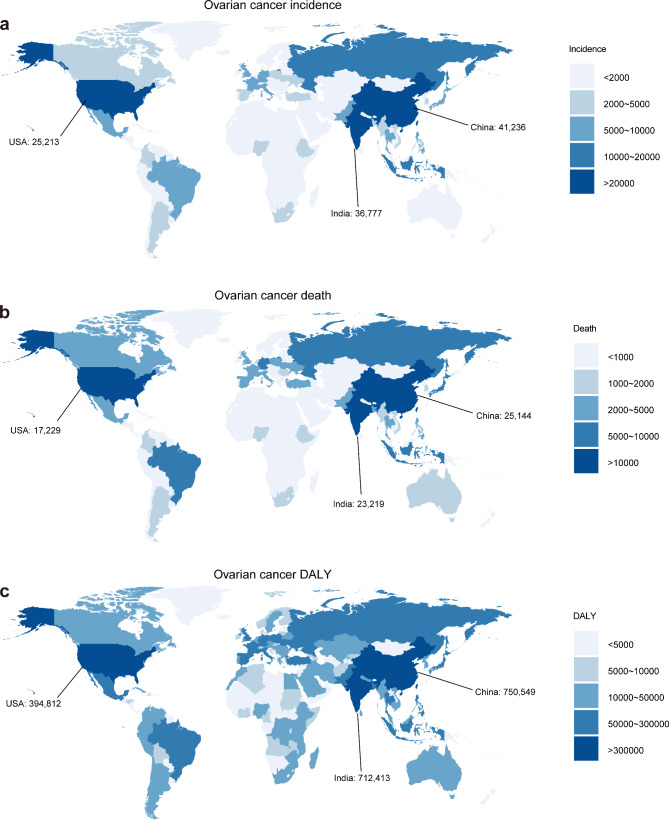
Global distribution of ovarian cancer incidences, deaths, and disability-adjusted life years (DALYs) in 2021. a. The incidences of ovarian cancer. b. The ovarian cancer mortality. c. The DALYs of ovarian cancer
Fig. 5
Fig. 5
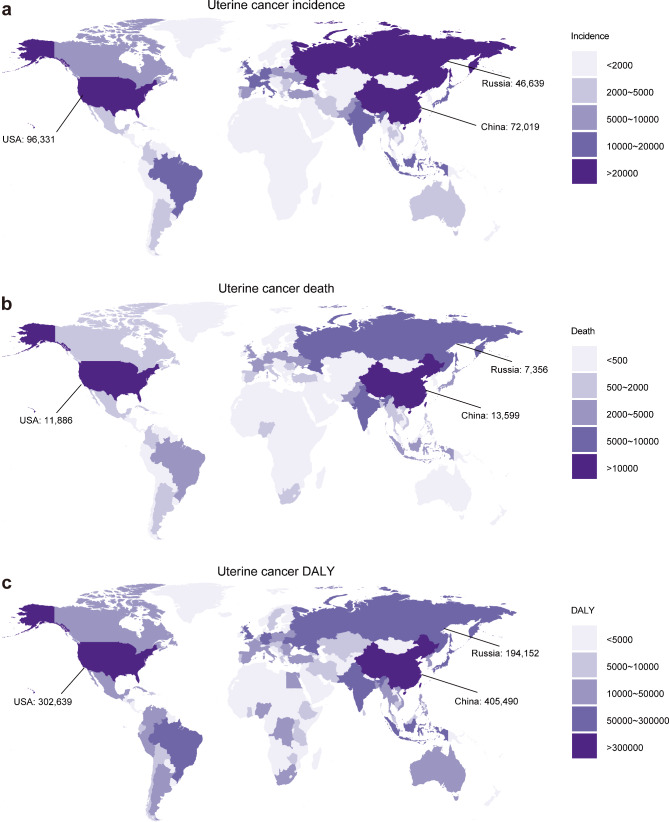
Global distribution of uterine cancer incidences, deaths, and disability-adjusted life years (DALYs) in 2021. a. The uterine cancer incidences. b. The uterine cancer mortality. c. The uterine cancer DALYs
Fig. 6
Fig. 6
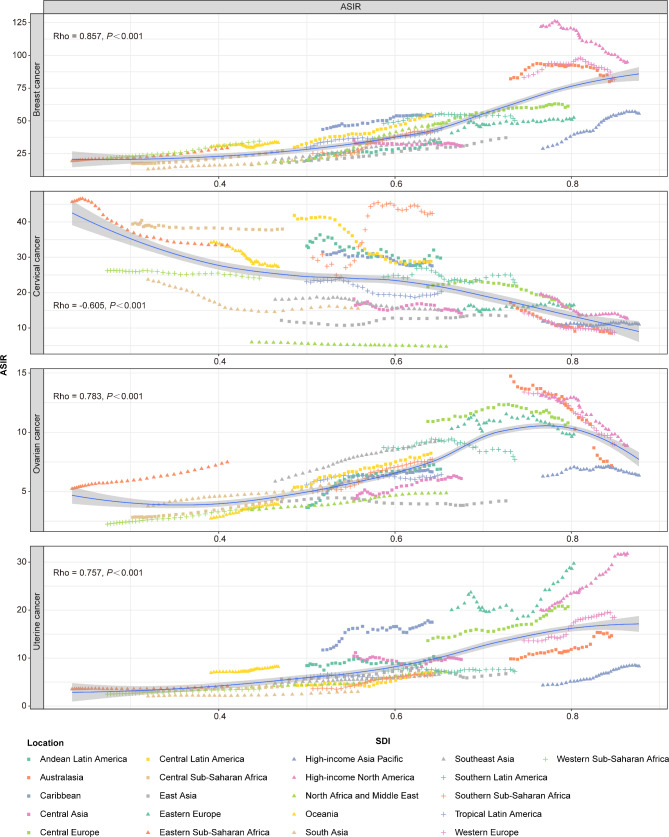
Global trends in age-standardized incidence rates (ASIRs) and socio-demographic index (SDI) from 1990 to 2021. The Rho values (Spearman’s rho correlation coefficient) indicate the strength of the correlation between the SDI and ASIRs
Fig. 7
Fig. 7
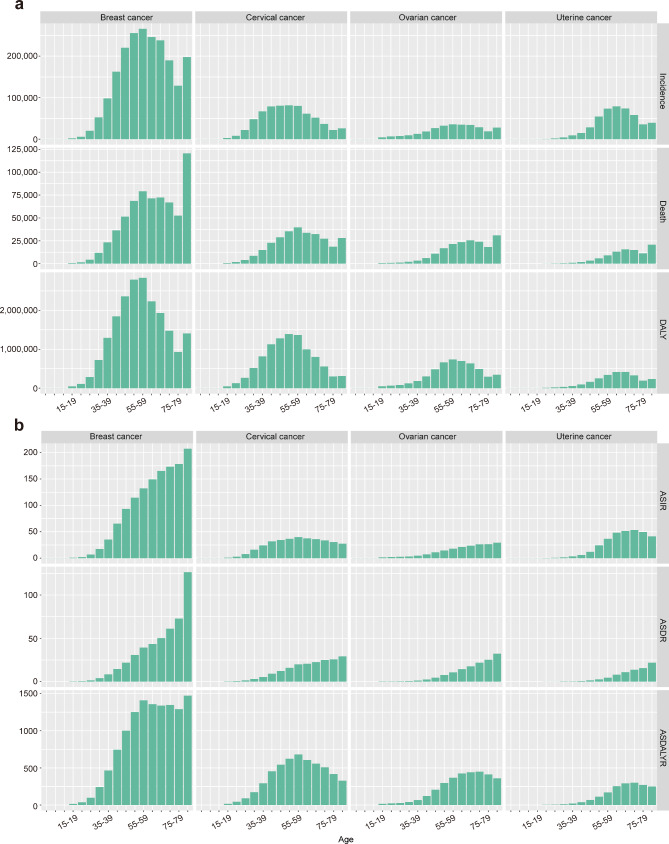
Age distribution of incidences, mortality, and disability-adjusted life years (DALYs) for female-specific cancers in 2021. a. Global incidences, deaths, and DALYs for breast, cervical, ovarian, and uterine cancers across different age groups in 2021. b. Global age-standardized rates of incidence, death, and DALYs for breast, cervical, ovarian, and uterine cancers across different age groups in 2021
Fig. 8
Fig. 8
Level 2 risk factors contributing to female-specific cancer-related death. The trends in risk factors contributing to deaths for breast, cervical, ovarian, and uterine cancers globally and across different regions from 1990 to 2021, a. Breast cancer, b. Cervical cancer, c. Ovarian cancer d. Uterine cancer

References

    1. Bray F, Laversanne M, Sung H, Ferlay J, Siegel RL, Soerjomataram I, et al. Global cancer statistics 2022: GLOBOCAN estimates of incidence and mortality worldwide for 36 cancers in 185 countries. CA Cancer J Clin. 2024;74:229–63. - PubMed
    1. Zhou T, Wang X, Zhang J, Zhou E, Xu C, Shen Y, et al. Global burden of thyroid cancer from 1990 to 2021: a systematic analysis from the global burden of Disease Study 2021. J Hematol Oncol. 2024;17:74. - PMC - PubMed
    1. Li W, Liang H, Wang W, Liu J, Liu X, Lao S, et al. Global cancer statistics for adolescents and young adults: population based study. J Hematol Oncol. 2024;17:99. - PMC - PubMed
    1. Yi M, Li T, Niu M, Luo S, Chu Q, Wu K. Epidemiological trends of women’s cancers from 1990 to 2019 at the global, regional, and national levels: a population-based study. Biomark Res. 2021;9:55. - PMC - PubMed
    1. Murray CJL. Findings from the global burden of Disease Study 2021. Lancet. 2024;403:2259–62. - PubMed

MeSH terms