


Chromosome-scale genome assembly of three-spotted seahorse (Hippocampus trimaculatus) with a unique karyotype
- PMID: 39799130
- PMCID: PMC11724837
- DOI: 10.1038/s41597-024-04349-y
Chromosome-scale genome assembly of three-spotted seahorse (Hippocampus trimaculatus) with a unique karyotype
Abstract
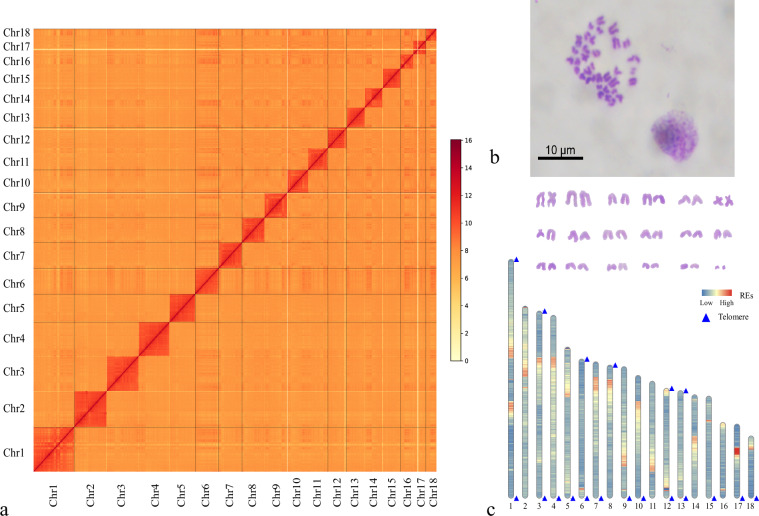
Three-spotted seahorse (Hippocampi trimaculata) is a unique fish with important economic and medicinal values, and its total chromosome number is potentially quite different from other seahorse species. Herein, we constructed a chromosome-level genome assembly for this special seahorse by integration of MGI short-read, PacBio HiFi long-read and Hi-C sequencing techniques. A 416.57-Mb haplotypic genome assembly was obtained. Subsequently, 99.38% of its scaffold sequences were anchored onto 18 chromosomes, with identification of 29.1% repeat sequences in the assembled genome. Additional karyotype analysis validated the diploid chromosomes of 2n = 36, which are remarkably different from other seahorses' 2n = 42 or 44. The genome completeness (BUSCO score: 96.5%, CEGMA score: 97.87%) confirmed that this chromosome-scale assembly is indeed of high quality. Moreover, a total of 18,712 protein-coding genes were annotated, of which 96.36% could be predicted with functions. Based on construction of a phylogenetic tree, we estimated that Hippocampus and Syngnathoides diverged approximately 50.1 million years ago (Mya). Taken together, our genome data presented in this study provide a valuable genetic resource for numerical chromosome changes and in-depth evolutionary and functional investigations, as well as conservation and molecular breeding of this endangered teleost.
© 2025. The Author(s).
Conflict of interest statement
Competing interests: The authors declare no competing interests.
Figures



References
-
- Yan, Z. et al. Research on applications of Hippocampus: progress and prospect. Marine Fisheries40(6), 752–762 (2018).
-
- Aylesworth, L. A. et al. Regional-scale patterns of habitat preference for the seahorse Hippocampus reidi in the tropical estuarine environment. Aquatic ecology49, 499–512 (2015). - DOI
-
- Zhang, X. et al. Predicting distributions, habitat preferences and associated conservation implications for a genus of rare fishes, seahorses (Hippocampus spp.). Divers. Distrib.24(7), 1005–1017 (2018). - DOI
-
- Harasti, D. Declining seahorse populations linked to loss of essential marine habitats. Mar. Ecol. Prog. Ser.546, 173–181 (2016). - DOI
Publication types
MeSH terms
LinkOut - more resources
Full Text Sources
Miscellaneous
