


Molecule interacting with CasL-2 enhances tumor progression and alters radiosensitivity in cervical cancer
- PMID: 39799334
- PMCID: PMC11725214
- DOI: 10.1186/s12967-024-06065-y
Molecule interacting with CasL-2 enhances tumor progression and alters radiosensitivity in cervical cancer
Abstract
Objective: Cervical cancer is a common malignancy among women, and radiotherapy remains a primary treatment modality across all disease stages. However, resistance to radiotherapy frequently results in treatment failure, highlighting the need to identify novel therapeutic targets to improve clinical outcomes.
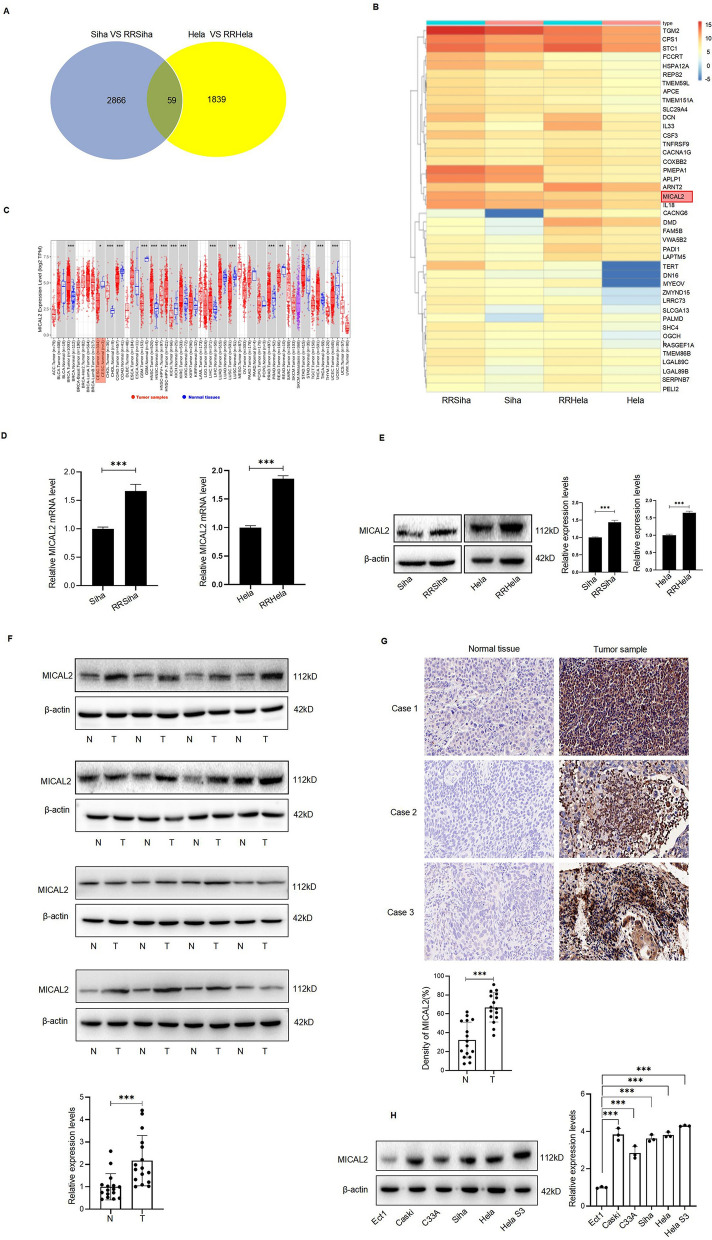
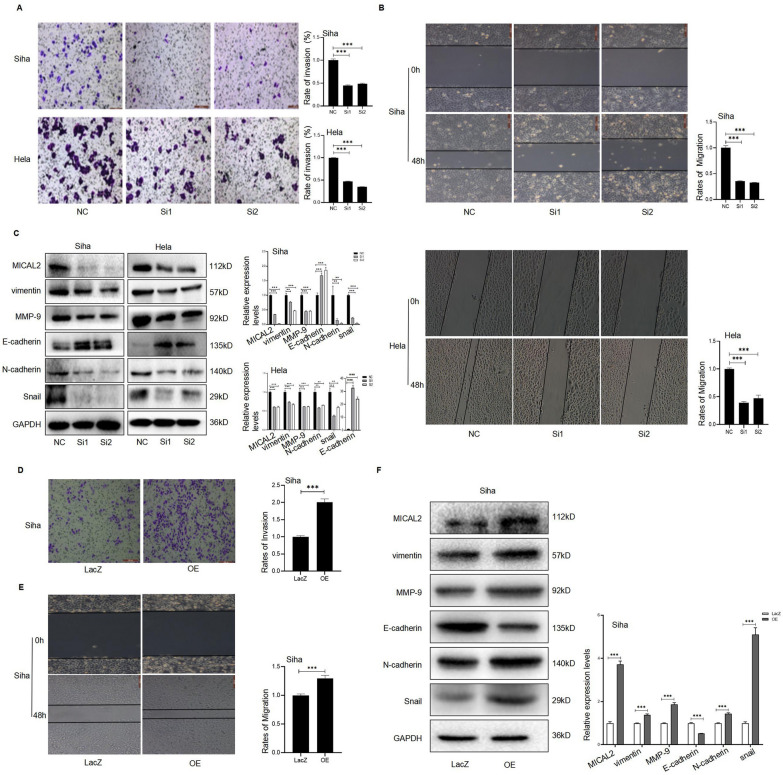
Methods: The expression of molecule interacting with CasL-2 (MICAL2) was confirmed in cervical cancer tissues and cell lines through western blotting (WB) and immunohistochemistry (IHC). Siha and Hela cells were used to examine the regulatory and biological functions of MICAL2 via knockdown and overexpression experiments. Assays including MTT, colony formation, wound healing, transwell migration, and sphere formation were employed, along with WB analysis. DNA damage in irradiated cells with MICAL2 knockdown or overexpression was evaluated using the comet assay, while γ-H2AX and Rad51 protein levels were detected by WB. In vivo experiments validated the tumorigenic and radioresistance functions of MICAL2. Additionally, the relationship between MICAL2 expression and radiotherapy response was analyzed in 62 patients with cervical cancer by assessing tumor regression and MICAL2 levels six months post-treatment.
Results: MICAL2 expression was significantly elevated in cervical cancer tissues and cells. Functional analyses demonstrated that MICAL2 promotes cell proliferation, migration, and invasion by activating the MAPK and PI3K/AKT pathways, as confirmed through both in vitro and in vivo experiments. Silencing MICAL2 increased DNA damage, impeded DNA repair, and enhanced radiosensitivity. Among the 62 patients with cervical cancer, elevated MICAL2 expression was associated with a lower complete response rate to radiotherapy (25.6% vs. 60.9% in those with low expression), reduced progression-free survival, and advanced cancer stage (*p < 0.05).
Conclusion: MICAL2 plays a critical role in tumor progression and radiotherapy resistance in cervical cancer. These findings provide a foundation for developing targeted therapies to improve treatment outcomes in this population.
Keywords: Cervical cancer; DNA damage; Irradiation; MICAL2; Radioresistance.
© 2025. The Author(s).
Conflict of interest statement
Declarations. Ethics approval and consent to participate: This study was conducted in accordance with the Declaration of Helsinki and received approval from the Ethics Committee of The Second Affiliated Hospital of Dalian Medical University (No 2023067). All animal care and experimental procedures adhered to the National Institutes of Health Guidelines for the Care and Use of Laboratory Animals and were approved by the Animal Care and Ethics Committee of Dalian Medical University (authorization code: 20233228). Consent for publication: Not applicable. Competing interests: The author declares that they have no competing interests.
Figures



References
-
- Ali I, Wani WA, Haque A, Saleem K. Glutamic acid and its derivatives: candidates for rational design of anticancer drugs. Future Med Chem. 2013;5(8):961–78. - PubMed
-
- Bray F, Laversanne M, Sung H, Ferlay J, Siegel RL, Soerjomataram I, et al. Global cancer statistics 2022: GLOBOCAN estimates of incidence and mortality worldwide for 36 cancers in 185 countries. CA Cancer J Clin. 2024; 74(3):229–263. - PubMed
-
- Sung H, Ferlay J, Siegel RL, Laversanne M, Soerjomataram I, Jemal A, et al. Global Cancer Statistics 2020: GLOBOCAN estimates of incidence and mortality worldwide for 36 cancers in 185 countries. CA Cancer J Clin. 2021;71:209–49. - PubMed
MeSH terms
Grants and funding
LinkOut - more resources
Full Text Sources
Medical
Research Materials
