


C3/C3aR Bridges Spinal Astrocyte-Microglia Crosstalk and Accelerates Neuroinflammation in Morphine-Tolerant Rats
- PMID: 39801259
- PMCID: PMC11725764
- DOI: 10.1111/cns.70216
C3/C3aR Bridges Spinal Astrocyte-Microglia Crosstalk and Accelerates Neuroinflammation in Morphine-Tolerant Rats
Abstract
Aims: Communication within glial cells acts as a pivotal intermediary factor in modulating neuroimmune pathology. Meanwhile, an increasing awareness has emerged regarding the detrimental role of glial cells and neuroinflammation in morphine tolerance (MT). This study investigated the influence of crosstalk between astrocyte and microglia on the evolution of morphine tolerance.
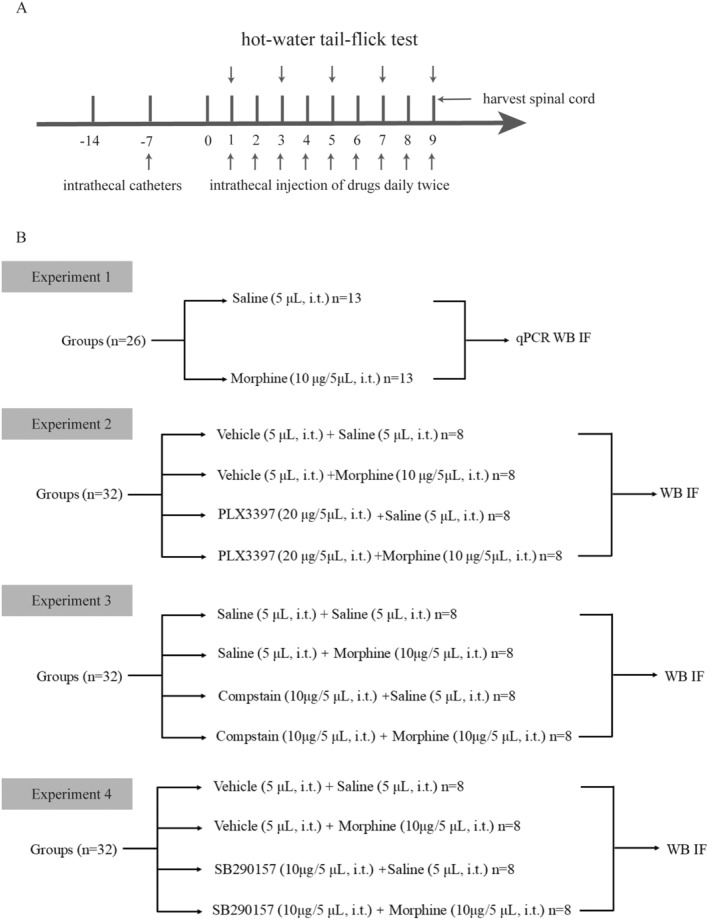
Methods: Sprague-Dawley rats were intrathecally treated with morphine twice daily for 9 days to establish morphine-tolerant rat model. Tail-flick latency test was performed to identify the analgesic effect of morphine. The role of microglia, astrocyte and C3-C3aR axis in morphine tolerance were elucidated by real-time quantitative polymerase chain reaction, Western blot, and immunofluorescence.
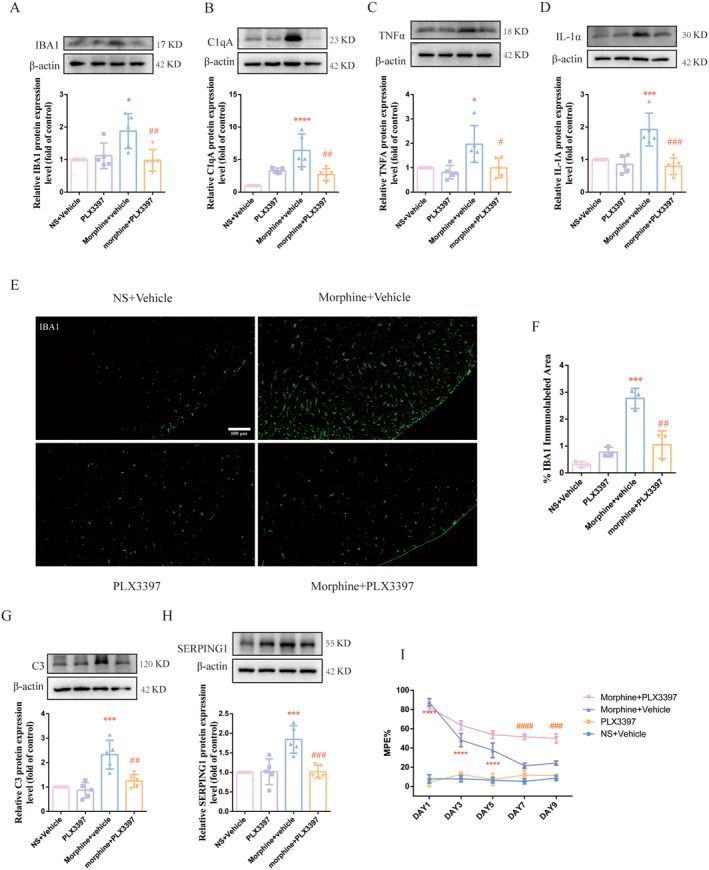
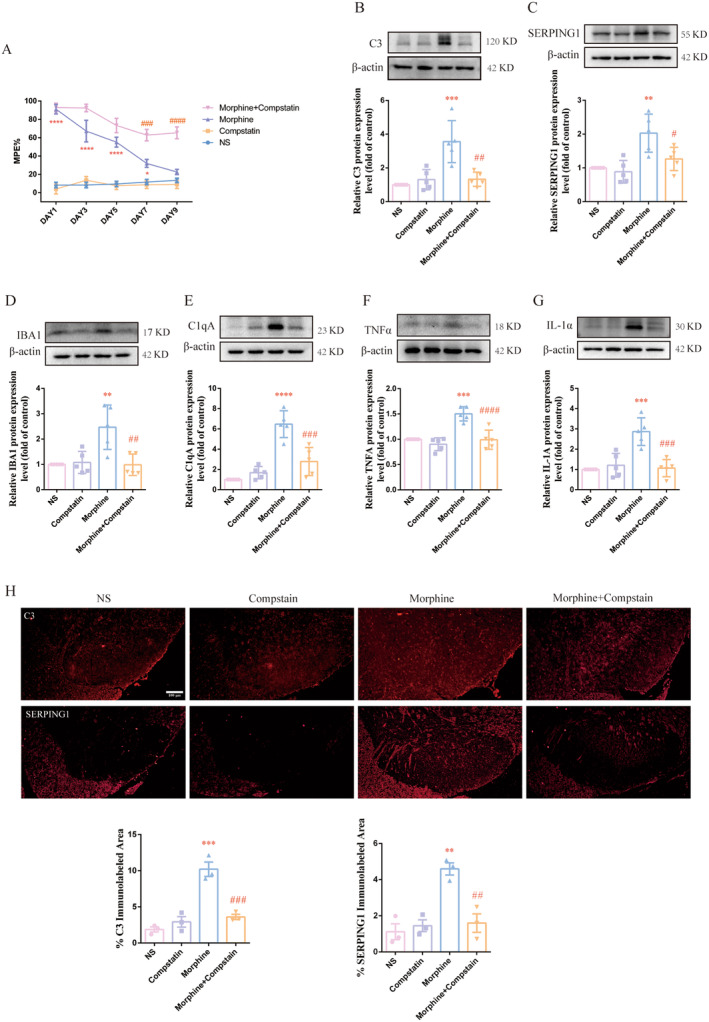
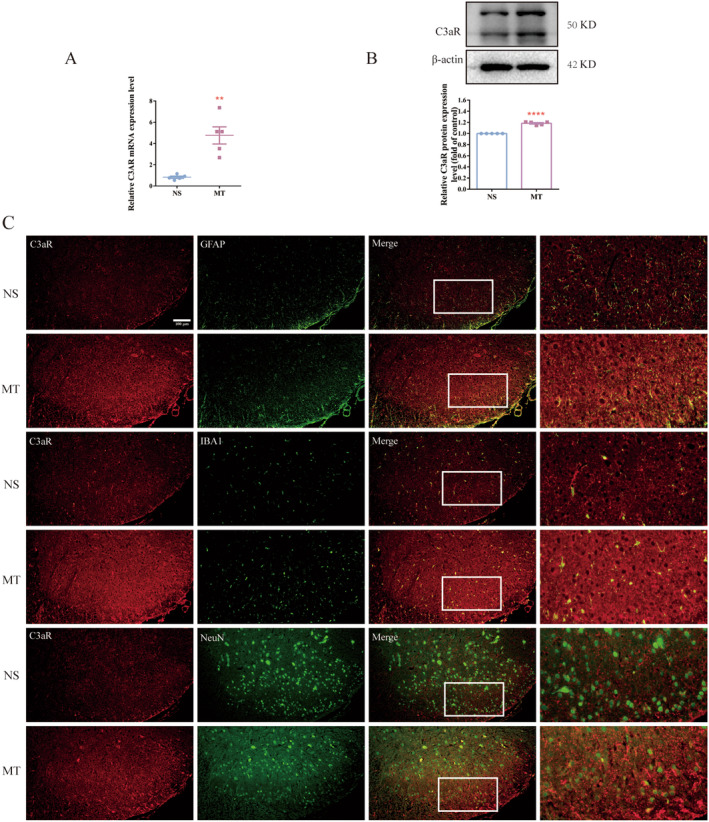
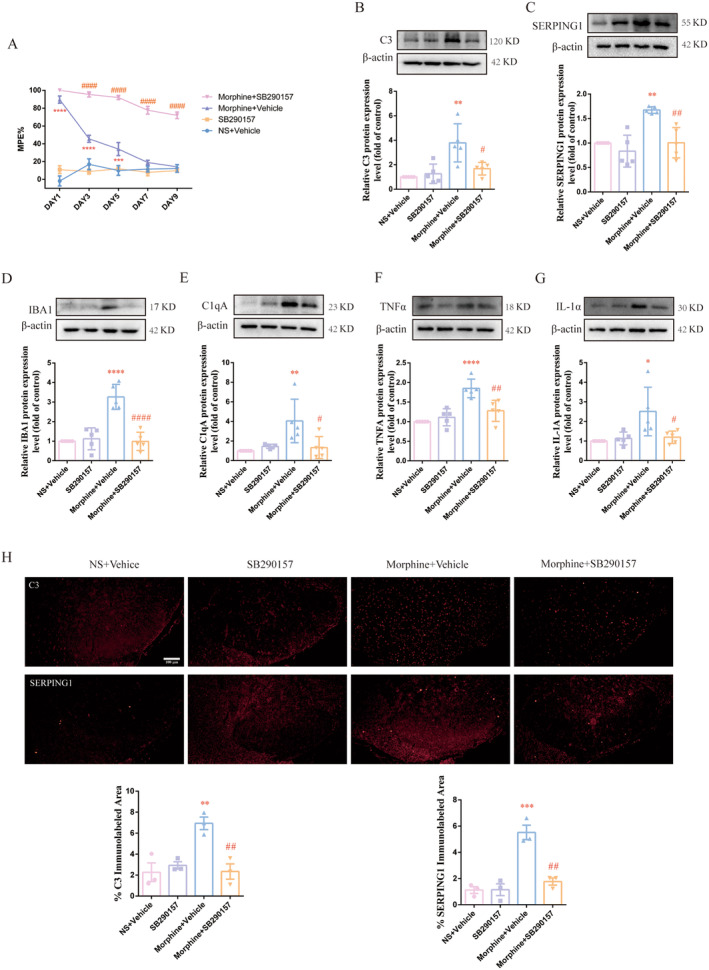
Results: Chronic morphine treatment notably promoted the activation of microglia, upregulated the production of proinflammatory mediators (interleukin-1 alpha (IL-1α), tumor necrosis factor alpha (TNFα), and complement component 1q (C1q)). Simultaneously, it programed astrocytes to a pro-inflammatory phenotype (A1), which mainly expresses complement 3 (C3) and serping1. PLX3397 (a colony-stimulating factor 1 receptor (CSF1R) inhibitor), Compstain (a C3 inhibitor) and SB290157(a C3aR antagonist) could reverse the above pathological process and alleviate morphine tolerance to different extents.
Conclusion: Our findings identify C3-C3aR axis as an amplifier of microglia-astrocyte crosstalk, neuroinflammation and a node for therapeutic intervention in morphine tolerance.
Keywords: A1 astrocyte; C3/C3aR; microglia‐astrocyte crosstalk; morphine tolerance.
© 2025 The Author(s). CNS Neuroscience & Therapeutics published by John Wiley & Sons Ltd.
Conflict of interest statement
All the authors have approved the manuscript and agree with submission to Experimental Neurology. The authors declare no conflicts of interest.
Figures
References
-
- Szabo I., Chen X. H., Xin L., et al., “Heterologous Desensitization of Opioid Receptors by Chemokines Inhibits Chemotaxis and Enhances the Perception of Pain,” Proceedings of the National Academy of Sciences of the United States of America 99, no. 16 (2002): 10276–10281, 10.1073/pnas.102327699. - DOI - PMC - PubMed
-
- Merighi S., Gessi S., Varani K., Fazzi D., Stefanelli A., and Borea P. A., “Morphine Mediates a Proinflammatory Phenotype via Mu‐Opioid Receptor‐PKCvarepsilon‐Akt‐ERK1/2 Signaling Pathway in Activated Microglial Cells,” Biochemical Pharmacology 86, no. 4 (2013): 487–496, 10.1016/j.bcp.2013.05.027. - DOI - PubMed
MeSH terms
Substances
Grants and funding
LinkOut - more resources
Full Text Sources
Research Materials
Miscellaneous
