


Multidrug resistant Acinetobacter baumannii: A study on its pathogenesis and therapeutics
- PMID: 39802320
- PMCID: PMC11718326
- DOI: 10.1016/j.crmicr.2024.100331
Multidrug resistant Acinetobacter baumannii: A study on its pathogenesis and therapeutics
Abstract
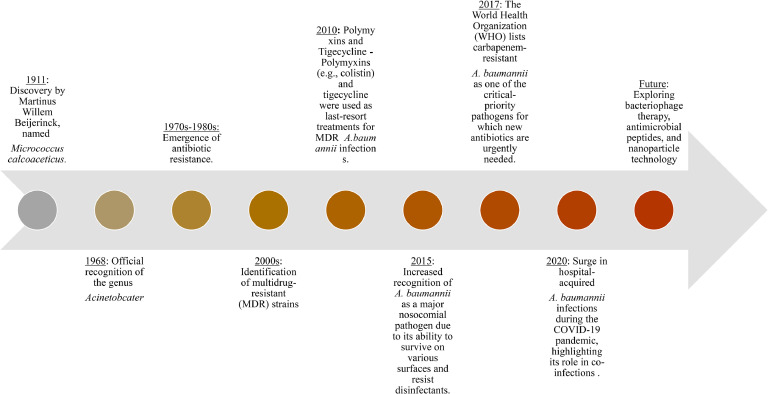
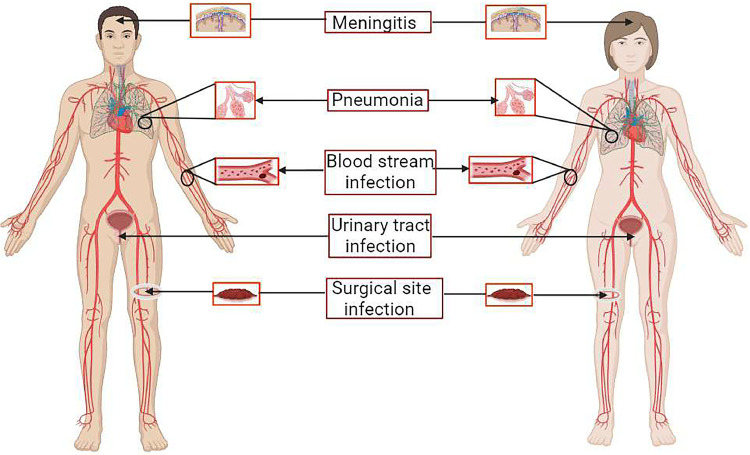
The overuse of antibiotics has led to the global dissemination of Acinetobacter baumannii, an increasingly challenging nosocomial pathogen. This review explores the medical significance along with the diverse resistance ability of A. baumannii. Intensive care units (ICUs) serve as a breeding ground for A. baumannii, as these settings harbour vulnerable patients and facilitate the spread of opportunistic microorganisms. A. baumannii belongs to the ESKAPE group of bacterial pathogens that are major contributors to antibiotic-resistant infections. The pathogenic nature of A. baumannii is particularly evident in seriously ill patients, causing pneumonia, wound infections, and other healthcare-associated infections. Historically considered benign, A. baumannii is a global threat due to its propensity for rapid acquisition of multidrug resistance phenotypes. The genus Acinetobacter was formally recognized in 1968 following a comprehensive survey by Baumann et al., highlighting the relationship between previously identified species and consolidating them under the name Acinetobacter. A. baumannii is characterized by its Gram-negative nature, dependence on oxygen, positive catalase activity, lack of oxidase activity, inability to ferment sugars, and non-motility. The DNA G+C content of Acinetobacter species falls within a specific range. For diagnostic purposes, A. baumannii can be cultured on specific agar media, producing distinct colonies. The genus Acinetobacter comprises numerous species those are associated with bloodstream infections with high mortality rates. Therefore, A. baumannii poses a significant challenge to global healthcare due to its multidrug resistance and ability to cause various infections. A comprehensive understanding of the mechanisms underlying its resistance acquisition and pathogenicity is essential for combating this healthcare-associated pathogen effectively.
Keywords: Acinetobacter baumannii; Hospital acquired pneumonia; Multidrug resistant organism; Pathogenesis; Urinary tract infection.
© 2024 The Authors.
Conflict of interest statement
The authors declare that they have no known competing financial interests or personal relationships that could have appeared to influence the work reported in this paper.
Figures
References
-
- Aksoy G., Ozyazici-Ozkan S., Tezel G., Dayar G., Köşker M., DOĞAN C. Assesment of colistin related side effects in premature neonates. Turk. J. Pediatr. 2020;62(5) - PubMed
-
- Albur M.S., Noel A., Bowker K., MacGowan A. The combination of colistin and fosfomycin is synergistic against NDM-1-producing Enterobacteriaceae in in vitro pharmacokinetic/pharmacodynamic model experiments. Int. J. Antimicrob. Agents. 2015;46(5):560–567. - PubMed
-
- Almaghrabi R., Clancy C.J., Doi Y., Hao B., Chen L., Shields R.K., Press E.G., Iovine N.M., Townsend B.M., Wagener M.M. Carbapenem-resistant Klebsiella pneumoniae strains exhibit diversity in aminoglycoside-modifying enzymes, which exert differing effects on plazomicin and other agents. Antimicrob. Agents Chemother. 2014;58(8):4443–4451. - PMC - PubMed
Publication types
LinkOut - more resources
Full Text Sources
