


An umbrella review of health outcomes following traumatic brain injury
- PMID: 39802934
- PMCID: PMC11717692
- DOI: 10.1038/s44220-024-00356-5
An umbrella review of health outcomes following traumatic brain injury
Abstract
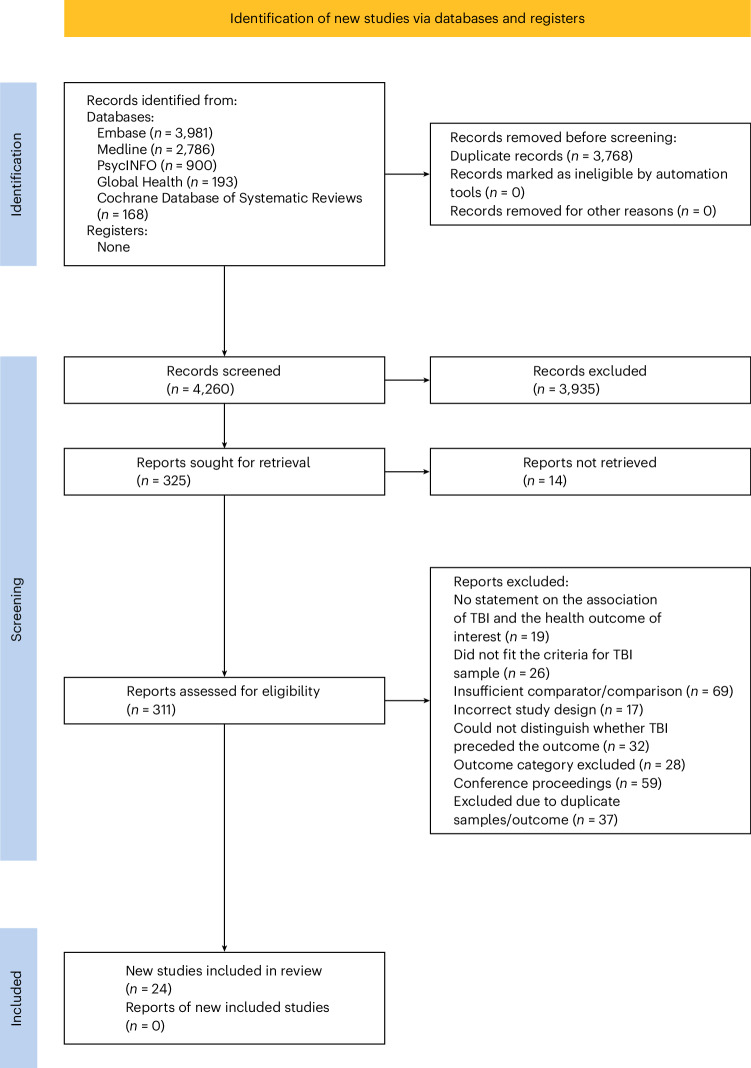
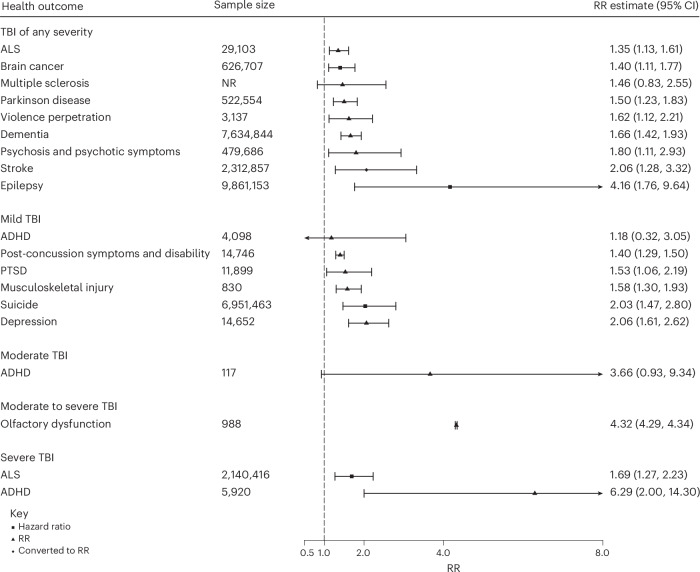
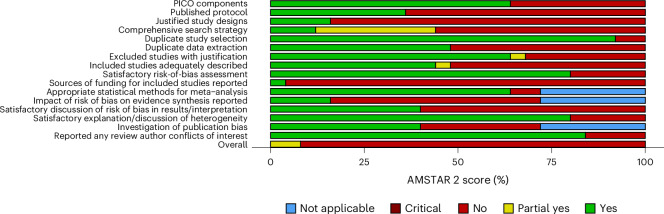
While numerous reviews have assessed the association between traumatic brain injury (TBI) and various mental and physical health outcomes, a comprehensive evaluation of the scope, validity, and quality of evidence is lacking. Here we present an umbrella review of a wide range of health outcomes following TBI and outline outcome risks across subpopulations. On 17 May 2023, we searched Embase, Medline, Global Health, PsycINFO, and Cochrane Database of Systematic Reviews for systematic reviews and meta-analyses. We compared risk ratios across different outcomes for risks compared with people without TBI and examined study quality, including heterogeneity, publication bias, and prediction intervals. The study was registered with PROSPERO (CRD42023432255). We identified 24 systematic reviews and meta-analyses covering 24 health outcomes in 31,397,958 participants. The current evidence base indicates an increased risk of multiple mental and physical health outcomes, including psychotic disorders, attention-deficit/hyperactivity disorder, suicide, and depression. Three outcomes-dementia, violence perpetration, and amyotrophic lateral sclerosis-had meta-analytical evidence of at least moderate quality, which suggest targets for more personalized assessment. Health-care services should review how to prevent adverse long-term outcomes in TBI.
Keywords: Brain injuries; Psychology; Public health.
© The Author(s) 2025.
Conflict of interest statement
Competing interestsThe authors declare no competing interests.
Figures
References
LinkOut - more resources
Full Text Sources