


This is a preprint.
Tissue-Specific Ablation of Liver Fatty Acid-Binding Protein Induces a Metabolically Healthy Obese Phenotype in Female Mice
- PMID: 39803463
- PMCID: PMC11722216
- DOI: 10.1101/2025.01.02.631082
Tissue-Specific Ablation of Liver Fatty Acid-Binding Protein Induces a Metabolically Healthy Obese Phenotype in Female Mice
Update in
-
Tissue-Specific Ablation of Liver Fatty Acid-Binding Protein Induces a Metabolically Healthy Obese Phenotype in Female Mice.Nutrients. 2025 Feb 21;17(5):753. doi: 10.3390/nu17050753. Nutrients. 2025. PMID: 40077623 Free PMC article.
Abstract
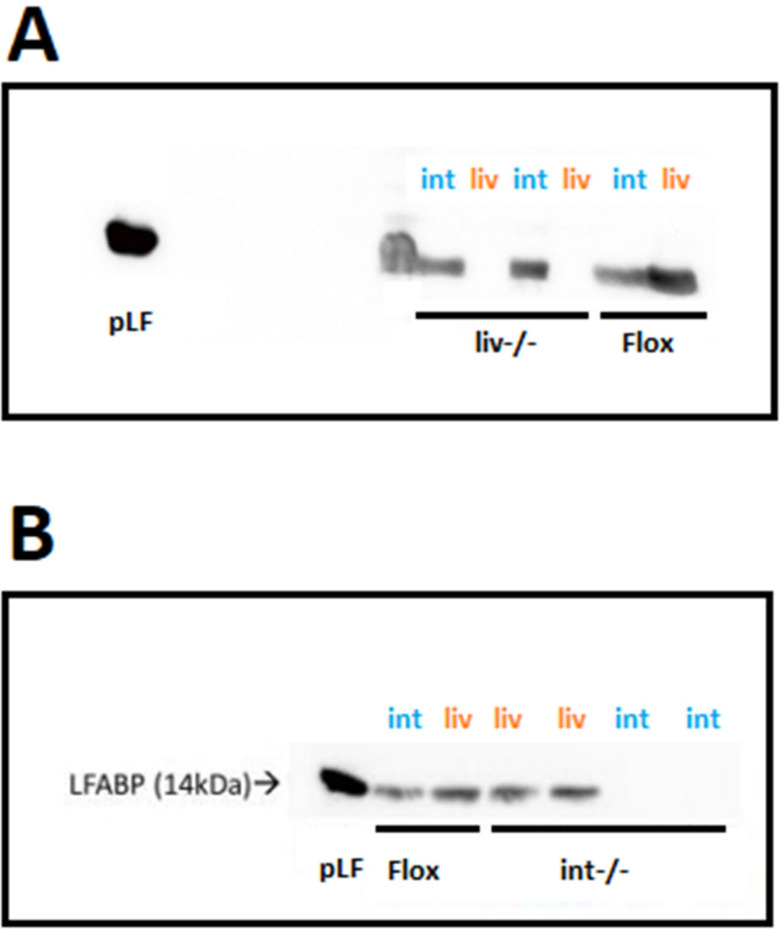
Background/objectives: Obesity is associated with numerous metabolic complications including insulin resistance, dyslipidemia, and a reduced capacity for physical activity. Whole-body ablation of liver fatty acid-binding protein (LFABP) in mice was shown to alleviate several of these metabolic complications; high fat (HF) fed LFABP knockout (LFABP-/-) mice developed higher fat mass than their wild-type (WT) counterparts but displayed a metabolically healthy obese (MHO) phenotype with normoglycemia, normoinsulinemia, and reduced hepatic steatosis compared with WT. LFABP is expressed in both liver and intestine, thus in the present study, LFABP conditional knockout (cKO) mice were generated to determine the contributions of LFABP specifically within the liver or the intestine to the whole body phenotype of the global knockout.
Methods: Female liver-specific LFABP knockout (LFABPliv-/-), intestine-specific LFABP knockout (LFABPint-/-), and floxed LFABP (LFABPfl/fl) control mice were fed a 45% Kcal fat semipurified HF diet for 12 weeks.
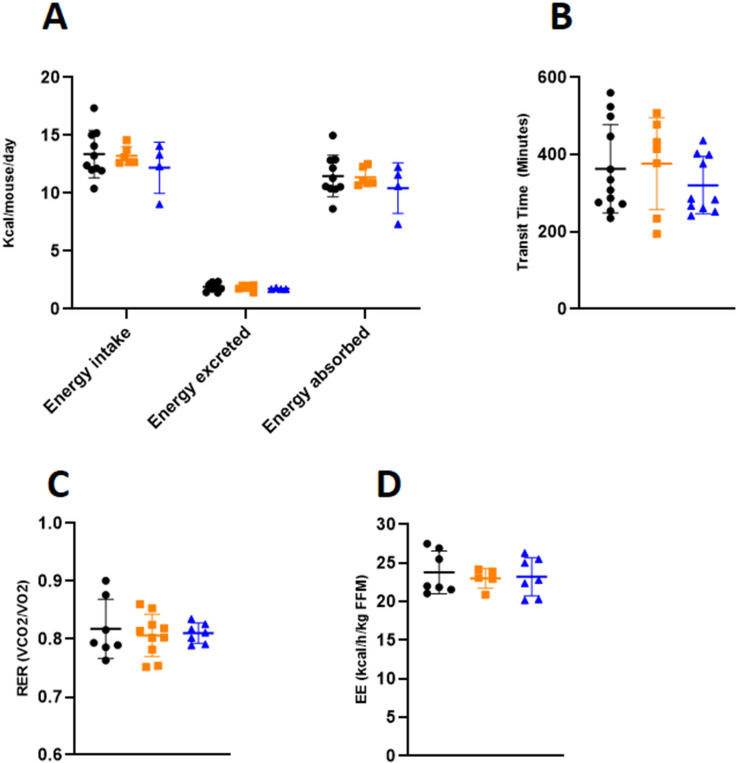
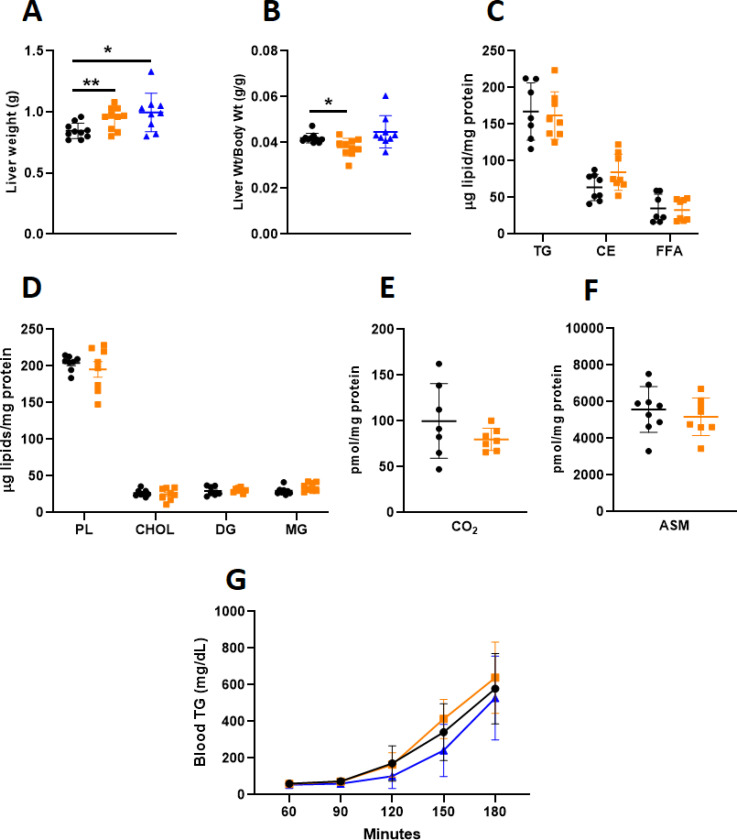
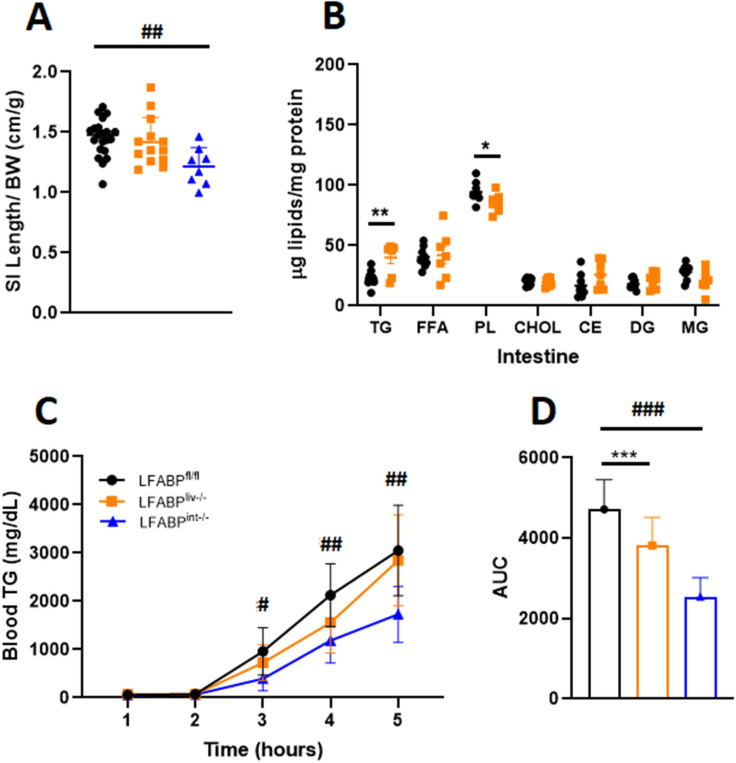
Results: While not as dramatic as found for whole-body LFABP-/- mice, both LFABPliv-/- and LFABPint-/- mice had significantly higher body weights and fat mass compared with LFABPfl/fl control mice. As with the global LFABP nulls, both LFABPliv-/- and LFABPint-/- mice remained normoglycemic and normoinsulinemic. Despite their greater fat mass, the LFABPliv-/- mice did not develop hepatic steatosis. Additionally, LFABPliv-/- and LFABPint-/- mice had higher endurance exercise capacity when compared with LFABPfl/fl control mice.
Conclusions: The results suggest, therefore, that either liver-specific or intestine-specific ablation of LFABP in female mice is sufficient to induce, at least in part, the MHO phenotype observed following whole-body ablation of LFABP.
Keywords: Liver fatty acid-binding protein; high-fat diet; liver; metabolically healthy obese; mouse; small intestine.
Conflict of interest statement
Conflicts of Interest: Authors declare no conflicts of interest.
Figures





References
-
- Wycherley T.P.; Moran L.J.; Clifton P.M.; Noakes M.; Brinkworth G.D. Effects of energy-restricted high-protein, low-fat compared with standard-protein, low-fat diets: a meta-analysis of randomized controlled trials. Am J Clin Nutr 2012, 96, 1281–1298. - PubMed
Publication types
Grants and funding
LinkOut - more resources
Full Text Sources
Research Materials
Miscellaneous
