


Efficacy of melatonin treatment in a cystic fibrosis mouse model of airway infection
- PMID: 39805903
- PMCID: PMC11730334
- DOI: 10.1038/s41598-025-85948-6
Efficacy of melatonin treatment in a cystic fibrosis mouse model of airway infection
Abstract
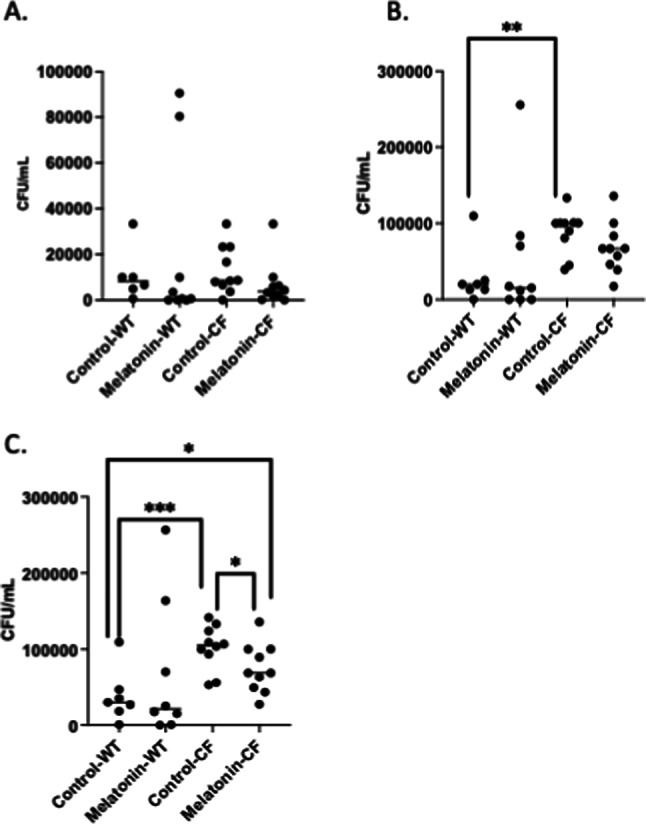
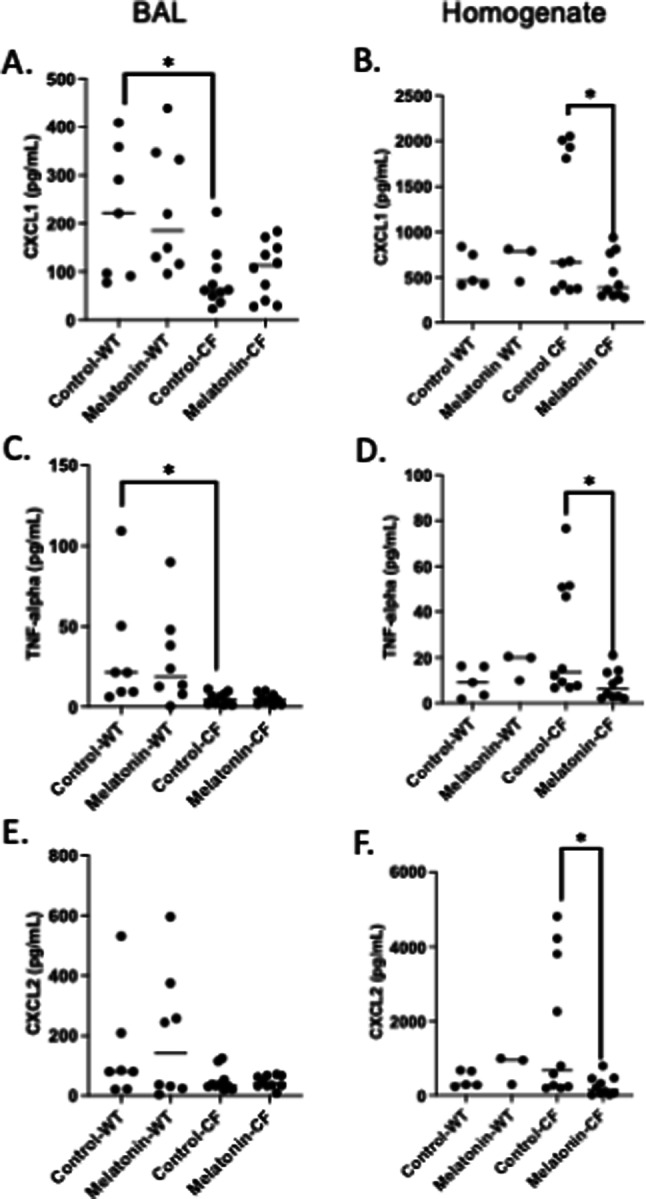
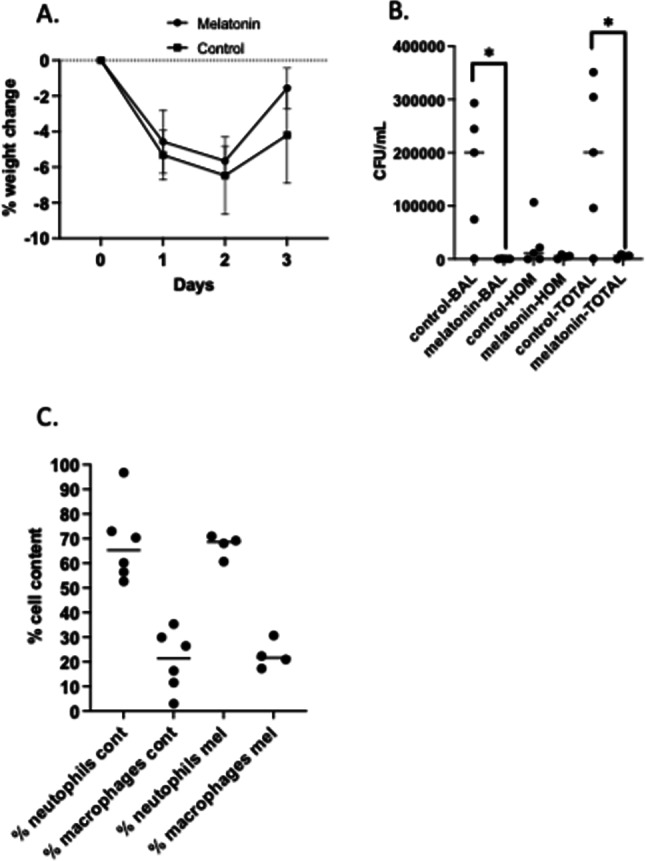
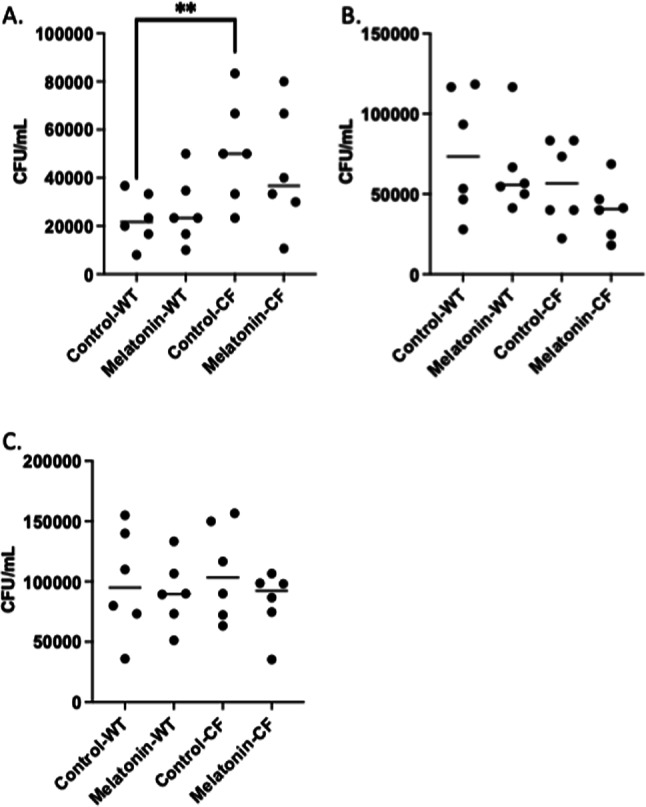
Approaches to mitigate the severity of infections and of immune responses are still needed for the treatment of cystic fibrosis (CF) even with the success of highly effective modulator therapies. Previous studies identified reduced levels of melatonin in a CF mouse model related to circadian rhythm dysregulation. Melatonin is known to have immunomodulatory properties and it was hypothesized that treatment with melatonin would improve responses to bacterial infection in CF mice. Data demonstrate that CF mice (G542X/G542X) treated with melatonin (10 µg/mL) in drinking water for 10 weeks had improved responses to airway infection with a clinical isolate of Pseudomonas aeruginosa. Melatonin-treated mice exhibited improved bacterial clearance, reduced inflammatory markers. Mice treated in drinking water for 1 week had improved bacterial clearance but no improvement in inflammation. Wild type (WT) control mice showed no response to melatonin treatment suggesting melatonin is eliciting a CF-specific response in this model. The efficacy of direct melatonin (1 µM) treatment to the airways was also tested and found to be ineffective. In conclusion, long-term systemic treatment with melatonin is an effective therapy in a CF mouse model that normalizes the response to airway infection to a WT pattern.
© 2025. The Author(s).
Conflict of interest statement
Declarations. Competing interests: The authors declare no competing interests.
Figures




References
Publication types
MeSH terms
Substances
Grants and funding
LinkOut - more resources
Full Text Sources
Medical
Molecular Biology Databases
